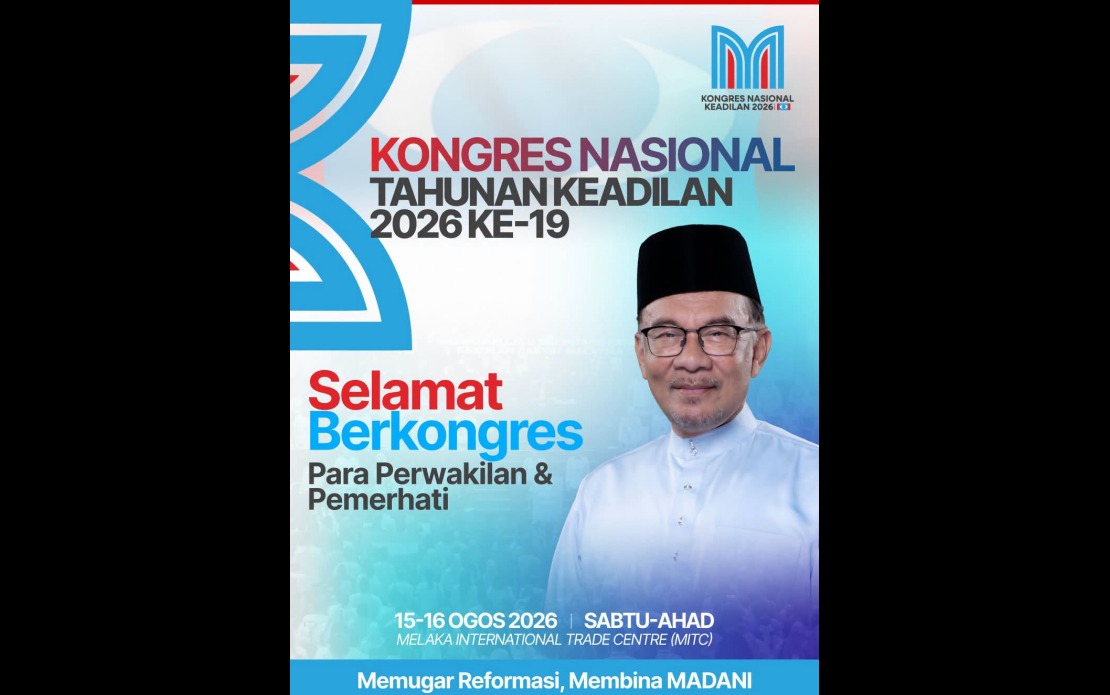
Datuk Seri Anwar Ibrahim has issued a pointed reminder to Parti Keadilan Rakyat that the party's fundamental purpose transcends winning votes at the ballot box. In a statement marking the approach of PKR's National Congress 2026, the Prime Minister and party president emphasised that the organisation must function primarily as a mass movement dedicated to upholding integrity, advancing social justice, fostering national unity, and earning the confidence of ordinary Malaysians. This framing carries particular significance in the contemporary Malaysian political climate, where coalition dynamics and electoral calculations frequently dominate party agendas.
Anwar's message suggests a party leadership conscious of potential drift from foundational values. The emphasis on "mass movement" rather than institutionalised machinery reflects broader concerns within PKR about maintaining grassroots relevance and popular legitimacy in an era when political machinery can become disconnected from the communities it purports to serve. For Malaysian observers, this articulation signals that even as PKR occupies significant government positions through the unity government arrangement, the party grapples with questions of identity and purpose.
The PKR National Congress 2026, scheduled to convene at the Melaka International Trade Centre in Ayer Keroh over two days commencing August 15, carries substantial symbolic weight for the party. Held under the theme "Memugar Reformasi, Membina MADANI" (Revitalising Reformasi, Building MADANI), the gathering represents more than routine party procedure. For PKR, which traces its origins to the reformasi movement of the late 1990s, such congresses offer opportunities to recalibrate its ideological compass and reassert connections to the movement that birthed it.
Anwar explicitly framed the congress as a moment for institutional introspection. He envisioned delegates using the platform to evaluate what PKR has accomplished, acknowledge shortcomings, and reinvigorate commitment to the reformasi agenda that fundamentally shaped the party's formation. This language of assessment and renewal suggests recognition that PKR, having transitioned from opposition movement to governing party, faces distinctive challenges in maintaining ideological coherence whilst managing the pragmatic demands of wielding executive power.
The invocation of the reformasi struggle deserves contextualisation for contemporary Malaysian readers. The movement that crystallised in 1998 emerged from demands for institutional accountability, judicial independence, and democratic renewal during a turbulent political crisis. For more than two decades, PKR has positioned itself as custodian of these reformist commitments. Yet navigating coalition politics, managing diverse party factions, and implementing governance inevitably creates tensions between foundational principles and immediate political necessities. Anwar's statement acknowledges this perpetual tension by insisting that the party's raison d'être must remain anchored in substantive principles rather than mere organisational survival or electoral success.
The insertion of MADANI into the congress theme reflects the current government's broader development paradigm. MADANI—an acronym representing prosperity, sustainability, transparency, and integrity—serves as the unity government's articulated vision for national progress. By tethering the congress theme to this framework, PKR positions itself as instrumental to delivering shared governance objectives while maintaining fidelity to reformist principles. This balancing act proves essential for maintaining party cohesion across diverse membership whilst demonstrating capacity to deliver tangible improvements in citizens' lives.
Anwar's scheduled address to congress delegates will command close attention from Malaysian political observers and PKR members alike. The Prime Minister's policy speech traditionally outlines strategic direction and serves as a public statement of party priorities. Coming against a backdrop of coalition management challenges, internal party dynamics, and persistent public expectations for institutional reform, such statements carry weight beyond routine party communication. Malaysian and regional analysts will examine whether Anwar's remarks chart fresh ideological territory or reinforce existing party positioning.
For Southeast Asian context, PKR's trajectory demonstrates how reform movements navigate the transition from opposition activism to governing participation. The party's experience offers instructive lessons for democratic movements elsewhere in the region wrestling with similar challenges. How PKR successfully maintains popular legitimacy and reformist credentials whilst executing governance responsibilities in coalition settings remains closely observed by democratic advocates throughout the region.
The congress itself serves broader symbolic functions for Malaysia's political landscape. It occurs within a context where public confidence in political institutions continues facing pressures from economic challenges, ongoing corruption investigations, and generational expectations for inclusive governance. PKR's reaffirmation of commitment to integrity and social justice, whether rhetorical or substantive, speaks to these wider democratic health indicators. The party's capacity to demonstrate that its principles shape concrete policy choices rather than function as aspirational rhetoric will fundamentally influence its future political standing.
Anwar's emphasis that PKR must remain accountable to the people rather than treating politics as merely an exercise in power acquisition addresses enduring tensions within Malaysian democracy. The distinction between political movements organised around substantive reform and those primarily structured around electoral competition proves consequential for how political parties interact with constituencies and exercise authority. By articulating this distinction explicitly, Anwar places PKR's leadership on record regarding foundational commitments, creating accountability mechanisms against which party performance can be measured.
The congress concludes a period of significant coalition adjustment and internal PKR recalibration. The party has experienced membership fluctuations, leadership transitions in various wings, and shifting coalition relationships since the 2022 general election. A national congress provides opportunity to consolidate these developments within a coherent party narrative. Whether the gathering produces substantive organisational renewal or functions primarily as ceremonial reaffirmation will substantially influence PKR's political momentum heading toward the next general election cycle and beyond.

