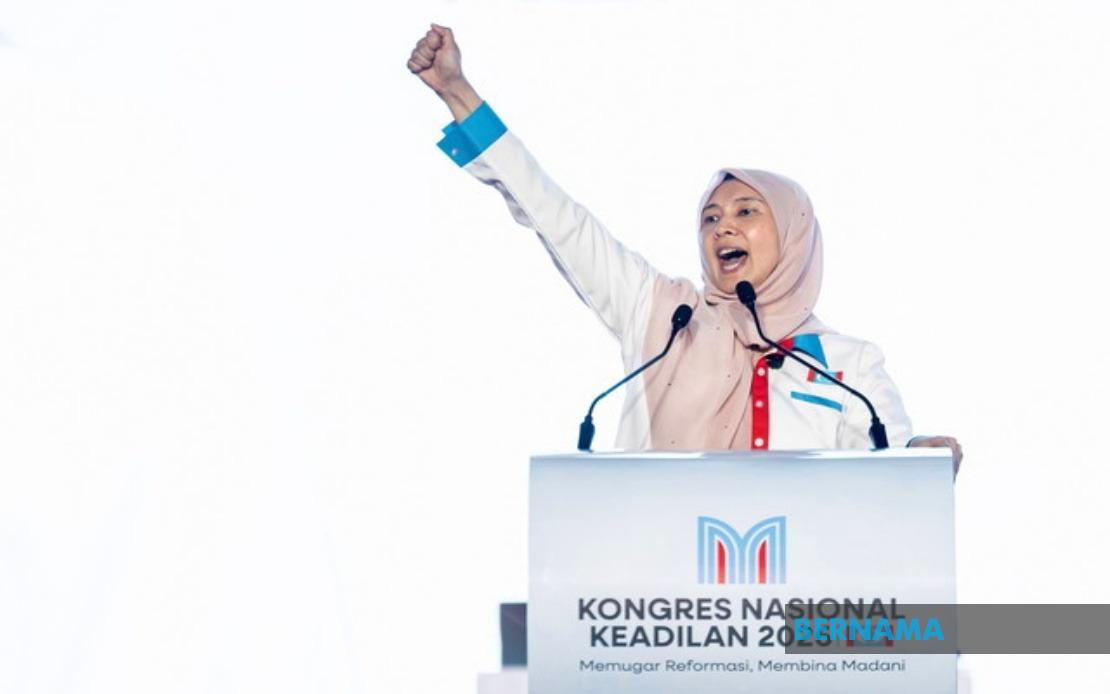
PKR's deputy president Nurul Izzah Anwar delivered a clarion call to party members at the 2026 National Congress in Melaka on Friday, insisting that the reformist struggle which gave birth to the party cannot be abandoned simply because it now holds ministerial positions. Speaking at the Melaka International Trade Centre, Izzah stressed that the momentum for systemic change must become embedded in the party's DNA and passed down to future generations, serving as a permanent obligation rather than a temporary campaign slogan.
The party, which emerged from the reform movement that swept Malaysia in the late 1990s and early 2000s, faces a critical juncture in its political maturity. Having transitioned from opposition agitator to coalition partner in government, PKR must resist the complacency that often accompanies power. Izzah's emphasis on continuous reform signals her concern that party members could become complacent administrators, content to manage existing structures rather than pursue the deeper transformations that once defined PKR's political identity. This challenge confronts many parties that move from protest to governance, where the urgency of opposition gives way to the competing demands of administration.
One tangible achievement Izzah highlighted was the repeal of the Universities and University Colleges Act (AUKU) 1971, legislation that had constrained student political participation for decades. The successful nullification of this restrictive law demonstrated that PKR's long-standing commitment to academic freedom could be realised when the party wielded executive authority. This victory embodies the kind of structural reform that justifies Izzah's call for persistent action—not merely delivering rhetorical promises but translating ideological conviction into legislative reality. The AUKU example provides a blueprint for how reform-minded governments can implement change that their younger generation of supporters demand.
However, Izzah's broader concern extends beyond individual legislative victories to encompass the distribution of economic benefits generated by the government's economic growth. The MADANI administration has presided over healthy expansion, yet Izzah cautioned that macroeconomic figures mean little if ordinary citizens cannot perceive tangible improvements in their daily circumstances. This disconnect between headline growth and household perception has plagued numerous Malaysian administrations, contributing to voter frustration regardless of party affiliation. She argued that economic expansion must translate into expanded job creation, particularly in sectors where young Malaysians and women face persistent barriers to meaningful employment.
Small and medium enterprises occupy a crucial position in Malaysia's economic structure, employing substantial portions of the workforce and serving as incubators for entrepreneurship. Izzah's emphasis on creating greater opportunities for SME participation reflects recognition that inclusive growth requires deliberate policy intervention beyond passive market forces. The same applies to women's participation in mainstream economic activities—Malaysia's female labour force participation rate remains below regional peers, representing both a social equity issue and an underutilisation of human capital. Her call for targeted opportunities addresses structural barriers rather than assuming that economic growth naturally lifts all demographic groups equally.
Wage structure reform emerged as another priority in Izzah's reform agenda. She contended that Malaysian salary frameworks require fundamental restructuring to ensure fairness and alignment with workers' productivity contributions. This concern resonates acutely with Malaysian workers facing cost-of-living pressures, particularly as inflation has outpaced wage growth in many sectors. The need for wage rates to advance in tandem with productivity gains reflects economic reality—workers who generate increasing value deserve compensation increases that reflect their enhanced contributions. This principle, while intellectually straightforward, encounters resistance from employers and requires government commitment to implement through both legislative and administrative means.
Beyond specific policy proposals, Izzah delivered a philosophical reminder to PKR's leadership regarding the nature of political power itself. She cautioned against treating ministerial positions as personal possessions or vehicles for individual advancement, framing instead the concept of power as a temporary custodianship of public trust. This distinction carries profound implications for institutional integrity and party culture. When politicians view office as personal property, corruption, nepotism, and self-dealing naturally follow. When they understand office as a trust, accountability becomes intrinsic rather than externally imposed. Izzah's invocation of this principle suggests concern that PKR members, having struggled through years of opposition, might now succumb to the entitlements that plague longer-established parties.
Her meditation on legacy—that positions change, titles fade, and names eventually fade from public memory—reflects a mature understanding of political impermanence. This perspective stands in sharp contrast to the ego-driven politics that characterises many Malaysian politicians, who measure success through personal accumulation of titles, perquisites, and public adulation. Izzah's reminder that only the work and values endure beyond a politician's tenure offers a corrective vision centred on institutional contributions rather than individual glorification. For a party still defining its institutional character after a decade in government, such philosophical grounding becomes essential to maintaining its reform credentials.
The timing of these remarks at the national congress carries strategic significance. Party congresses provide venues where senior leadership articulates the organisation's direction and implicitly addresses internal tensions or complacencies. By emphasising continuous reform, Izzah signaled to younger and more idealistic party members that the leadership remains committed to the principles that initially attracted them. This messaging also serves as subtle pressure on colleagues who might be drifting toward comfortable accommodation with the status quo. For Malaysian political observers, her speech represents a rare moment where a senior leader explicitly prioritises institutional ideals over partisan point-scoring.

