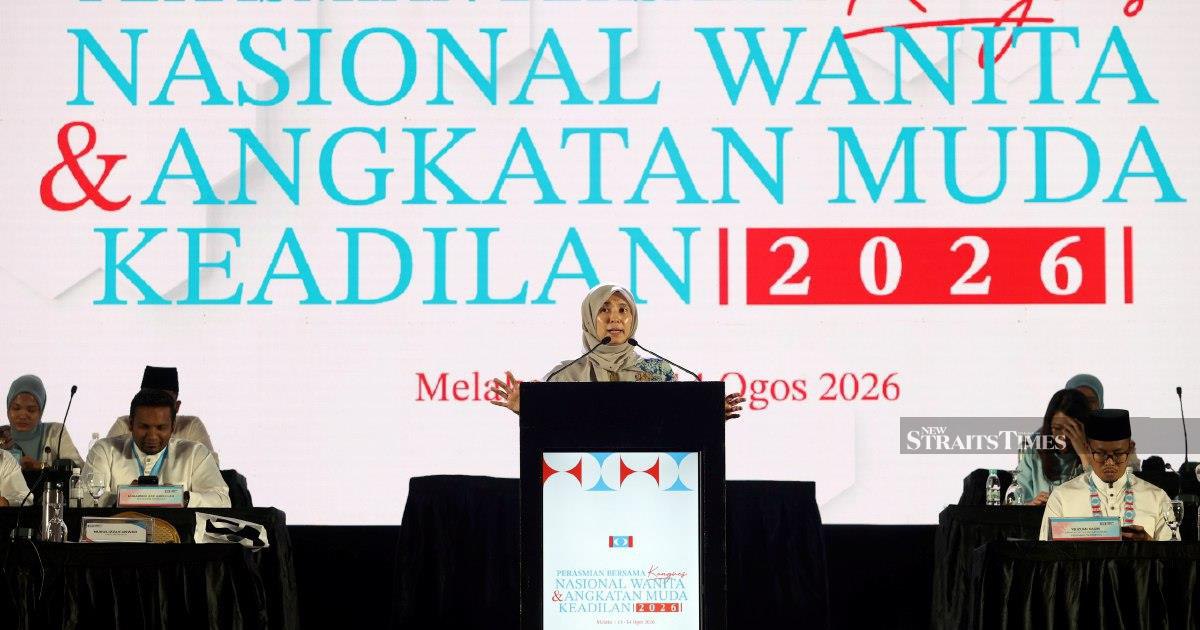
PKR's deputy president Nurul Izzah Anwar has issued a pointed reminder that the party must establish unmistakable boundaries regarding acceptable political conduct, particularly as Malaysia's fractious political landscape continues to encourage multi-party coalitions and pragmatic alliances. Speaking in Ayer Keroh, Nurul Izzah stressed that while political compromise is an inevitable feature of coalition governance, such arrangements must never become a pretext for tolerating corruption, the misuse of public office, or other forms of institutional abuse.
Her intervention signals growing awareness within PKR that the party's participation in successive administrations—first under the Pakatan Harapan government and subsequently in various coalition configurations—has raised legitimate questions about whether principle has been subordinated to political convenience. As a major stakeholder in Malaysian politics and a potential kingmaker in future governments, PKR faces mounting pressure to articulate a coherent ethical framework that guides its decision-making on coalition partnerships and ministerial appointments.
The concept of establishing firm "red lines" reflects international best practice in coalition politics, where parties explicitly define which issues are non-negotiable and which behaviours would trigger withdrawal from an alliance. For PKR, which traces its roots to democratic reform movements and built its reputation partly on anti-corruption platforms, such clarity becomes particularly significant. Without clearly delineated boundaries, coalition partners may test the limits of permissible conduct, and observers may reasonably conclude that the party's reformist credentials have been compromised by electoral arithmetic.
Nurul Izzah's comments carry particular weight given her family's historical association with PKR's founding principles. Her father, Anwar Ibrahim, established the party during a period of activism against institutional corruption and cronyism. This heritage creates both an opportunity and an obligation for the party to maintain consistency with its foundational values, even as it navigates the pragmatic realities of coalition governance in a deeply fragmented political system.
Malaysian politics has increasingly become characterised by fluid alliances where yesterday's opponents become today's partners. While such flexibility has provided opportunities for parties to gain governmental representation, it has also created space for ethical standards to become negotiable. When multiple parties coalesce around shared electoral interests rather than shared policy platforms, smaller issues like integrity in governance can be deprioritized in favour of maintaining coalition stability. Nurul Izzah's intervention suggests PKR recognizes this risk and wishes to signal that some principles remain inviolable regardless of political calculations.
The emphasis on preventing corruption and abuse of power reflects both international pressure and domestic accountability concerns. Malaysia has faced sustained scrutiny from international anti-corruption indices and civil society organisations regarding the effectiveness of its governance institutions. Any political party that claims reformist credentials must demonstrate through concrete action—including the establishment of enforceable ethical standards—that it takes these concerns seriously. Public statements become credible only when supported by institutional mechanisms that impose real consequences for violations.
For PKR specifically, establishing red lines also addresses internal party management challenges. Without clear standards, faction leaders within the party might feel entitled to make separate arrangements with coalition partners, potentially fragmenting the party's unified stance. Additionally, party members who share the reform agenda that originally attracted them to PKR require reassurance that the party has not entirely abandoned principle in pursuit of ministerial portfolios and government contracts.
The Malaysian political context adds another layer of complexity to this discussion. The country's electoral system, constitutional framework, and the distribution of seats among competing coalitions means that no single party can typically govern alone. This structural reality creates genuine dilemmas for parties committed to reform: remain pure but powerless, or accept compromise and risk losing moral authority. Nurul Izzah's framing suggests PKR seeks a middle path—engaging in necessary political compromise while maintaining non-negotiable standards on fundamental issues.
The timing of these remarks also reflects broader concerns about governance quality. Recent years have seen public attention focus increasingly on whether political transitions have actually improved accountability and institutional performance. Voters invested emotional and practical support in the democratic reform movement expect tangible improvements in governance standards, not merely changes in which party holds office. If coalition partners tolerate each other's misconduct to maintain unity, the reform agenda effectively collapses regardless of which party leads government.
For regional observers, PKR's wrestling with these questions mirrors challenges faced by reformist parties across Southeast Asia. In Indonesia, the Philippines, Thailand, and other nations, parties that emerged from democratic movements have grappled with similar tensions between principle and pragmatism. How Malaysian parties navigate these tensions may offer lessons—both positive and cautionary—for democracy advocates elsewhere in the region.
Implementing such red lines in practice will test PKR's commitment to these principles. The party must establish mechanisms for evaluating prospective coalition arrangements against its stated boundaries, procedures for addressing violations by coalition partners, and consequences for internal party members who ignore party discipline on these matters. Without such institutional scaffolding, Nurul Izzah's words, however sincere, risk remaining purely rhetorical—another political statement that disappears into the background noise of Malaysian public discourse.

