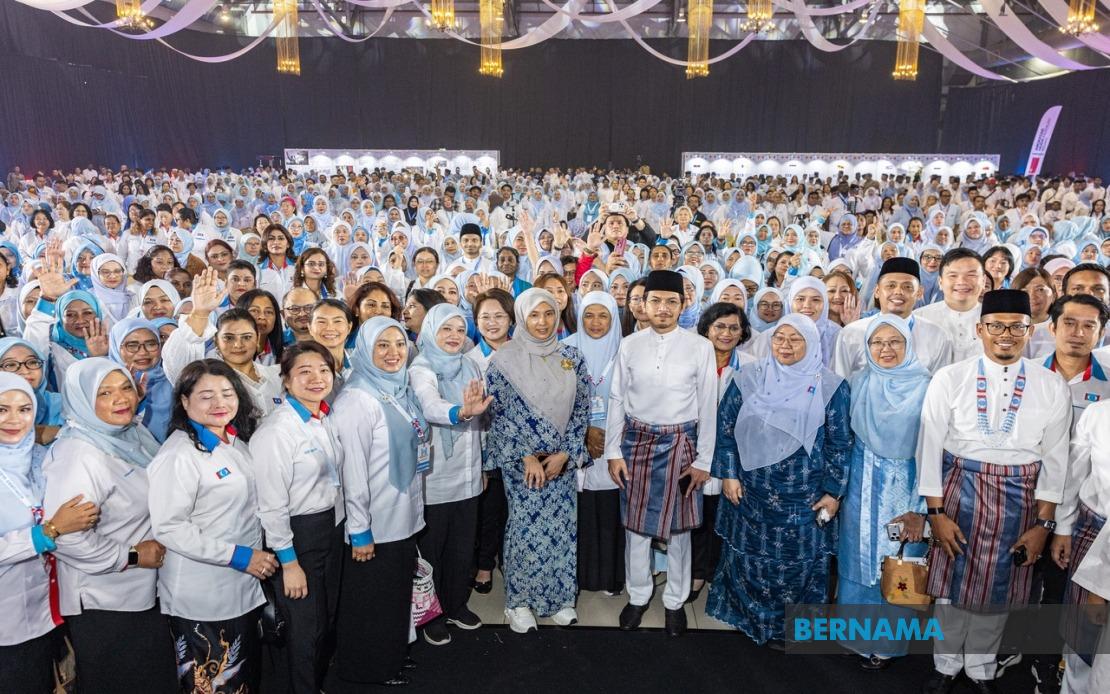
The People's Justice Party (PKR) requires a substantially refreshed political narrative capable of reinvigorating public confidence in its direction and competence, according to Muhammad Kamil Abdul Munim, chief of the party's youth wing Angkatan Muda Keadilan (AMK). Speaking at the 2026 AMK National Congress held in Melaka on August 14, he highlighted a critical gap between the party's popularity and its ability to convert electoral enthusiasm into concrete parliamentary and state assembly seats, particularly following disappointing showings in recent regional contests.
The observations from the AMK leadership carry significant weight as they reflect internal party assessment of recent electoral performance across multiple states. Over the past two years, PKR has contested in Sabah, Johor, and Negeri Sembilan state elections where results fell short of expectations despite the party's prominent position within the ruling Pakatan Harapan coalition. Muhammad Kamil's candid acknowledgment that grassroots machinery remains insufficiently developed to translate voter sentiment into wins signals a fundamental organisational challenge that extends beyond campaign slogans or media presence. This admission represents the kind of internal reckoning that suggests PKR recognises the distinction between headline popularity and the detailed precinct-level organisation required to maximise seat gains in Malaysia's electoral system.
Since its formation following the 1998 Reformasi movement, PKR has historically benefited from waves of public sentiment centred on reform narratives and opposition to incumbent governments. Muhammad Kamil noted that throughout the party's existence, from its early years through its current role as part of the government coalition, individuals and communities have voluntarily become extensions of party machinery during election cycles. However, the quality and reliability of such ad-hoc mobilisation has become increasingly unpredictable in Malaysia's contemporary political environment where voter behaviour has become more fluid and less tied to traditional party structures. The party's ascension to federal government through the 2022 general election, initially viewed as vindication of its reform credentials, appears to have simultaneously exposed organisational vulnerabilities that were previously masked by the dynamics of opposition politics.
The challenge facing PKR reflects broader structural issues within Malaysian political parties struggling to maintain cohesive ground organisations while managing the competing demands of governing and campaigning. Muhammad Kamil argued that the party must fundamentally reimagine its strategic approach, tactical methods, and ongoing political activities to create systems that are more disciplined, hierarchically coordinated, and precisely targeted toward electoral objectives. This reconceptualisation acknowledges that the conditions for reform-oriented parties have shifted considerably. When PKR operated primarily in opposition, rallying public sentiment against perceived injustices and governance failures provided natural momentum. Now, as a governing party, PKR faces the inverse challenge: maintaining activist energy and grassroots engagement whilst managing the inevitable compromises and unpopular decisions that accompany ministerial responsibility.
The youth wing chief's remarks during the congress proceedings, attended by PKR deputy president Nurul Izzah Anwar and other senior figures including Datuk Seri Dr Zaliha Mustafa and Wanita PKR chief Fadhlina Sidek, appeared calibrated to avoid blame-shifting whilst simultaneously spurring party members toward institutional renewal. His exhortation that members and leaders should neither succumb to despondency nor dismiss recent electoral setbacks represents a delicate balance between acknowledging disappointing results and maintaining party morale. He framed voter dissatisfaction as a clarion call demanding introspection and revitalisation rather than as terminal decline, seeking to channel frustration into constructive organisational work.
Fadhlina Sidek, representing the party's women's wing, amplified these themes during her congress address, positioning the gathering as an opportunity for genuine institutional self-examination. She emphasised that leadership speeches and party resolutions must translate into concrete operational improvements, strengthening organisational capacity at all levels and rekindling the combative spirit necessary for electoral competition. Her emphasis on acknowledging weaknesses with humility rather than defensive rationalisation suggests recognition within the party hierarchy that external blame-shifting will not address structural deficiencies. The call for delegates' discussions to generate actionable grassroots recommendations indicates an attempt to democratise the reform process, allowing rank-and-file members to shape party renewal rather than imposing top-down restructuring.
For Malaysian political observers and voters, PKR's internal dialogue carries implications extending beyond the party itself. As the largest component party within the Pakatan Harapan coalition by membership and parliamentary representation, PKR's organisational effectiveness directly shapes coalition viability and performance in forthcoming electoral contests. The 2026 state elections and eventual 2027 or 2028 federal election will represent crucial tests of whether the party can successfully bridge the identified gap between popular sentiment and organisational capacity. Other ruling coalition partners including Democratic Action Party (DAP) and Amanah have maintained relatively stronger grassroots structures, and PKR's acknowledged organisational challenges could become coalition-wide vulnerabilities if not addressed systematically.
The regional context adds further significance to PKR's predicament. Throughout Southeast Asia, centre-left and reform-oriented parties have grappled with translating anti-establishment momentum into durable governing coalitions. Thailand's Move Forward Party and Indonesia's PKB have faced comparable challenges in maintaining party discipline and grassroots engagement whilst governing. PKR's experience of these difficulties therefore offers instructive lessons for understanding how reform movements institutionalise and what organisational investments prove necessary for long-term political sustainability. The party's willingness to publicly acknowledge these challenges, at least within internal forums, suggests a degree of institutional maturity that may ultimately strengthen its capacity to address them effectively.
Moving forward, PKR's strategy appears to emphasise three interconnected priorities: developing a clearer, more compelling political narrative that distinguishes PKR from coalition partners; systematically rebuilding grassroots organisational capacity through structured training and recruitment; and creating mechanisms for translating member feedback into party strategy. The 2026 AMK National Congress discussions may seed ideas subsequently expanded into broader party reform initiatives. Whether such initiatives prove sufficient to meaningfully improve electoral performance in upcoming contests will depend substantially on execution quality and the party's ability to maintain organisational focus amid the distractions inherent in coalition governance. The coming months will test whether PKR can genuinely transform institutional weaknesses into competitive advantages through organisational innovation.

