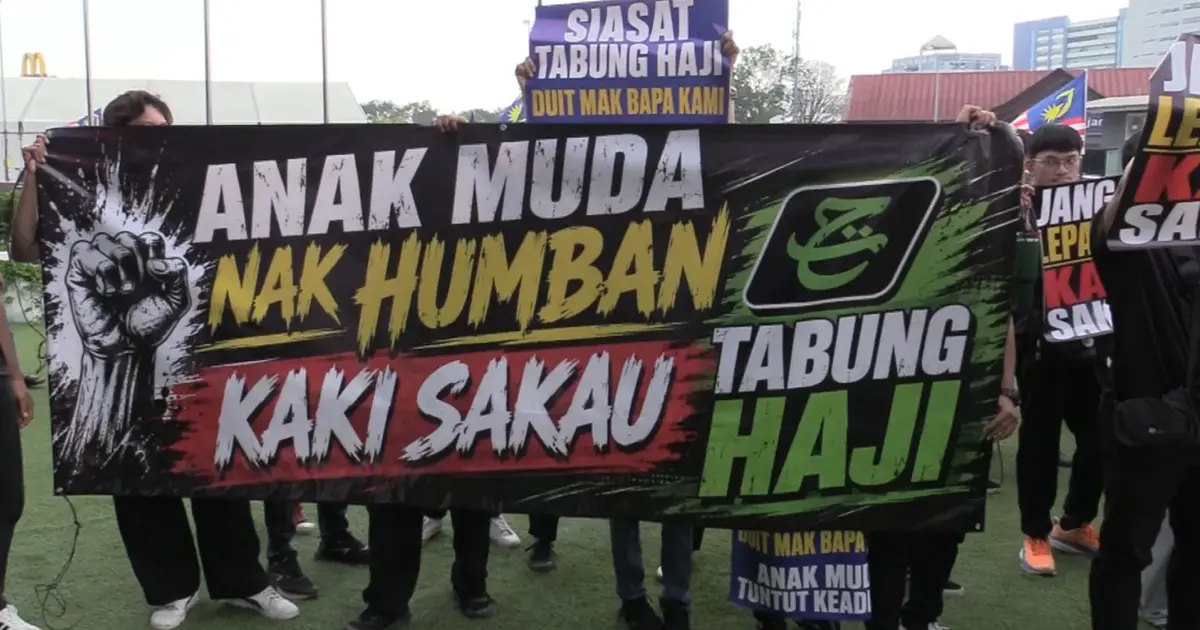
Approximately 250 members of Parti Keadilan Rakyat (PKR) assembled outside the party's congress venue in Melaka on Wednesday, mounting a demonstration that underscores growing grassroots pressure within the opposition coalition regarding the Tabung Haji controversy. The protesters, predominantly from the Melaka division, sought to draw attention to what they perceive as administrative and financial irregularities affecting Malaysia's leading pilgrimage savings scheme, demanding that party leadership prioritise a thorough and expedited investigation into the matter.
The timing of the assembly outside the formal party gathering reflects strategic intent among party members to amplify their message during a period when senior PKR officials would be present and focused on party business. Rather than remaining isolated, the demonstrators positioned themselves at a venue where their concerns could directly reach decision-makers and attract media attention, transforming what might have been a dispersed complaint into a coordinated political action with clear visibility and impact.
For PKR's grassroots base, the Tabung Haji issue carries particular emotional and political weight. The statutory body, which helps Malaysian Muslims save for the Hajj pilgrimage, holds deep cultural significance within Malay-Muslim society. When questions arise about its financial management or governance standards, the matter transcends technical bureaucratic concerns and touches directly on public trust in an institution designed to serve the religious aspirations of millions of Malaysians. Members argue that any mismanagement or irregularities warrant comprehensive scrutiny to restore confidence among depositors and pilgrims who depend on the fund.
The protestors' emphasis on the necessity for swift action suggests frustration with the pace of investigations or perceived inaction by relevant authorities. In Malaysian politics, particularly within the opposition coalition, grassroots movements often form when party members believe leadership is moving too slowly on issues that resonate strongly with their constituents. This gathering signals that for Melaka PKR divisions at least, the Tabung Haji matter deserves heightened priority and more aggressive pursuit of accountability.
Tabung Haji has faced scrutiny in recent years over its financial performance and investment decisions. The controversy encompasses questions about real estate holdings, reported losses, and management decisions that have affected returns for members. For Muslim Malaysians, particularly those from lower and middle-income backgrounds who rely on Tabung Haji as a primary savings vehicle for hajj expenses, the stakes are deeply personal. Any erosion of the fund's financial health directly impacts their ability to fulfil the Fifth Pillar of Islam, making this fundamentally different from corporate governance issues affecting secular entities.
Within the opposition coalition's broader political calculations, the Tabung Haji issue represents both an opportunity and a vulnerability. For PKR and other opposition parties, highlighting governance failures or regulatory lapses can demonstrate to voters that they take fiduciary responsibility seriously and will hold institutions accountable regardless of political considerations. Simultaneously, however, if government bodies feel pressured to launch investigations perceived as politically motivated, such actions risk undermining the credibility of any inquiry's findings and polarising an already sensitive community issue.
The Melaka assembly also reflects internal PKR dynamics. As a party competing for support in constituencies across the peninsula, PKR must balance various competing interests and demographic concerns. Grassroots activism on specific issues indicates which matters are mobilising party members and likely resonating with voters in particular regions. Melaka, with its significant Muslim and Malay population, is precisely the sort of state where Tabung Haji concerns would generate sustained engagement and political organisation.
The broader implications for Malaysian governance extend beyond PKR's positioning. The Tabung Haji controversy highlights the ongoing challenge of ensuring transparent management and effective oversight of statutory bodies that handle public funds, particularly those serving cultural and religious communities. Whether investigations proceed through the Malaysian Anti-Corruption Commission, parliamentary committees, or other channels, establishing credible accountability mechanisms remains essential for maintaining institutional legitimacy and public confidence in financial systems designed to serve specific demographic groups.
For the religious and Malay Muslim communities that Tabung Haji principally serves, the demonstrated concern from opposition party members may provide some assurance that oversight mechanisms exist beyond direct government control. In Southeast Asia's political landscape, where institutional accountability sometimes remains contested, the visibility of organised civil society and political oversight—even in protest form—can function as an important check on potential irregularities or mismanagement of public resources.
Moving forward, PKR's response to these grassroots demands will signal the party's commitment to the issues mobilising its base while demonstrating whether the party can translate member activism into concrete political action. For opposition parties operating in competitive Malaysian politics, responding substantively to member concerns about governance failures is necessary for maintaining organisational cohesion and demonstrating relevance to voters concerned about public accountability and institutional integrity.

