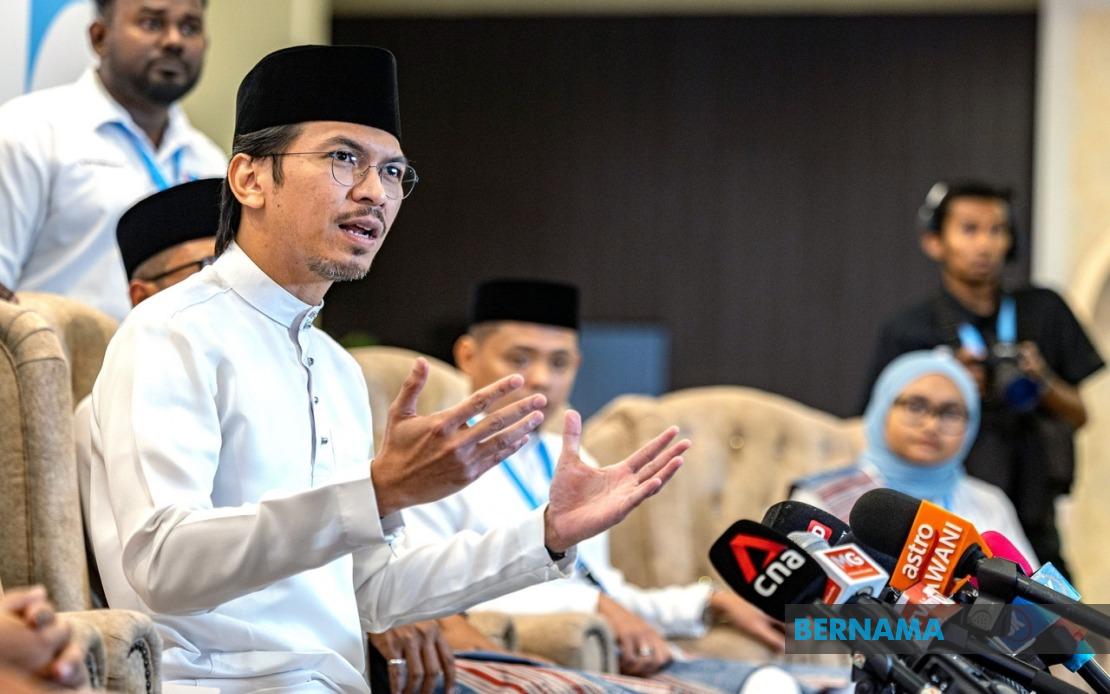
The Parti Keadilan Rakyat mounted a defensive response to criticism over member attrition on Wednesday, with the party's youth wing chief dismissing recent departures as numerically negligible and operationally immaterial. Muhammad Kamil Ahmad Munim, who leads Angkatan Muda Keadilan (AMK), told journalists during the 2026 AMK National Congress in Melaka that while some party members had indeed opted to leave citing diminished confidence, the overall scale of these exits posed no threat to PKR's institutional capacity or internal cohesion.
The remarks came in direct response to claims made by Parti Bersama Malaysia co-founder Datuk Seri Rafizi Ramli, who suggested that approximately one-quarter of his fledgling party's membership consisted of former PKR adherents. Rather than engaging substantively with this figure, Muhammad Kamil characterised the departures as statistically inconsequential, though he acknowledged being unable to provide precise percentages of those who had switched allegiances. His assertion that organisational operations continued unimpeded reflected the party's broader strategy of minimising the political significance of its member losses during a period of documented internal flux.
The youth wing chief's confident tone at the Melaka International Trade Centre belied deeper structural questions facing the coalition-allied party. PKR has faced successive challenges to its internal stability over recent months, ranging from factional tensions to strategic disagreements regarding the party's political direction. The departure of members to emerging alternatives like Bersama Malaysia suggests that at least some elements of the party base harbour concerns about either party leadership or its positioning within the broader political landscape. That departing members explicitly cited lost confidence underscores the voluntary nature of these exits—individuals actively choosing to pursue alternatives rather than remaining disengaged.
Critical to understanding PKR's current position is the ongoing absence of deputy president Nurul Izzah Anwar, who remains on leave from her formal duties. Muhammad Kamil explicitly addressed concerns that this leadership gap might compromise party functionality, framing the situation instead as an exercise in institutional resilience. According to his account, responsibility for key party functions had been systematically redistributed among the remaining senior leadership, with vice-president Datuk Seri Saifuddin Nasution Abdullah and PKR election director Datuk Seri Amirudin Shari absorbing expanded portfolios. This delegation model, he maintained, demonstrated organisational maturity rather than crisis management.
The division of labour framework represents a critical test case for PKR's institutional depth. Malaysian political parties have historically struggled to function effectively when senior figures assume extended absences, often exposing either weak secondary leadership or concentration of power in individual personalities rather than structures. That PKR's youth wing chief felt compelled to publicly defend the party's operational capacity despite Nurul Izzah's continued leave suggests internal awareness that grassroots confidence required reassurance. His reference to explanations provided by state and branch-level leadership indicated that concerns had reached down through the party hierarchy and required active management.
For Malaysian political observers, PKR's membership challenges reflect broader trends affecting coalition stability heading into the next general election. The emergence of Parti Bersama Malaysia as a repository for departed PKR members indicates that frustration with the established coalition structure has tangible political outlets. Rather than representing isolated discontent, these departures signal that alternative formations can now credibly compete for votes and membership from within the Pakatan Harapan coalition's traditional constituency. This fragmentation dynamic carries particular significance for elections where coalition discipline and unified messaging prove decisive.
The youth wing chief's emphasis on high delegate turnout at the congress served a dual communicative purpose: demonstrating internal engagement while implicitly countering narratives of declining party vitality. Delegate participation at party congresses has become a standard metric through which Malaysian parties publicly assert membership loyalty and organisational health. By highlighting strong attendance, Muhammad Kamil sought to establish that despite documented departures, the party's core base remained committed and mobilised. This framing attempted to shift discourse away from those leaving toward those remaining, a rhetorical manoeuvre common to organisations confronting membership attrition.
The timing of these remarks, delivered during AMK's national congress, reflects PKR's recognition that its youth wing requires reassurance about party durability. Youth wings across Malaysian political parties have historically proven sensitive to perceptions of institutional weakness, as younger members retain greater flexibility to migrate toward alternative organisations. By proactively addressing member departures and leadership absences through the youth wing forum, PKR signalled awareness that this demographic required explicit reassurance about the party's trajectory and viability as a long-term political vehicle.
Looking toward the state elections and general election for which PKR is preparing, the party faces a fundamental challenge in converting its existing institutional framework into electoral advantage while managing internal cohesion. The loss of approximately one-quarter of any rival party's membership base to former PKR cadres, if accurate, suggests that departures have proven selective rather than wholesale—specific individuals or factions choosing exit rather than universal dissatisfaction. This selectivity potentially limits electoral damage if departing members represent concentrated geographic or demographic clusters rather than broadly distributed voter constituencies. However, the fact that departing members explicitly attribute their exit to loss of confidence suggests deeper ideological or strategic concerns rather than mere opportunistic defection.
The party's framing of member departures as insignificant and operationally irrelevant represents a calculated public posture designed to project institutional confidence and continuity. Whether this assessment proves accurate will become evident as electoral campaigns commence and PKR's membership mobilisation capacity confronts practical tests in the field. The coming months will reveal whether the party can maintain grassroots enthusiasm and volunteer engagement despite the visible departures that have prompted this defensive response from senior leadership.

