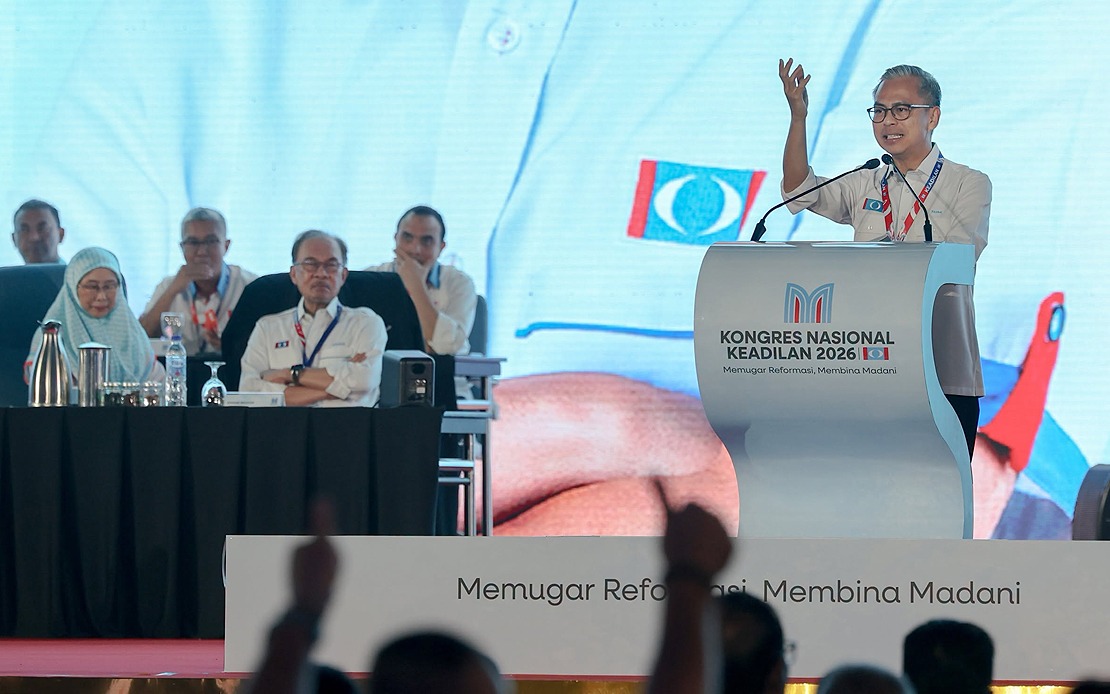
The two-day Parti Keadilan Rakyat National Congress wrapped up in Kuala Lumpur on Friday, serving as a critical juncture for the party to reassess its direction and reaffirm its commitment to reform-driven governance. Rather than functioning as a conventional gathering of speeches and procedural debates, the 2026 congress operated as an introspective exercise, allowing party delegates and leadership to evaluate the organisation's performance, identify internal weaknesses, and chart a course that keeps public welfare at the centre of its political mission.
PKR Information Chief Datuk Seri Fahmi Fadzil characterised the congress as an opportunity for the party to listen directly to voices from its grassroots structure, a critical feedback mechanism often overlooked in hierarchical political organisations. This emphasis on bottom-up consultation reflects a deliberate shift within PKR toward consolidating support beyond the party's urban electoral strongholds, where organisational presence remains uneven across different regions. By prioritising these channels of communication, the party appears to be addressing long-standing concerns about the disconnect between leadership decisions and ground-level membership sentiment.
The centrepiece of the congress came through PKR President Datuk Seri Anwar Ibrahim's keynote address, which underscored that the reformasi struggle—the party's foundational commitment to systemic political and institutional renewal—must remain unwavering regardless of external pressures or changing political circumstances. This messaging carries particular weight given Malaysia's complex political environment, where coalition stability remains contested and the government faces consistent pressure from opposition quarters. By explicitly reiterating this principle, Anwar signalled to party members that ideological consistency and public-interest orientation must supersede short-term political calculations.
Fahmi's subsequent commentary stressed that party members bear individual responsibility for translating congress directives into tangible community outcomes. He called for PKR representatives to return to their constituencies and engage in sustained dialogue with residents, moving beyond periodic election-time interactions toward genuine year-round community accountability. This framework suggests the party recognises that electoral success in future polls depends not merely on manifesto promises but on demonstrating concrete problem-solving capacity in constituencies.
The structural strengthening of PKR's party machinery emerged as a secondary but equally important theme from the congress. Fahmi explicitly referenced the need for organisational discipline and coordinated action across different levels of the party hierarchy. For a coalition partner in government, this disciplinary emphasis carries institutional implications, particularly regarding party voting cohesion on parliamentary matters and ministerial coordination. Weaknesses in party machinery can create vulnerabilities in coalition governance, making internal organisational efficiency a matter of governmental stability.
Significantly, Fahmi's framing acknowledged that political headwinds will inevitably continue, whether from opposition attacks or challenges within the broader governmental coalition. Rather than projecting naive optimism, this realism suggests the party leadership understands the fragile nature of political coalitions and the constant jockeying for advantage among government partners. By preparing members psychologically for sustained challenges, PKR's leadership appears to be building organisational resilience rather than assuming the political landscape will remain static.
The emphasis on principle-anchored politics versus expedient positioning represents a notable rhetorical choice for a governing party. Typically, coalition partners soften ideological messaging to maintain unity, but PKR's congress messaging doubled down on its reformist identity. This could reflect internal party dynamics, where grassroots members expect the leadership to maintain fidelity to the party's reform mission despite governing responsibilities, or it could represent a deliberate attempt to differentiate PKR within the coalition by claiming the moral-political high ground.
For Southeast Asian observers, PKR's approach illuminates broader debates about political party institutionalisation in the region. Many governing coalitions struggle with balancing ideological coherence against the practical necessities of power-sharing. PKR's attempt to thread this needle—maintaining reform credentials while governing within a coalition—offers lessons for other progressive parties navigating similar tensions across the region.
Looking ahead, the success of PKR's renewed commitment will depend on whether party members translate congress resolutions into sustained community engagement and whether the party can maintain internal discipline without fracturing over policy disagreements. The congress concluded, but as Fahmi emphasised, the actual work of connecting reform principles to citizen welfare continues in constituencies across the country, where political legitimacy is ultimately built or lost.

