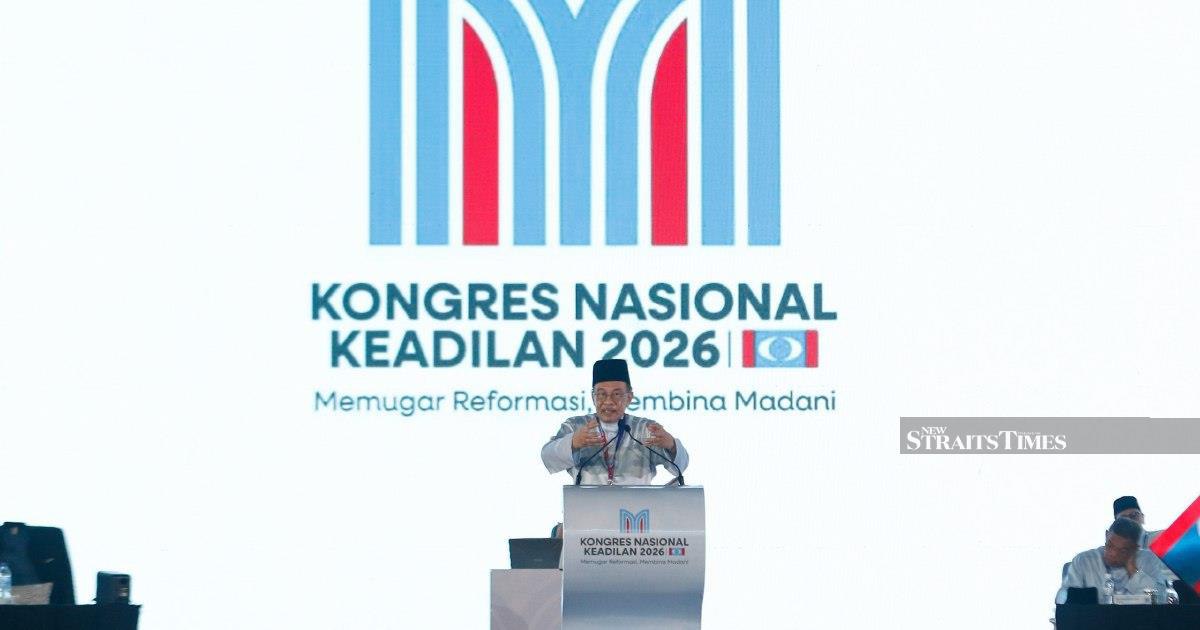
At the PKR Congress held in Ayer Keroh, Datuk Seri Anwar Ibrahim publicly acknowledged that embezzlement—referred to locally as "sakau"—has indeed been substantiated at Tabung Haji, based on the conclusions drawn by the Royal Commission of Inquiry established to investigate the institution's affairs. The PKR president's confirmation lends significant weight to the formal inquiry's findings and marks a forthright recognition of financial misconduct within the pilgrimage management authority that oversees savings for Malaysian Muslims planning to perform the hajj.
Tabung Haji, officially known as the Lembaga Tabung Haji, functions as both a savings institution and the pilgrimage operator for Malaysian Muslims. The fund holds billions in deposits from members who have entrusted their earnings to support their hajj aspirations. Given the institution's pivotal role in facilitating one of Islam's Five Pillars for hundreds of thousands of Malaysians annually, any financial impropriety strikes at the heart of public trust in religious and financial stewardship. The establishment of a Royal Commission of Inquiry indicates that concerns about the institution's management had reached a level requiring formal, independent investigation into potential wrongdoing.
Anwar's comments at the party congress represent an important moment of public accountability. Rather than deflecting or minimizing the findings, the PKR leader directly addressed the embezzlement allegations by referencing the RCI's formal conclusions. This approach contrasts with instances where political figures have sidestepped uncomfortable institutional realities. By acknowledging the problem openly at a high-profile party gathering, Anwar has signalled that his administration takes seriously the need for transparency regarding government-linked institutions and the protection of public assets.
The term "sakau" carries particular weight in Malaysian discourse, as it references the classic form of institutional theft or misappropriation that has historically plagued government agencies and linked companies. The use of this colloquial yet serious terminology by Anwar underscores the gravity of what the RCI uncovered—not merely accounting irregularities, but intentional diversion of funds belonging to individual savers. Each rupiah involved represents the life savings of ordinary Malaysians who placed their trust in an institution backed by government oversight.
For Malaysian Muslims who have contributed to Tabung Haji over many years, Anwar's acknowledgement raises urgent questions about the security of their deposits and what steps the government intends to take to recover misappropriated funds. The institution serves millions of members, and any large-scale embezzlement directly threatens retirement plans and religious obligations that families have spent decades financing. This extends beyond a matter of institutional governance to become a personal financial crisis for affected contributors across the country.
The RCI into Tabung Haji was established to investigate widespread concerns about the institution's financial health and operational practices. Such royal commissions typically examine years of transactions, management decisions, and internal controls to identify where breaches occurred and how they were enabled. The formal investigation process lends credibility to findings that might otherwise be disputed, as it involves independent inquiry, public hearings, and documented evidence. Anwar's reference to the RCI's work suggests that the commission has produced a thorough accounting of the embezzlement incidents.
From a regional perspective, the Tabung Haji case reflects broader governance challenges facing Southeast Asian financial institutions, particularly those managing public trust funds or serving religiously significant functions. Countries across the region have grappled with similar issues involving mismanagement of pilgrimage funds, pension schemes, and charitable foundations. Malaysia's willingness to conduct a transparent inquiry and publicly acknowledge findings sets a standard for accountability that has implications for how other nations approach similar institutional vulnerabilities.
The political dimension of Anwar's statement at the PKR Congress also merits consideration. As Prime Minister leading a coalition government, Anwar faces pressure to demonstrate effective oversight of government-linked entities. Acknowledging the embezzlement directly, while positioning his administration as committed to uncovering and addressing it, frames the government as responsive to institutional malfeasance rather than complicit in cover-ups. However, this admission simultaneously requires swift action to implement recommendations from the RCI, restore public confidence, and ensure accountability for those responsible.
Moving forward, the critical question centres on implementation of the RCI's recommendations. Formal findings matter only insofar as they lead to concrete reforms in governance structures, financial controls, audit procedures, and personnel accountability. Malaysian stakeholders and international observers will assess whether the government uses the RCI report as a genuine catalyst for institutional transformation at Tabung Haji or merely as a document filed away after initial media attention fades. The credibility of Malaysia's commitment to fighting institutional corruption depends substantially on visible, measurable changes implemented at the institution.
Anwar's forthright acknowledgement at Ayer Keroh represents an important first step toward transparency, but the harder work lies ahead. Restoring confidence among the millions of Tabung Haji members will require not just words but demonstrable improvements in oversight, recovered assets where possible, and new safeguards against future embezzlement. The statement also underscores that no institution—however religiously or socially significant—operates beyond scrutiny or accountability, a principle central to strengthening governance across Malaysia's public sector.

