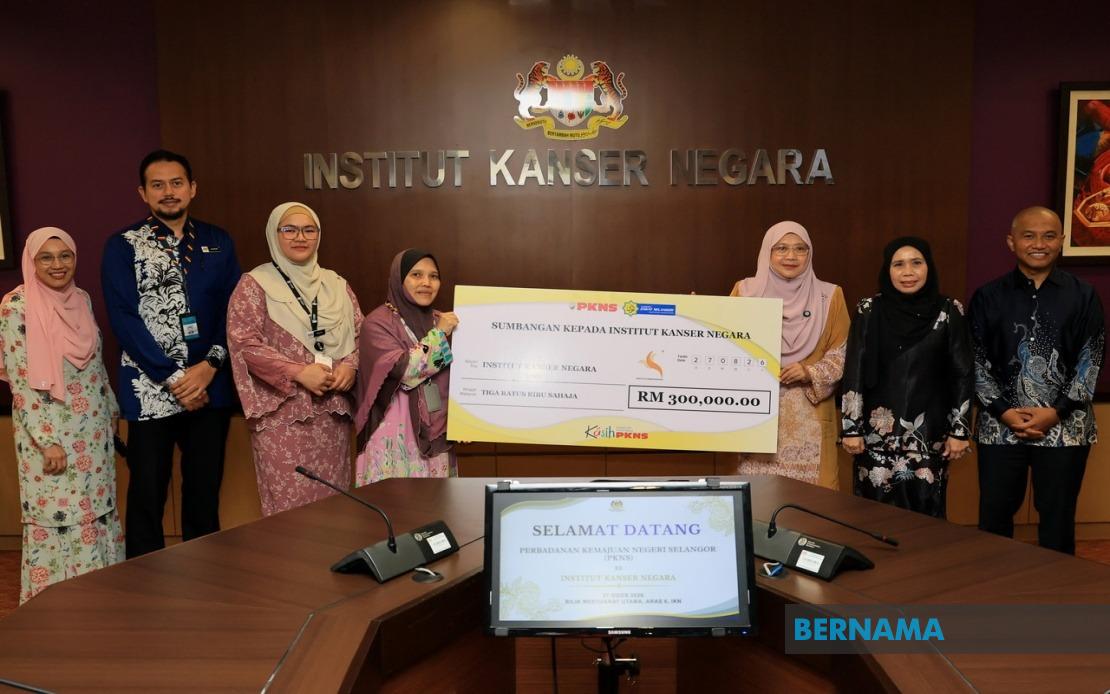
The Selangor State Development Corporation (PKNS) has announced a RM300,000 contribution aimed at alleviating the financial strain experienced by between 50 and 100 cancer patients receiving care at the National Cancer Institute (IKN) in Putrajaya. The allocation represents a significant gesture from the state development agency, reflecting growing corporate sector involvement in addressing the healthcare challenges faced by vulnerable patient populations across Malaysia's healthcare system.
The contribution emerges from a partnership between PKNS and the Selangor Zakat Board (LZS), structured through a corporate social responsibility initiative utilising wakalah zakat mechanisms. This collaborative framework demonstrates how institutional and religious financing structures can be mobilised to address contemporary medical needs. Notably, the assistance has been specifically designed for eligible Muslim cancer patients classified under the asnaf al-Gharimin category, ensuring that support reaches those facing genuine financial hardship.
Sapna Turmidi, senior general manager of PKNS Corporate Services and chairperson of the PKNS Zakat Management Committee, articulated the broader philosophy underpinning this initiative during the formal presentation ceremony. She emphasised that providing support extended beyond mere monetary transfers, encompassing emotional encouragement and affirming to patients that they remain part of a broader community network. Her remarks underscored an emerging recognition among Malaysian institutions that cancer treatment involves dimensions beyond clinical intervention, including psychological and financial resilience.
The personal tragedy that prompted PKNS to take action reveals the human dimensions underlying corporate decision-making. A PKNS staff member diagnosed with glioma in February succumbed to the disease four months later at IKN, an experience that galvanised organisational reflection on the vulnerability of cancer patients. This loss prompted internal discussions about corporate responsibility and the organisation's capacity to meaningfully contribute to a sector where personal and financial crises frequently coincide. The decision reflects how institutional memory of individual suffering can translate into systemic support initiatives.
Dr Nur Aslina Bahakodin, director of the National Cancer Institute, contextualised the funding contribution within IKN's broader financial landscape, noting that the institute requires between RM1 million and RM2 million annually to adequately support underprivileged patients navigating their treatment journeys. Financial constraints frequently force patients to make devastating choices, including postponing follow-up appointments critical to treatment effectiveness. The ripple effects of such disruptions extend beyond individual patients, potentially affecting cancer survival outcomes and overall institutional efficacy in managing Malaysia's cancer burden.
The scope of assistance that IKN provides extends far beyond pharmaceutical costs or surgical fees. Beneficiaries receive support for medical equipment, essential supplies, transportation expenses to and from appointments, specialised nutritional requirements tailored to individual conditions, and welfare provisions for family members managing their own crises during treatment periods. This comprehensive approach acknowledges that cancer imposes multi-dimensional burdens on households already economically marginalised. PKNS funding will be administered through IKN's Medical Social Work Unit, which will conduct detailed socio-economic assessments to ensure resources reach those facing the greatest hardship.
The contribution coincides with PKNS' 62nd anniversary, observed on August 1. Originally established in 1964, PKNS has evolved into a Selangor-based development entity implementing initiatives directed toward socio-economic advancement and population welfare throughout the state. The organisation's decision to channel anniversary commemorations toward cancer patient support signals a reorientation of institutional celebrations toward tangible community benefit rather than ceremonial observance.
From a public health perspective, Dr Nur Aslina highlighted the paradoxical relationship between rising cancer detection rates and genuine positive developments in Malaysian healthcare. Increased case identification reflects expanded screening programmes and heightened public awareness rather than deteriorating population health. Early detection fundamentally alters treatment trajectories and survival probabilities, with patients identified in initial stages experiencing substantially improved outcomes. Breast cancer remains the predominant malignancy among Malaysian women, whilst colorectal cancer leads incidence rates among men, patterns reflecting both genetic susceptibility and lifestyle factors increasingly prevalent in middle-income populations.
The emphasis on early detection carries profound implications for Malaysian health policy. Patients identified through screening programmes often qualify for less aggressive interventions and experience shorter treatment periods, reducing overall healthcare expenditure and improving quality-of-life outcomes. However, this advantage accrues primarily to populations with regular healthcare access and financial capacity to pursue screening recommendations. Individuals in economic distress frequently present with advanced-stage disease after symptoms become severe, necessitating more intensive and costly interventions with lower success probabilities. PKNS' funding addresses this disparity, enabling vulnerable patients to complete recommended treatment sequences without financial abandonment.
Corporate contributions such as PKNS' commitment reflect broader shifts in Malaysian institutional engagement with healthcare financing. State governments and statutory bodies increasingly recognise that public healthcare systems alone cannot adequately address patient support across all dimensions, creating space for well-coordinated private sector collaboration. The integration of zakat mechanisms into corporate giving demonstrates how Islamic financing principles can address contemporary healthcare challenges. This model potentially offers replicable frameworks for other Malaysian institutions, state development agencies, and corporate entities seeking meaningful healthcare sector engagement.
For Malaysian readers and regional observers, PKNS' initiative exemplifies an important principle: cancer represents not merely an individual medical crisis but a collective social responsibility. As Malaysia transitions toward higher-income classification, ensuring that economic vulnerability does not determine treatment outcomes remains fundamental to legitimate development. The partnership between institutional funding, religious principles, and medical expertise suggests pathways through which resource constraints need not invariably dictate whether patients access necessary care. Sustained expansion of such collaborative models across Malaysia's state development corporations and corporate sector could substantially mitigate financial barriers preventing vulnerable patients from completing cancer treatment protocols.

