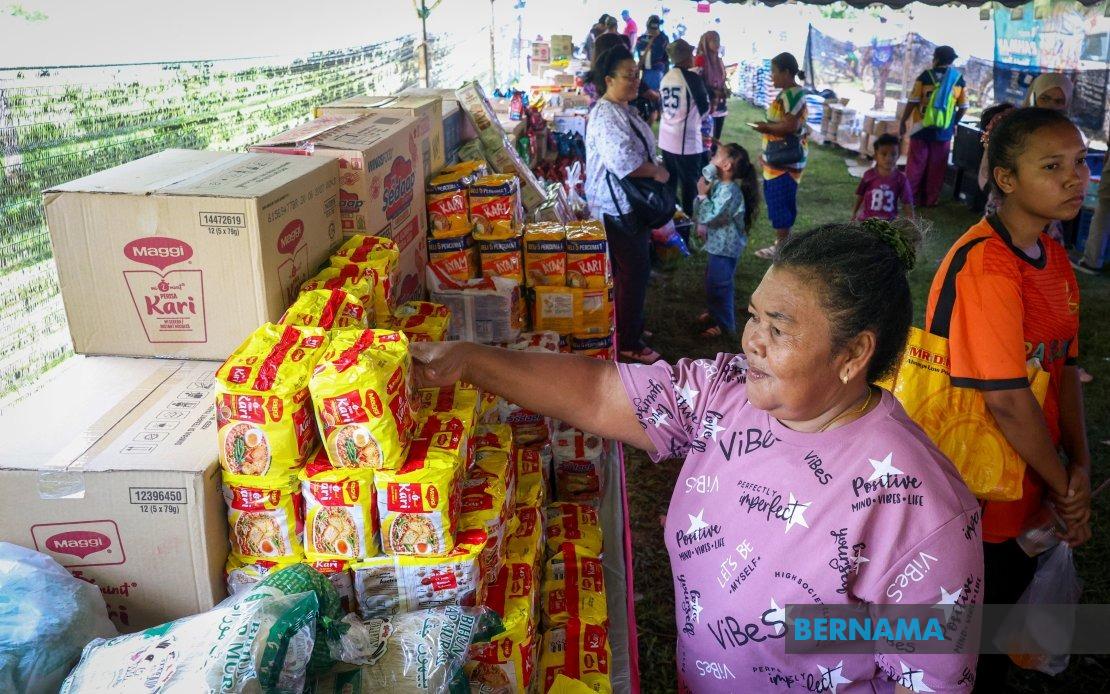
Over 1,000 Temiar Orang Asli residents living at the Pasik Resettlement Scheme in Gua Musang now have direct access to subsidised essential goods through the Rahmah MADANI Sales Programme, or PJRM, eliminating the need for exhausting journeys to distant markets. The initiative represents a significant step towards bringing government-supported commerce into one of Peninsular Malaysia's most isolated indigenous communities, where geographical remoteness has long forced residents to accept inflated prices or undertake arduous travel to access basic supplies at reasonable costs.
The impact of this convenience cannot be overstated for residents like Ramli Chimbong, a 51-year-old farmer from Kampung Ayong within the scheme. Previously, obtaining staples such as rice, cooking oil and sugar through PJRM required a gruelling two-and-a-half-hour journey to Kampung Jerek, coupled with vehicle rental expenses and meal costs that together consumed at least RM600 per trip. The financial and physical toll of these expeditions represented a substantial burden on household budgets already stretched by limited employment opportunities in the remote settlement. Now, with the programme operating locally, residents can shop for necessities without incurring these cumulative transportation and logistics costs, effectively stretching their purchasing power considerably further.
Price comparisons illustrate the tangible savings residents now enjoy. A nine-kilogramme bag of rice, previously commanding prices up to RM40 in village shops, now costs only RM29 through PJRM—a reduction of nearly 28 percent that compounds significantly when multiplied across a household's monthly grocery needs. Such discrepancies between remote retail outlets and government-subsidised programmes reflect the inherent logistical inefficiencies and profit margins that characterise commerce in isolated areas, where supply chains are longer, transportation costs are higher, and consumer choice is severely limited. The availability of cheaper alternatives directly improves household financial resilience and food security for families living on modest incomes.
SMS Maju Solution, the operator managing the PJRM rollout at Pasik, brought a comprehensive inventory featuring 100 varieties of essential goods to the initial distribution event. The operator stocked 300 bags of rice, 300 trays of eggs and 300 live chickens, anticipating strong demand from the resident population. The early morning rush—with residents arriving as early as 9 am—underscored the pent-up demand for affordable goods in the community and the population's eagerness to access the programme. This reception demonstrates that the accessibility gap identified by government policymakers reflects genuine hardship rather than abstract statistical concern.
A striking finding emerged regarding residents' existing SARA credit balances. Many community members retained substantial unused funds within their MyKad accounts, with balances typically ranging between RM300 and RM800—amounts that position them to make meaningful purchases but that had remained underutilised due to the practical barriers involved in reaching distant programme outlets. The availability of RM100 balances was noted as exceptionally rare, suggesting that either residents had already spent down lower allocations or that the Rahmah Basic Contribution had been distributed at levels sufficient to meet immediate needs when utilised. This reservoir of dormant purchasing power represents both an opportunity for government subsidy programmes to achieve their intended impact and a window into how accessibility fundamentally shapes the effectiveness of social support initiatives.
Operational challenges emerged even during this inaugural event, foreshadowing the difficulties that supply chain logistics present in rural indigenous areas. A vehicle transporting supplies suffered a tyre failure attributed to the rocky and muddy road conditions characteristic of the settlement's infrastructure. While ultimately surmountable, such incidents highlight the ongoing infrastructure deficits that constrain commerce and development in Orang Asli communities. These conditions affect not only government programmes but also private sector willingness to establish permanent retail operations, creating a cycle in which isolation perpetuates limited access to markets and services.
Nenggiri assemblyman Mohd Azmawi Fikri Abdul Ghani framed the PJRM expansion within the broader policy objective of helping rural communities navigate sustained increases in living costs. His comments reflected official recognition that inflation disproportionately affects low-income households in remote areas, where wage growth lags urban centres and employment diversification remains limited. The Rahmah MADANI initiative represents an attempt to mitigate this pressure through direct price interventions rather than income enhancement—an approach with both strengths and limitations depending on the sustainability of subsidy funding and programme expansion.
The assemblyman expressed explicit support for scaling similar initiatives across all Orang Asli settlements, acknowledging that current coverage remains incomplete. This statement indicates that Pasik represents one of multiple potential locations where such programmes could be deployed, and that further expansion remains contingent on resource allocation and political prioritisation. The Orang Asli population encompasses diverse settlements with varying degrees of remoteness and accessibility, suggesting that a one-size-fits-all implementation would require careful adaptation to local conditions.
The PJRM programme's expansion to Pasik carries implications extending beyond immediate consumer convenience to encompass broader questions about inclusive economic policy in Malaysia's most marginalised communities. Indigenous settlements have historically experienced economic exclusion manifesting through limited employment opportunities, inadequate infrastructure, and restricted access to markets—conditions that perpetuate intergenerational poverty cycles. Interventions that reduce the transaction costs associated with accessing government support programmes represent incremental progress toward more equitable service delivery, though they address symptoms rather than underlying structural challenges related to employment, education and infrastructure development.
For Malaysian policymakers monitoring implementation of Rahmah MADANI initiatives across different demographic groups and geographic areas, the Pasik experience provides instructive data regarding uptake patterns, pricing impacts and operational feasibility. The strong community response and substantial existing SARA balances suggest that accessibility—rather than consumer awareness or benefit generosity—represents the primary constraint limiting programme effectiveness in isolated communities. This insight could inform decisions about allocating mobile distribution resources or establishing semi-permanent retail outlets in other remote settlements, potentially multiplying the programme's social impact without substantially increased expenditure.
Looking forward, the sustainability of PJRM operations in remote areas depends on balancing government subsidy commitments against the genuine logistics costs involved in serving dispersed, low-density populations. Private sector participation, as evidenced through SMS Maju Solution's involvement, remains essential for programme viability, as government capacity alone cannot realistically manage distribution logistics across all settlements simultaneously. The success of the Pasik initiative will likely influence both community expectations regarding government support and official willingness to commit further resources to scaling similar programmes, establishing either a pathway toward broader coverage or constraints limiting expansion.

