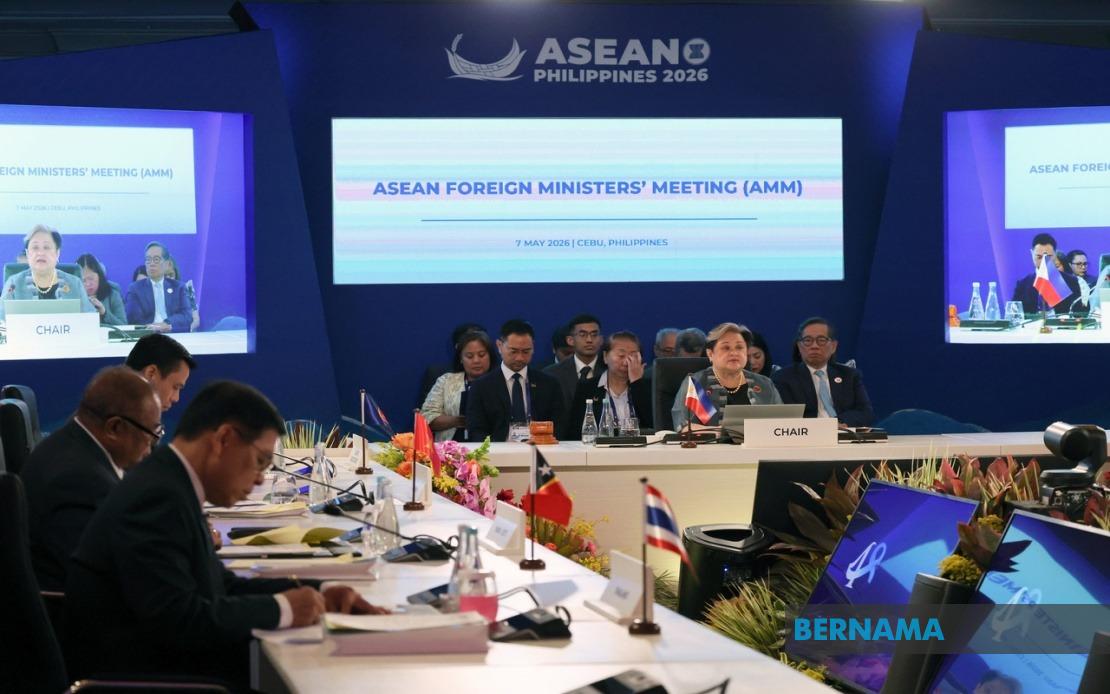
The Philippines has signalled support for a recalibrated approach to ASEAN's flagship Myanmar peace framework, arguing that its implementation must become more responsive to conditions on the ground without diluting the bloc's core commitment to resolving the crisis. Speaking in an interview, Philippine Foreign Affairs Secretary Ma. Theresa P. Lazaro emphasised that while the Five-Point Consensus remains ASEAN's cornerstone policy on Myanmar, member states must be willing to reassess how they operationalise the plan to generate tangible progress rather than symbolic gestures.
The Five-Point Consensus, adopted in April 2021 in the immediate aftermath of Myanmar's military coup, establishes five pillars that ASEAN deems essential for resolving the political impasse. These include an immediate halt to all violence, the initiation of inclusive dialogue involving all contending parties, the deployment of an ASEAN Special Envoy to broker negotiations, the delivery of humanitarian assistance to affected populations, and sustained engagement by the envoy with every stakeholder in the Myanmar conflict. Now more than three years into the crisis, questions have emerged about whether rigid adherence to this framework—designed in a different context—adequately addresses the current complexities of Myanmar's fractured landscape.
Lazaro's position reflects a growing debate within ASEAN capitals about the gap between stated principles and practical outcomes. She stressed that the Philippines does not seek to abandon the Five-Point Consensus but rather to sharpen the focus of ASEAN's actions so they respond meaningfully to developments as they unfold. This distinction is significant: it acknowledges that peace frameworks require flexibility without suggesting that foundational commitments should be negotiable. The challenge lies in determining which elements deserve reconsideration and which must remain fixed to preserve ASEAN's credibility and consistency.
The question of Myanmar's participation in ASEAN functions has emerged as a particular pressure point. Since the military's ouster of Aung San Suu Kyi in February 2021, ASEAN has enforced a graduated exclusion policy: Myanmar's top military and civilian leaders have been barred from attending summits, though lower-level non-political representatives may still participate in some forums. According to Lazaro, any restoration of Myanmar's full representation would hinge on demonstrable progress across three specific areas: tangible de-escalation of armed conflict, evidence of good-faith dialogue among Myanmar's competing factions, and meaningful delivery of humanitarian assistance to civilians caught in the crossfire. This creates a framework for assessing progress without setting arbitrary timelines that could prove unrealistic.
The annual ASEAN Leaders' Review and Decision on the Implementation of the Five-Point Consensus provides the institutional mechanism through which member states evaluate Myanmar's trajectory. This annual stocktake is designed to offer regular opportunities for ASEAN to calibrate its approach, refresh its assessment of whether conditions are improving or deteriorating, and adjust strategies accordingly. For the Philippines, now holding the ASEAN Chair, this represents an opportunity to convene member states for serious conversations about the direction and intensity of ASEAN's Myanmar engagement moving forward.
Malaysia's Foreign Minister Datuk Seri Mohamad Hasan had previously signalled similar thinking, noting in late June that ASEAN was actively exploring fresh approaches to strengthen Five-Point Consensus implementation. Malaysia's emphasis on continued engagement with all stakeholders—a coalition including Myanmar's military government, the National Unity Government formed by civilian and ethnic minority leaders, the People's Defence Force militia, and various ethnic armed organisations—highlights ASEAN's commitment to inclusivity despite the military regime's isolation from high-level meetings. This selective engagement approach walks a delicate line: maintaining channels of communication with the military junta while supporting non-state actors who contest its legitimacy.
For Malaysia and other Southeast Asian nations, the Myanmar crisis represents both a humanitarian catastrophe and a complex diplomatic challenge. The ongoing conflict has generated hundreds of thousands of internally displaced persons, disrupted cross-border communities, and created ungoverned spaces that could attract transnational criminal networks or insurgent groups. ASEAN's non-interference tradition ordinarily shields member states from external pressure to intervene in neighbours' internal affairs, yet the scale and duration of the Myanmar crisis—and its capacity to destabilise the broader region—test the limits of that doctrine. A pragmatic recalibration of the Five-Point Consensus reflects ASEAN's attempt to remain relevant and proactive without crossing into coercive intervention.
The tension between maintaining principle and adapting to reality is particularly acute because Myanmar's trajectory remains deeply uncertain. The military regime shows no signs of capitulating to pressure for restoration of civilian governance, ethnic armed organisations control significant territory in border regions, and the National Unity Government lacks the military capacity to overthrow the junta independently. In such circumstances, ASEAN's framework must acknowledge that immediate resolution is unlikely whilst simultaneously keeping diplomatic channels open and maintaining pressure for incremental improvements in violence cessation and humanitarian conditions.
From a Southeast Asian perspective, what happens in Myanmar matters enormously for regional stability and credibility. Thailand, Laos, and Cambodia—nations that share borders or strong historical ties with Myanmar—are directly affected by conflict spillover. Brunei, Indonesia, Singapore, and Vietnam have legitimate interests in preventing Myanmar from becoming a failed state or a platform for destabilisation. ASEAN's approach must therefore balance the interests of frontline states heavily impacted by the crisis with the sensitivities of member states that prioritise non-interference norms.
The Philippines' advocacy for pragmatic flexibility suggests that ASEAN is moving toward a more nuanced middle ground: maintaining the Five-Point Consensus as an aspirational framework whilst gradually accepting that implementation timelines may be longer and interim milestones more modest than originally hoped. This does not represent a triumph for the Myanmar military, which remains isolated and faces international sanctions, nor does it abandon hope for eventual political transition. Rather, it reflects a mature acknowledgement that deep structural changes in Myanmar cannot be forced through ASEAN diplomacy alone and that the bloc's role is to encourage incremental progress, support affected populations, and prevent further deterioration.
As the Philippines assumes its ASEAN Chair responsibilities, its commitment to reassessing the Five-Point Consensus implementation whilst reaffirming the framework itself indicates a bloc attempting to navigate between competing imperatives: principled opposition to the coup, pragmatic acknowledgement of political realities, and responsibility for preventing regional destabilisation. Whether this approach ultimately generates the momentum needed to restore meaningful progress toward civilian rule and conflict resolution will largely depend on Myanmar's own internal dynamics rather than ASEAN's diplomatic finesse. What remains clear is that ASEAN will not abandon Myanmar, but nor will it exhaust itself in futile efforts to impose outcomes that can only emerge from within Myanmar itself.

