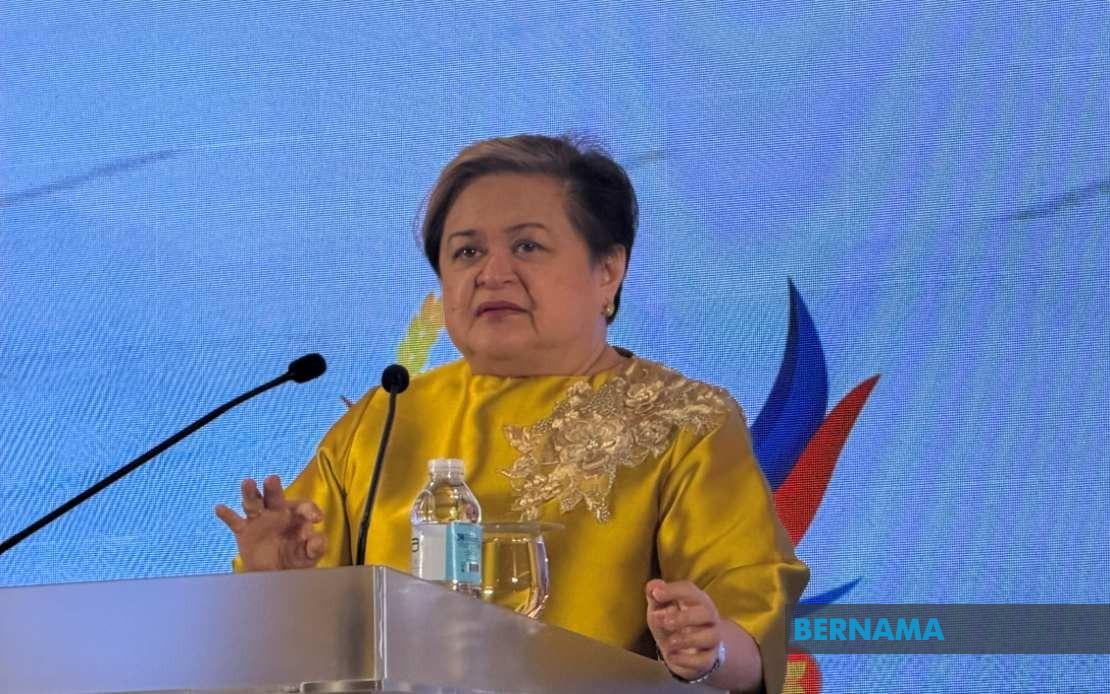
The Philippines has made an urgent appeal to ASEAN member states to bolster defences protecting the region's vital maritime corridors, particularly in light of mounting geopolitical tensions that threaten to disrupt international commerce. Speaking to Bernama, Philippine Foreign Affairs Secretary Ma. Theresa P. Lazaro stressed the interconnected nature of regional prosperity, arguing that any significant interference with shipping lanes could cascade into severe economic consequences affecting multiple countries across Southeast Asia. The timing of Manila's intervention reflects deepening anxiety about maritime security as external powers expand their activities in contested waters and chokepoint shipping routes that are essential to global trade flows.
Recent disruptions in the Strait of Hormuz have provided a sobering case study for what could happen if similar incidents were to occur in Southeast Asian waters. When major shipping arteries are blocked or subjected to attacks, the immediate consequence is spiralling energy costs that ripple through entire economies. This phenomenon extends beyond fuel prices alone; higher transportation costs drive up inflation across food and consumer goods, destabilise budgets for businesses heavily reliant on just-in-time supply chains, and create cascading effects that disproportionately harm smaller economies with limited fiscal buffers. For ASEAN nations, many of which are net importers of essential commodities, such disruptions pose an existential threat to food and energy security that cannot be ignored or treated as a distant risk.
Lazaro emphasised that ASEAN's vulnerability stems partly from its deep integration into global supply networks. The region's prosperity depends on maintaining predictable, uninterrupted access to international markets and reliable transit corridors. Southeast Asian manufacturers, agricultural exporters, and resource producers have built business models premised on the assumption that goods can flow freely across maritime borders. Disruptions force production delays, increase overhead costs, and reduce competitive advantage relative to manufacturers in other regions with more stable maritime environments. The cumulative effect damages the entire regional ecosystem, from multinational corporations operating manufacturing hubs to small and medium enterprises embedded in complex supply chains.
In response, Lazaro outlined a comprehensive framework for regional maritime resilience that extends far beyond traditional naval patrols and coast guard operations. She advocated for ASEAN to prioritise maintaining open, secure sea lanes as a fundamental public good, but recognised that physical security alone is insufficient without parallel efforts to strengthen underlying supply chain architecture. This means investing in port infrastructure, developing redundant logistics networks that can absorb shocks, and building diversified sourcing patterns that reduce dependency on single corridors. Energy security received particular emphasis, with Lazaro arguing that ASEAN must collectively work toward reducing vulnerability to supply disruptions through strategic coordination of energy sourcing, investment in renewable capacity, and shared emergency reserve mechanisms.
The Philippine foreign minister called for enhanced crisis communication and coordination protocols operating at the foreign ministers' level, enabling ASEAN to mount rapid, unified responses when maritime emergencies occur. Currently, individual countries often operate independently during crises, leading to fragmented responses that lack coherence and can inadvertently worsen situations. A formal, pre-agreed communications framework would establish clear lines of authority, agreed procedures, and shared situational awareness that transforms ASEAN from a collection of individual responders into a coordinated regional bloc capable of presenting unified diplomatic positions and executing coordinated operational responses. Such protocols would be particularly valuable during acute crises when decision-making windows are narrow and hesitation costs are high.
Lazaro proposed establishing more robust technical cooperation mechanisms, with particular emphasis on information-sharing and early warning capabilities. ASEAN nations possess substantial maritime monitoring assets—radar systems, satellite imagery, port authorities with real-time shipping data—that remain largely siloed within national borders. Pooling this intelligence across the region would enable collective threat detection far superior to individual national capabilities, allowing the bloc to identify emerging risks before they crystallise into crises. Early warning systems that flag unusual vessel movements, suspicious activities, or developing geopolitical tensions would provide policymakers with precious lead time to implement preventive measures or prepare contingency responses.
The Philippine government has proposed establishing an ASEAN Maritime Centre as a flagship deliverable under its 2026 ASEAN Chairship, marking a significant institutional commitment to maritime cooperation. This centre would serve as a centralised hub for coordinating maritime-related initiatives across ASEAN mechanisms and member states, eliminating duplicative efforts and ensuring coherent approaches to shared challenges. By housing technical expertise, facilitating knowledge exchange, and coordinating capacity-building programs, the centre could systematically strengthen maritime governance across the region while fostering deeper professional relationships among maritime officials from different countries.
For Malaysia specifically, this agenda carries particular weight given the country's central position within ASEAN and its own critical interests in maritime security. The Strait of Malacca, one of the world's most important shipping chokepoints, directly affects Malaysian interests as a transit state and as a nation whose own prosperity depends on uninterrupted international trade. Malaysian authorities have long recognised that unilateral action to secure the strait is insufficient; meaningful security requires coordination with Singapore, Indonesia, and other regional partners. The Philippine initiative aligns closely with Malaysia's existing security concerns and provides a multilateral framework through which Malaysian interests can be advanced collectively rather than pursued through competing bilateral channels.
Lazaro underscored that openness, transparency, and predictability form the essential foundation upon which confidence in regional maritime commerce rests. Shipping companies, traders, and investors make decisions about routing cargo and deploying capital based on expectations about safety and stability. When uncertainty increases, business models become uneconomical, and capital flows redirect toward more stable regions. Conversely, when ASEAN projects unified commitment to maintaining secure, transparent, rule-based maritime arrangements, it becomes a more attractive destination for international investment and trade. The economic benefits of establishing a reputation as a stable, cooperative maritime region extend far beyond maritime security itself, affecting broader foreign investment decisions and trade patterns.
The Philippines' initiative reflects broader recognition within ASEAN that maritime security and economic prosperity are inseparable concerns in the contemporary geopolitical environment. As external powers compete for influence in Southeast Asian waters and as non-traditional threats including piracy, smuggling, and environmental degradation persist alongside traditional maritime security concerns, individual nations find their capabilities insufficient. Collective action through ASEAN mechanisms offers the only viable path to comprehensive maritime resilience that can withstand both deliberate disruptions and accidental shocks. By advancing this agenda during its 2026 chairmanship, the Philippines positions itself as a leader in addressing one of the region's most consequential challenges while building institutional capacity that will benefit ASEAN for years to come.

