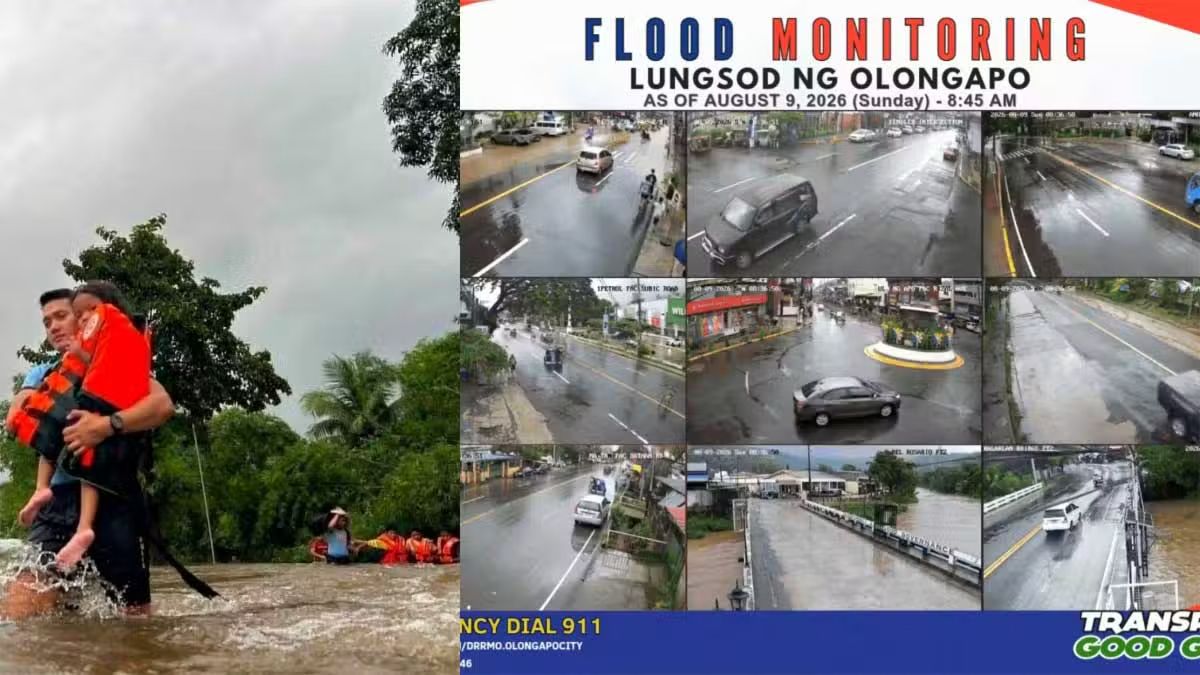
Authorities in the Philippines have declared a disaster response on a massive scale, deploying additional personnel and equipment to flood-affected areas as the southwest monsoon, locally known as the habagat, intensifies across the archipelago. The situation has been compounded by two tropical cyclones that have converged with the seasonal weather pattern, triggering evacuations in vulnerable communities from Luzon to Mindanao and forcing rescue teams into round-the-clock operations.
According to the National Disaster Risk Reduction and Management Council, the disaster has claimed at least nine lives and displaced approximately 382,000 people across 110,000 families, with the heaviest impact concentrated in eight regions spanning Luzon and Mindanao. The toll includes a police officer who died attempting to rescue two colleagues from a fast-moving river in Negros Occidental, underscoring the severity of the conditions facing both residents and responders. The weather phenomenon triggered by the convergence of Tropical Depression Luis and Tropical Storm Maymay, designated as Kujira in international nomenclature, has created dangerous conditions that authorities warn may persist through Wednesday of the following week.
The Philippine Atmospheric, Geophysical and Astronomical Services Administration issued warnings on Sunday evening predicting continued heavy rainfall, particularly in elevated and mountainous terrain where topography amplifies precipitation impact. The agency cautioned that communities which have already experienced significant accumulation face heightened risk of intensified flooding, suggesting that the worst impacts may still lie ahead as saturated ground loses its capacity to absorb additional water. This meteorological forecast represents the fourth consecutive day of warnings issued since Friday, reflecting the stubborn persistence of the weather disturbances affecting the nation.
Central Luzon has emerged as a particularly hard-hit region, with 98 villages inundated and nearly 170,000 individuals affected by the flooding. Pre-emptive evacuation operations have relocated 2,544 people from 781 families in Nueva Ecija and Zambales as authorities attempt to move vulnerable populations ahead of anticipated water level rises. In the Calabarzon region, which encompasses four provinces south of Manila, over 7,000 families have been affected, with more than 3,000 families sheltering in 117 evacuation centres spread across 29 localities, straining the capacity of local disaster response infrastructure.
The impact on critical water infrastructure reveals how interconnected the disaster becomes across provincial boundaries. The Angat Dam in Bulacan, which supplies much of the water for the Manila metropolis, has experienced a dramatic rise of nearly 15 metres in just ten days, climbing from a record low of 150.61 metres above sea level in late July to 164.80 metres on Sunday. The Ipo Dam located downstream has similarly approached critical levels, releasing enormous quantities of water—314.91 cubic metres per second—to manage inflows that continue accumulating as heavy rains persist across the watershed. These rising levels bring both relief and concern, as while they address the severe water shortage that had plagued the region, they simultaneously increase flooding risk in downstream communities.
Specific incidents underscore the dangers posed by the flooding across disparate provinces. A 28-year-old resident of Cuenca, Batangas, died after being electrocuted while traversing a submerged section of J.P. Laurel Highway in Lipa City, highlighting how floodwaters create invisible hazards beyond simple inundation. Seven additional fatalities resulted from separate drowning and landslide events scattered across multiple provinces including Ilocos Sur, La Union, Pangasinan, Benguet, and Rizal, with one victim being a minor. In Zambales, a dike breach in San Marcelino cut off entire communities after floodwaters and volcanic lahar created impassable conditions, while strong winds damaged at least eleven houses and destroyed a community multipurpose facility in San Antonio.
The flooding and associated disruptions have severely constrained movement and commerce throughout Luzon. Two bridges in Cagayan became impassable as the Chico River rose to dangerous levels, while landslides and rockfalls have closed critical roads in Nueva Vizcaya, Abra, and Mountain Province. In Iloilo City, what authorities suspect may have been a tornado generated by the monsoon system damaged at least 52 structures, toppled utility infrastructure, and displaced more than 150 residents. Maritime disruptions have compounded the transportation crisis, with the Philippine Coast Guard reporting that 543 passengers, truck operators, and cargo handlers remain stranded at 28 ports across four regions, effectively isolating some communities from supply chains and economic activity.
Police chief General Jose Melencio Nartatez Jr has urged residents to maintain composure while remaining vigilant, directing the Philippine National Police to deploy maximum personnel and resources toward evacuation and disaster response operations. He specifically cautioned the public against sharing unverified information circulating online, warning that misinformation campaigns can generate unnecessary panic that complicates evacuation efforts and strains emergency response capacity. This message reflects growing concern about social media's role in disaster situations, where rumours can spread faster than accurate information and influence public behaviour in ways that undermine coordinated response efforts.
The disaster has inevitably triggered political commentary, with the Makabayan coalition using the flooding as an occasion to criticise the Marcos Jr. administration's handling of infrastructure projects, particularly flood control systems that the coalition characterizes as inadequate. As budget negotiations for the 2027 fiscal year approach their critical phase, the coalition has called for scrutiny of how unprogrammed appropriations are allocated, expressing concern that discretionary spending mechanisms might be exploited for projects benefiting individual lawmakers at the expense of essential disaster prevention infrastructure. This political dimension reflects broader questions about resource allocation and whether the nation's infrastructure investments adequately address recurring natural disasters that strike with seasonal predictability.
The convergence of seasonal weather patterns with tropical cyclones demonstrates how multiple meteorological systems can amplify disaster impact beyond what any single system would produce independently. For Malaysian observers and regional readers, the Philippine experience offers cautionary perspective on monsoon-related hazards, as similar weather systems affect Southeast Asia's broader geography. The scale of displacement—382,000 people—underscores the human toll that poorly managed water infrastructure and inadequate disaster preparation can exact, suggesting that regional investment in flood prevention, early warning systems, and community evacuation capacity represents not merely humanitarian priority but essential economic protection.

