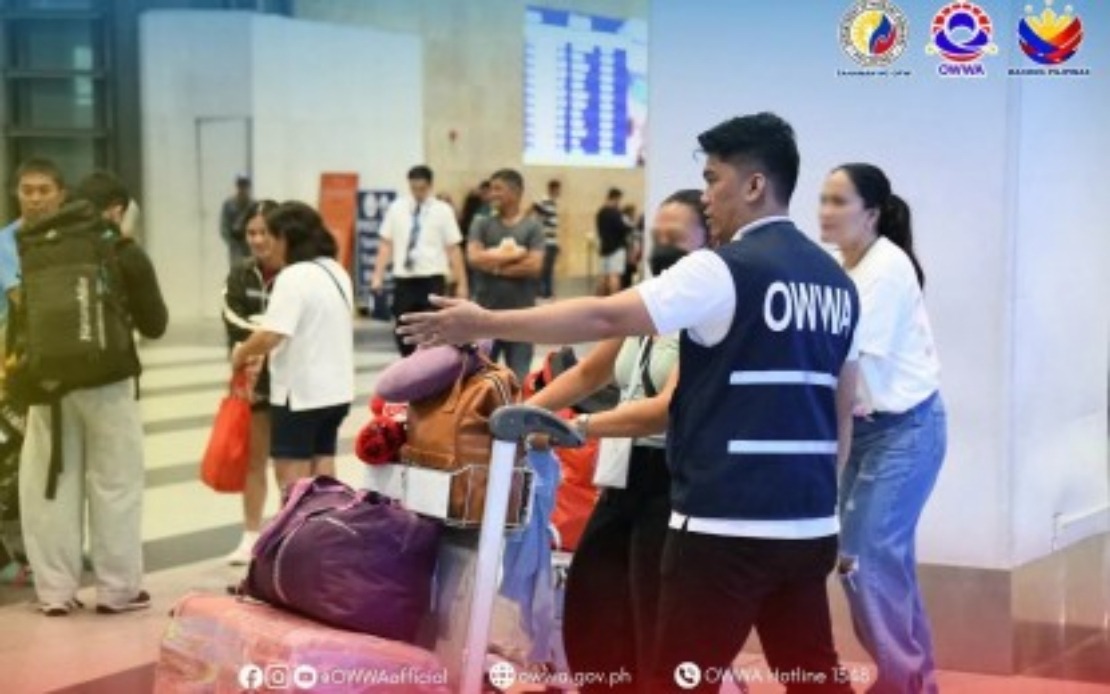
The Philippine Department of Migrant Workers has pledged sustained repatriation efforts for overseas Filipino workers attempting to leave conflict-affected regions of West Asia, underscoring that government support mechanisms remain fully operational regardless of fluctuating demand patterns. This commitment comes as the volume of workers seeking passage home has notably decreased from the elevated levels witnessed during the spring months, yet officials maintain that evacuation operations and related welfare services continue without interruption.
Undersecretary Felicitas Bay of the DMW outlined the shifting dynamics of the repatriation programme in a statement released on Monday, noting that while April and May represented periods of intensive evacuation activity, the current trajectory shows a marked reduction in requests without corresponding cessation of operational capacity. The distinction she drew reflects a normalisation of conditions rather than abandonment of vulnerable workers, suggesting that those most urgently requiring departure have largely completed their journeys whilst others may have elected to remain in their host countries.
As of early July, cumulative figures reveal that 10,580 migrant workers, overseas Filipinos, and family dependents have successfully returned to the Philippines since tensions escalated between the United States and Israel on one side and Iran on the other. This figure encompasses workers from multiple occupational backgrounds and geographic concentrations within West Asia, representing one of the largest coordinated evacuation movements the region has witnessed in recent years. The latest cohort included 50 individuals repatriated from Kuwait during the week preceding Bay's statement, demonstrating that even as overall numbers decline, the machinery of repatriation continues functioning systematically.
The Philippines maintains institutional machinery specifically designed to manage the complex logistics and welfare requirements inherent in large-scale worker evacuation. The Department coordinates actively with Migrant Workers Offices stationed throughout Gulf Cooperation Council member states, leveraging these regional presences to identify workers in distress, process repatriation requests, and address immediate welfare concerns. This distributed network proves essential given the geographic spread of Filipino labour across the Gulf and the necessity of maintaining local relationships with host-country authorities who ultimately grant exit permits and facilitate transportation arrangements.
Beyond merely processing departures, the DMW emphasises its commitment to welfare support for those who remain in West Asia by choice or circumstance. The coordinated approach through overseas MWOs ensures that Filipino communities throughout the region understand what assistance mechanisms exist, how to access them, and what constitutes legitimate government channels for seeking help. This emphasis on accessibility reflects recognition that many workers may lack clear information about their options during periods of regional instability.
For Malaysian and broader Southeast Asian audiences, the Philippine repatriation model offers instructive lessons about managing large diaspora populations during geopolitical crises. The region hosts millions of migrant workers whose livelihoods depend on Gulf employment, and coordinated repatriation capacities represent a critical dimension of national resilience planning. The Philippines' demonstration that such operations can be sustained over extended periods, adapting to changing circumstances whilst maintaining systematic rather than ad-hoc procedures, provides a template that other labour-exporting nations might consider.
Safety advisories constitute another pillar of the DMW's strategy, with officials explicitly urging workers to prioritise personal security by remaining in secure locations and adhering strictly to guidance issued by host-country authorities. This messaging acknowledges that repatriation cannot address all risk scenarios and that some workers will inevitably choose to weather uncertainty in place rather than undertake potentially hazardous travel arrangements. Bay's emphasis on compliance with local regulations reflects pragmatic recognition that Philippine workers remain subject to host-country legal frameworks and that cooperation with local authorities facilitates rather than complicates their protection.
Information governance has emerged as a recognised vulnerability in the repatriation context, with Bay explicitly cautioning workers against relying on unofficial or unverified sources when making decisions about evacuation. The proliferation of rumour, speculation, and deliberately misleading information during periods of regional tension creates environments in which workers may make poor decisions based on misinformation. Official communications from verified Philippine government offices abroad represent the only trustworthy foundation for critical decisions about whether to remain, depart, or access assistance.
The declining trajectory of repatriation requests may reflect several factors beyond mere stabilisation of regional conditions. Some workers have undoubtedly decided that the risks of remaining, whilst non-negligible, do not justify income loss and disruption associated with departure. Others may have relocated proactively during earlier peak periods or benefited from employer-arranged evacuations. The heterogeneous nature of the Filipino workforce across West Asia—spanning domestic workers, nurses, engineers, and labourers in construction and service sectors—means that risk perceptions and departure calculations vary substantially across occupational categories and individual circumstances.
Looking forward, the Philippine government appears to be calibrating its approach toward a sustainable long-term posture rather than treating repatriation as a temporary emergency measure. The maintenance of operational capacity despite reduced demand signals that policymakers anticipate potential renewed instability whilst avoiding the organisational and financial waste of maintaining surge capacity indefinitely. This measured approach reflects institutional learning from previous crises and suggests maturation of the DMW's crisis management capabilities.
For Filipino workers contemplating their positions in West Asia, the sustained availability of repatriation options provides genuine optionality without forcing immediate departure. Those who have assessed their circumstances and determined that employment continuation remains viable can proceed with that choice, whilst those experiencing deteriorating conditions, employment loss, or personal insecurity can access government-facilitated return. This flexibility ultimately serves both individual workers and Philippine national interests by enabling efficient matching of workers' preferences with available capacity and support resources.

