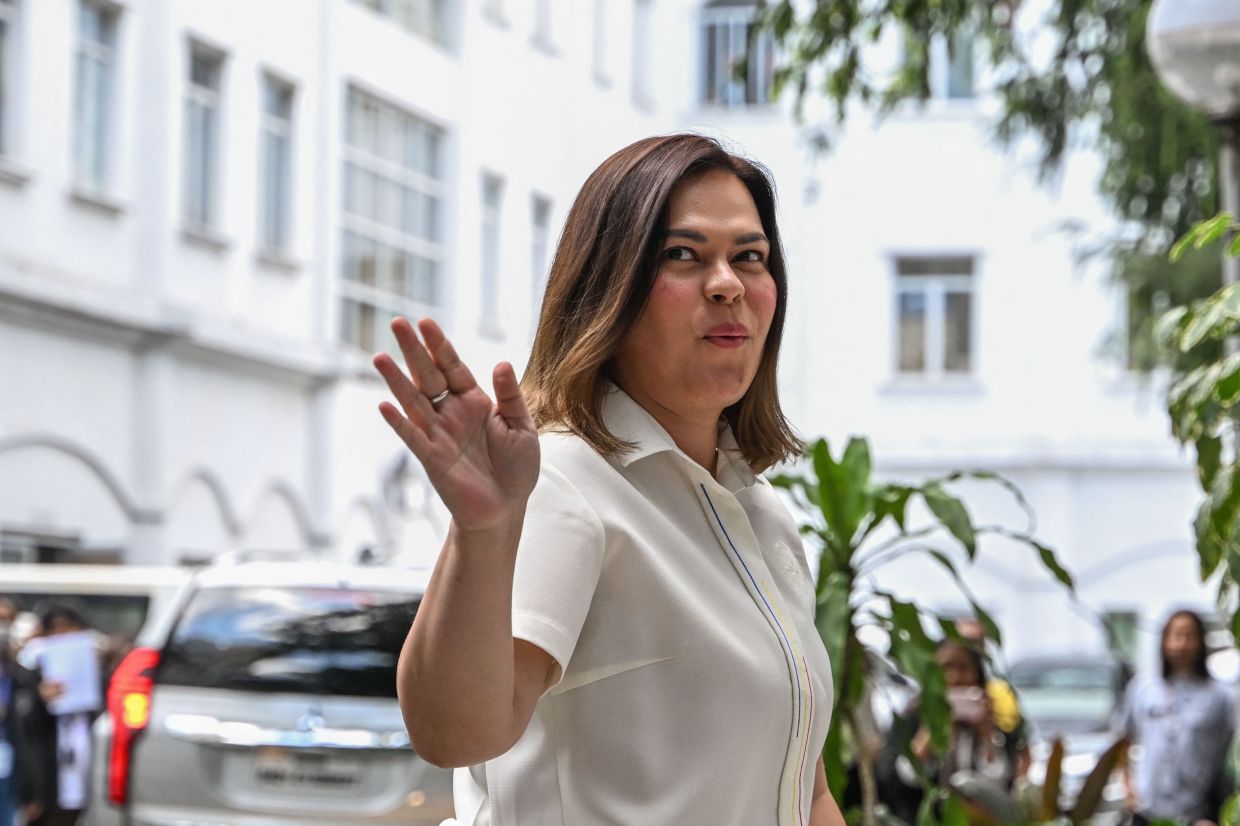
Vice President Sara Duterte is currently abroad on an officially sanctioned international journey that will keep her outside the Philippines until the end of July, the presidential palace announced on Tuesday. Palace spokesperson Claire Castro revealed at a media briefing that President Ferdinand Marcos Jr, acting through the Office of the Executive Secretary, granted Duterte permission for the extended trip spanning from July 16 through July 31. The vice president's itinerary encompasses a multi-country tour including stops in Qatar, Germany, the United Kingdom, Northern Ireland, and the Netherlands, with the trip classified as personal in nature by palace officials.
Duterte's current location is The Hague in the Netherlands, where her presence carries significant symbolic weight beyond typical diplomatic or leisure travel. Her father, former Philippine President Rodrigo Duterte, has been held in detention in the Dutch city since March of the previous year while preparing for trial proceedings before the International Criminal Court. The timing of the vice president's visit to The Hague, combined with her extended foreign absence, has drawn scrutiny given the concurrent impeachment proceedings taking place in the Philippine legislature.
The backdrop to these developments involves serious allegations against the former president relating to his tenure in national office and prior service as Davao City mayor. Rodrigo Duterte faces charges of crimes against humanity through his alleged indirect participation in thousands of extrajudicial killings that occurred during the government's aggressive anti-drug and anti-crime campaigns spanning 2011 through 2019. His ICC trial is scheduled to commence on November 30, establishing a lengthy waiting period during which the former leader remains in custody pending the international court process.
The former president's March arrest occurred following action by Philippine authorities acting on an ICC warrant, marking a dramatic reversal in the legal fortunes of one of Southeast Asia's most polarising political figures. His detention in The Hague represents a significant moment in international justice processes, particularly regarding enforcement of ICC warrants against sitting or former heads of state and government. The case has implications extending beyond the Philippines, touching on questions about national sovereignty and the reach of international courts across the region.
The approval for Duterte's extended foreign travel arrives during a particularly contentious period in Philippine domestic politics. Her defence counsel, lawyer Michael Poa, confirmed her current whereabouts during a press conference held before Tuesday's impeachment trial proceedings, noting that while she remains in The Hague at present, she would return to the country in due course. The specific timing of her return, however, was left unspecified in his public remarks.
The granting of presidential approval for the vice president's journey raises questions about parliamentary procedure and the normative expectations surrounding the conduct of government officials during impeachment trials. In conventional parliamentary democracies, questions frequently arise about whether officials facing serious charges should remain within their jurisdiction during judicial proceedings. The approval by President Marcos Jr, himself a lawyer and experienced politician, suggests an interpretation that such travel does not constitute an improper absence or obstruction of legislative processes.
The Netherlands and The Hague specifically hold particular significance in this context, functioning as the seat of the International Criminal Court and various other international legal institutions. The vice president's presence in this setting, particularly in proximity to her detained father, carries potential messaging implications both domestically and internationally regarding familial support and the Duterte family's continued political significance. Whether her visit carries diplomatic purposes, support for her father's legal defence, or purely personal motivations remains unclear from official statements.
The multi-country itinerary including stops across Western Europe underscores ongoing Philippine diplomatic engagement with European nations, a region with significant historical ties to the archipelago nation. These connections remain relevant across trade, development assistance, human rights monitoring, and security cooperation frameworks. The vice president's presence in these jurisdictions, whatever the stated purpose of her visit, occurs against a backdrop of international scrutiny regarding Philippine governance and human rights records.
For Malaysian readers and Southeast Asian observers, the Duterte case carries broader implications regarding regional stability and the evolving relationship between national governments and international legal institutions. The detention of a former regional leader on ICC charges represents a precedent with potential consequences for senior politicians across the region who have faced allegations regarding security operations. The case highlights the expanding jurisdiction and enforcement capabilities of international courts, even in nations that have not formally ratified all relevant international agreements.
The impeachment proceedings against the vice president herself constitute a separate legal and political challenge, with the vice presidency holding significant constitutional weight in the Philippine system. Should these proceedings conclude with conviction and removal, the line of succession and broader governmental stability could face disruption. The continuation of these proceedings during her extended absence demonstrates that parliamentary processes proceed irrespective of her physical presence, though questions may arise regarding fairness and procedural propriety in her defence efforts.
Duterte's anticipated return before the July 31 deadline will mark her re-entry into the midst of these proceedings, at which point her defence team will need to re-engage with trial activities. Her legal representatives have indicated that the absence is temporary and not indicative of any intention to avoid the impeachment process. The defence strategy appears to frame the trip as a legitimate personal undertaking with appropriate executive authorization, rather than as evidence of flight risk or contempt for legislative authority.

