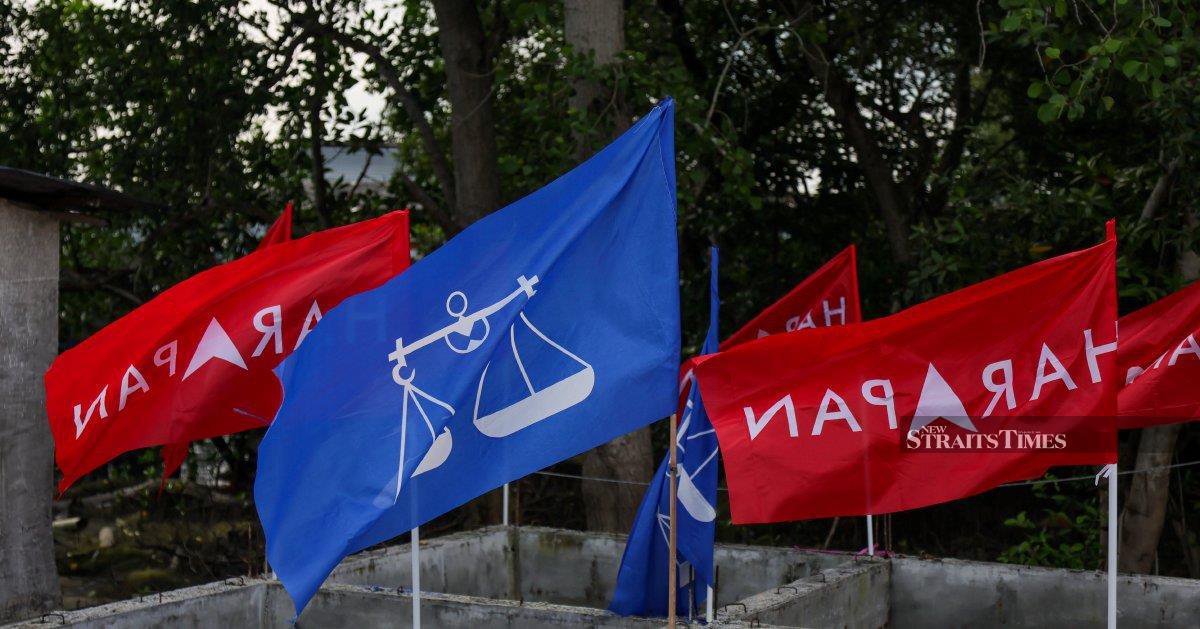
Malaysia's political fault lines have deepened after Pakatan Harapan's youth coalition publicly demanded the resignation of every Barisan Nasional minister and deputy minister serving in the Cabinet, marking an unprecedented rupture in the already fragile unity government arrangement. The provocative call reflects growing frustration within PH's younger leadership over what they characterize as fundamental betrayal of the coalition's founding principles through BN's willingness to cooperate with Perikatan Nasional across multiple state-level contests.
The underlying grievance centres on BN's decision to work alongside PN in electoral contests within Johor and Negri Sembilan, states where the three major coalitions have traditionally competed fiercely. From the perspective of PH's youth wing, this cooperation represents a strategic capitulation that contradicts the unity government's stated commitment to stability and cohesion. The positioning of PN alongside BN in these electoral theatres signals to many observers that the grand coalition arrangement holding the current Cabinet together may be becoming increasingly transactional rather than ideologically grounded.
The timing of this confrontation reveals deeper anxieties about the composition and durability of Malaysia's governing arrangement. Since the unity government's formation, BN has occupied several significant ministerial positions, including in economic and defence portfolios. Within PH's senior ranks, concerns have mounted that their coalition partners are simultaneously hedging their bets through alternative alliances, effectively maintaining optionality while drawing Cabinet salaries and access. For youth activists, this political manoeuvre appears duplicitous—participating in government while cultivating relationships with potential rivals.
Johor state elections represent particularly sensitive terrain for this dispute. As Malaysia's second-largest state and economic powerhouse, Johor's electoral outcome carries symbolic and practical significance far beyond its borders. BN's collaboration with PN in Johor contests suggests the two coalitions view themselves as more natural allies than previously acknowledged, a calculation that unsettles PH strategists who depend on BN's participation in the federal government to maintain their parliamentary majority and govern effectively.
Negri Sembilan, meanwhile, adds another dimension to this emerging conflict. The state's electoral fortunes will influence regional dynamics across the Klang Valley corridor and broader peninsular politics. PN's inclusion in electoral strategies for this state further demonstrates that BN leadership has evidently concluded that partnering with Islamist-oriented PN offers electoral advantages that outweigh loyalty to their federal government coalition partners.
The generational dimension of this dispute merits particular attention. PH's youth wing represents emerging party activists and younger voters who have historically supported the coalition's reformist messaging and commitment to governance principles. By publicly breaking with their older leadership's pragmatic approach to coalition management, youth activists are signalling dissatisfaction with backroom deals that prioritize short-term political convenience over substantive ideological alignment. This generational tension could complicate PH's internal cohesion heading into future electoral cycles.
For Malaysian politics broadly, this confrontation illuminates the inherent instability of consensus-based governance arrangements built on narrow parliamentary mathematics rather than shared programmatic vision. The unity government has always been understood as a temporary configuration necessitated by electoral fragmentation and the desire to exclude PAS from executive power. However, such marriages of convenience carry inherent contradictions when coalition members simultaneously cultivate external relationships that could reshape the political landscape.
BN's apparent strategy reflects a sophisticated reading of electoral geography and voter preferences across different state contexts. By cooperating with PN in Johor and Negri Sembilan while maintaining federal government positions, BN leadership may believe they can maximize their party's electoral competitiveness across multiple arenas. However, this approach assumes they can compartmentalize their political roles—a calculation that PH youth activists and potentially senior PH leadership view as fundamentally incompatible with honourable government participation.
The resignation demand, if taken seriously by BN ministers, would precipitate a major constitutional crisis requiring the Prime Minister to either accept their departures and reconstruct the Cabinet, or to resist the demand and risk further coalition fragmentation. Neither scenario appears politically palatable to the federal government, suggesting this confrontation will likely persist as low-level tension rather than explode into immediate crisis. Nevertheless, the willingness of PH youth to make such stark public demands indicates that patience with BN's political manoeuvres is wearing thin across the coalition's activist base.
Regionally, this Malaysian dispute echoes broader Southeast Asian patterns where ruling coalitions struggle to maintain coherence when component parties pursue divergent strategic interests. Thailand, Cambodia, and Indonesia have all experienced similar dynamics where coalition partners maintain public solidarity while privately pursuing alternative arrangements. Malaysia's experience suggests that consensus governance requires either genuine ideological alignment or robust institutional mechanisms for managing internal dispute—conditions that the current unity government appears to lack.
Looking forward, this confrontation will likely intensify pressure on BN to clarify its long-term political orientation and coalition loyalties. The youth wing's demands, while potentially unenforceable without broader party backing, serve notice that the internal costs of perceived duplicity are rising. Whether BN leadership responds through substantive dialogue with PH or doubles down on their pursuit of electoral flexibility through multi-coalition hedging will prove telling about the unity government's remaining lifespan and the Malaysian political system's evolution.

