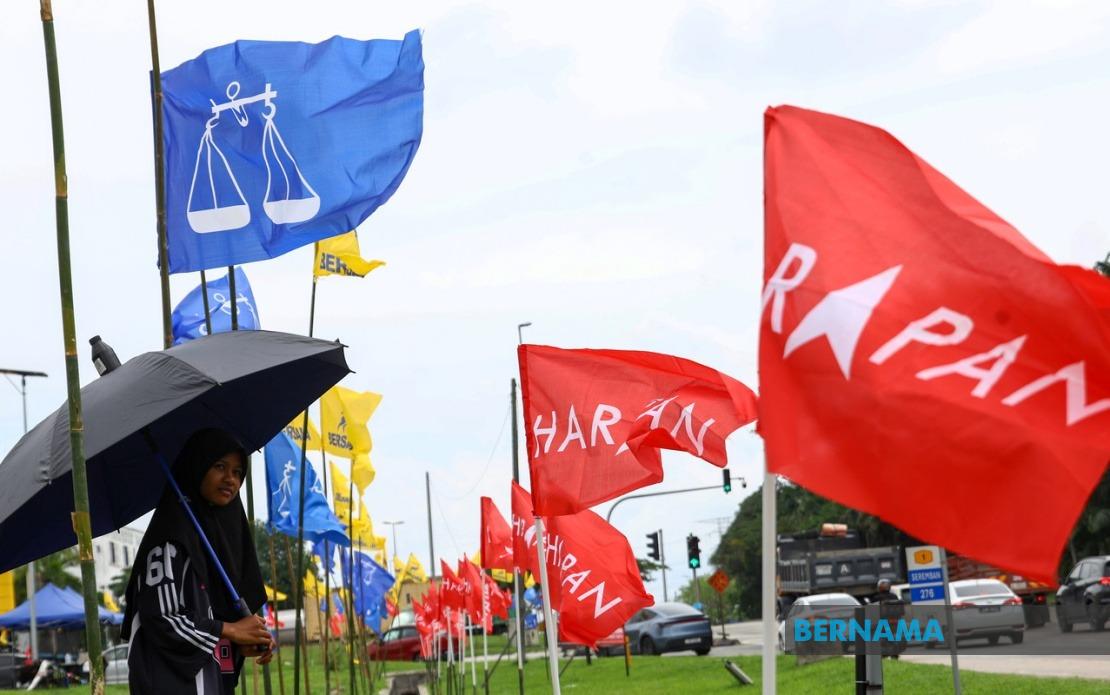
Pakatan Harapan's success in the Johor state election represents far more than a simple change of government—it is fundamentally about ensuring that power remains distributed and accountable within the state's political system, said DAP secretary-general Anthony Loke during a campaign dinner in Kluang. The remarks underscore the coalition's broader argument that voter choice matters not merely for replacing one administration with another, but for preserving the institutional safeguards that underpin democratic governance in Malaysia's second-largest state by population.
Loke articulated a concern that resonates across Malaysia's political landscape: the concentration of authority within a single political force erodes the natural friction required to keep government responsive and transparent. When one coalition commands overwhelming dominance, it effectively removes the opposition's capacity to scrutinise decisions, expose inefficiencies, or present alternative visions for policy direction. In Johor's context, where the ruling Barisan Nasional coalition has dominated state politics for decades, the argument becomes particularly pointed. Without credible opposition presence across multiple assembly seats, the mechanisms that force governments to justify their decisions to voters through competitive debate diminish substantially.
The three-coalition partnership bringing together PKR, DAP, and Amanah under Pakatan Harapan's banner reflects a strategic calculation that diverse representation strengthens rather than weakens governance. By fielding candidates across all 56 state assembly constituencies, Pakatan aims to establish sufficient parliamentary presence to mount meaningful challenges to government policy while demonstrating readiness to govern. This approach differs markedly from token opposition presence, which typically lacks the numbers to propose amendments, demand inquiries, or force substantive debate on legislative matters.
Loke's emphasis on stability through checks and balances touches on a paradox in Malaysian politics: many voters assume that single-party dominance equals stability, yet political science research consistently demonstrates that unchecked power correlates with corruption, policy inconsistency, and eventually institutional decay. When governments face no serious scrutiny from within the legislature, they become vulnerable to factional conflicts that play out destructively rather than through formal channels. The resulting instability often proves more damaging than the parliamentary friction generated by genuine opposition presence.
The electoral context heightens the significance of these arguments. The Johor state election, scheduled for July 11 with early voting on July 7, will see 172 candidates compete for 56 seats—a relatively contested race compared to some Malaysian state elections. This competitive environment means that voter choices genuinely translate into shifts in parliamentary composition. Unlike elections where outcomes appear predetermined, this contest offers Johor citizens a meaningful opportunity to reshape their state's political trajectory and, by extension, its institutional dynamics.
Pakatan Harapan's coalition structure itself embodies the principle Loke advocated for at the dinner event. The inclusion of multiple parties—each with distinct constituencies, policy emphases, and internal leadership dynamics—means that even within government, decision-making requires negotiation and consensus-building rather than unilateral directives. This internal diversity, while sometimes creating apparent inefficiencies, actually produces more robust policy outcomes because decisions must withstand scrutiny from multiple ideological perspectives before implementation.
For Malaysian observers, particularly those concerned with democratic erosion in the region, Johor's election carries implications beyond state boundaries. How Johor voters respond to arguments about checks and balances versus arguments about efficiency and single-party administration will send signals about democratic consciousness across the country. If voters embrace the case for distributed power and competitive politics, it validates the continued relevance of opposition politics in Malaysia. Conversely, if dominance-focused messaging proves more persuasive, it suggests declining appetite for the friction inherent to genuine democratic competition.
The participation of senior DAP figures including deputy national chairman Nga Kor Ming and deputy secretary-general Steven Sim Chee Keong at the Kluang event signals the coalition's recognition that this state election transcends routine electoral competition. Top party leadership engagement indicates that Pakatan views Johor as strategically crucial to its broader national positioning and its capacity to present itself as a genuine alternative government capable of managing a large, economically important state while maintaining democratic principles.
Johor's historical significance in Malaysian politics amplifies the stakes further. As the birthplace of Mahathir Mohamad's long political career and a traditional stronghold of Malay-Muslim political conservatism, Johor has represented the heartland of establishment politics. Any substantial shift in Johor's political orientation would represent a significant realignment in Malaysian politics more broadly, signalling that even traditionally conservative constituencies recognize value in political competition and institutional checks on executive power.
The underlying debate ultimately concerns what voters believe ensures good governance: concentrated authority that can implement decisions rapidly, or distributed power that forces deliberation and accountability. Loke's intervention in this debate frames Pakatan's campaign not as a bid for office but as a defence of democratic architecture itself—a framing that attempts to elevate the election beyond personality-driven politics or routine partisan competition into a question about how Johor and, by extension, Malaysia should organize political authority.

