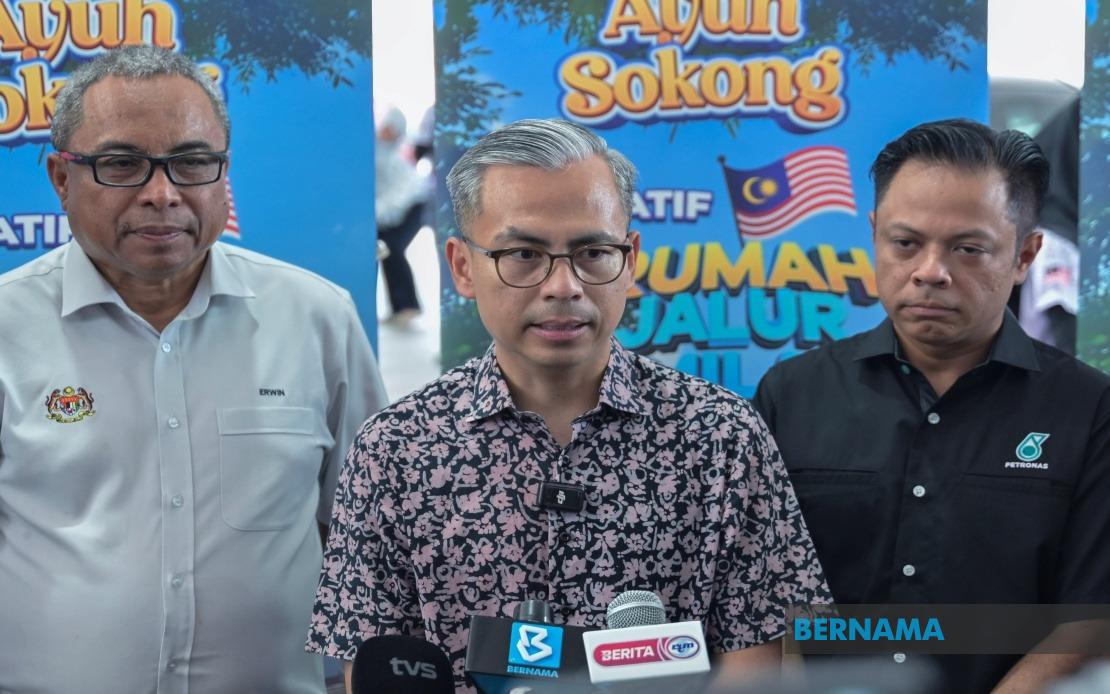
The political landscape in Melaka may be shifting following signals from both major coalitions that they are prepared to engage in substantive negotiations over seat allocation for the upcoming state election. Pakatan Harapan's communications director Datuk Seri Fahmi Fadzil has publicly endorsed Barisan Nasional's recent indication of flexibility regarding how legislative assembly seats should be apportioned between the two competing blocs, viewing the development as a constructive opportunity worthy of serious consideration.
Fahmi characterised BN's openness as significant not merely for the immediate electoral interests of either coalition, but for the broader imperatives of governmental stability and political maturity in Melaka. He emphasised that the state's long-term governance and Malaysia's national interests are intertwined with how the two coalitions manage their electoral competition. This framing suggests that PH is approaching the negotiations from a perspective beyond short-term seat maximisation, though the political realities of each organisation's own internal dynamics remain central to how discussions will unfold.
The current electoral mathematics in Melaka provide the backdrop for these negotiations. BN presently controls 21 seats in the state legislative assembly, while PH holds five seats, a substantial disparity that reflects the coalition's electoral dominance in the state. Fahmi acknowledged this numerical reality openly, suggesting that PH recognises the constraints within which negotiation must occur. Rather than pursue an unrealistic redistribution of power, PH appears focused on whether adjustments at the margins might improve its electoral positioning through strategic seat-sharing arrangements.
The direct engagement between PH's state leadership and Melaka's administration has already begun. Adam Adli, chairman of Keadilan Melaka—the party spearheading PH's efforts in the state—has maintained direct communication with Melaka Chief Minister Datuk Seri Ab Rauf Yusof regarding the allocation of state legislative assembly seats. These back-channel discussions suggest that both coalitions are pursuing negotiations through formal mechanisms rather than public posturing alone, a potentially more productive approach than conducted through media statements.
BN chairman Datuk Seri Dr Ahmad Zahid Hamidi articulated the coalition's negotiating position with clear parameters during recent remarks. BN expressed readiness to discuss not only the distribution of seats but even the potential exchange of seats between BN component parties and PH, provided such arrangements were conducted with genuine honesty and transparency. Ahmad Zahid explicitly stipulated that the foundation of any agreement must rest on respecting the seats legitimately won by each party, rejecting any notion that seats should be casually transferred between political partners without substantive justification.
This condition reflects a fundamental tension within coalition politics in Malaysia. While BN has indicated flexibility, it simultaneously seeks to protect the hard-won electoral gains of its component parties. The reservation that seats cannot be "simply handed over" suggests BN's awareness that any perceived surrender of contested seats could trigger internal friction among its constituent parties, each protective of its own territorial and electoral interests. For PH, this establishes both the opportunity and the constraint within which negotiations must operate.
Fahmi noted that various considerations could be managed across both state and federal levels to reach an accommodation on Melaka's seat distribution. This observation hints at the complex calculus that often characterises Malaysian coalition politics, where decisions at one administrative level may be linked to considerations at another. Whether federal-level arrangements might influence state-level seat allocations remains unclear, but Fahmi's comment suggests that both coalitions view this negotiation as potentially interconnected with broader political settlements.
The timing of these negotiations is significant within Malaysia's political calendar. State elections in individual states can function as testing grounds for coalition stability and as opportunities for recalibration of electoral strategies. A successful negotiation in Melaka might establish a template for how PH and BN manage electoral competition in other states, particularly those where neither coalition commands overwhelming dominance. Conversely, a breakdown in negotiations could signal to Malaysian voters that the two coalitions remain fundamentally adversarial despite their past cooperation in federal government formation.
For Malaysian observers, this development illustrates the pragmatic evolution of Malaysian coalition politics. Rather than approaching elections as all-or-nothing contests, both PH and BN appear willing to explore whether negotiated seat distributions might serve mutual interests. This approach potentially reduces electoral volatility and the acrimony that sometimes accompanies zero-sum political competition. However, it also raises questions about whether voters ultimately benefit from pre-arranged electoral mathematics or whether such arrangements insulate established parties from electoral accountability.
The Melaka negotiations also reflect the distinctive regional dynamics of the state itself. As a relatively compact state with specific demographic and political characteristics, Melaka provides a manageable arena for testing coalition protocols. The state's position as a potentially contested space—neither clearly dominated by one coalition nor genuinely competitive across all seats—makes it a natural location for this kind of strategic negotiation. How the two coalitions structure their arrangement here may have ripple effects across Malaysian electoral politics more broadly.

