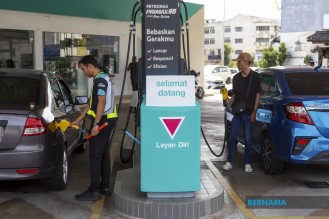
Malaysia's fuel supply situation remains on an even keel, at least through August, according to a statement delivered during this week's National Economic Action Council meeting. Datuk Seri Azalina Othman Said, the Minister in the Prime Minister's Department (Law and Institutional Reform), relayed reassurances drawn from official feedback provided directly by Petronas, the state-owned energy giant. The positive outlook addresses growing public concern about potential energy shortages in the region, particularly given geopolitical tensions affecting global crude oil markets and the broader consequences of the West Asia conflict.
The significance of maintaining adequate supplies cannot be overstated in Malaysia's economic context. Petronas Dagangan Bhd, the publicly listed subsidiary through which Petronas distributes fuel, operates a network accounting for roughly half of the country's domestic fuel consumption. This means that any disruption at the company's approximately 700 petrol stations nationwide would create immediate ripple effects throughout the economy, affecting transport operators, logistics firms, and everyday motorists. The fact that supplies are projected to remain stable and plentiful through August provides critical breathing room for both commercial enterprises and households to plan their operations without the anxiety of imminent fuel rationing or sharp price spikes.
The government has not left matters to chance, however. In response to the ongoing global energy crisis triggered by the conflict in West Asia, Malaysian authorities have established a dedicated Crisis Management Task Force under the auspices of MTEN. This body represents a proactive institutional response to energy volatility, incorporating multiple stakeholders responsible for different aspects of fuel distribution, refining, and strategic reserves. By centralizing coordination through such a mechanism, the government aims to respond more swiftly to any supply disruptions while maintaining the kind of strategic oversight necessary during periods of international instability.
The task force's remit extends beyond merely ensuring stocks do not run dry. It encompasses continuous surveillance of the country's fuel, petroleum, and energy supply positions, with an explicit mandate to lock in supply security for the months ahead. This monitoring function is particularly crucial given the unpredictable nature of geopolitical events; a sudden escalation in West Asian tensions could reshape crude oil availability and pricing within weeks. By maintaining real-time awareness of supply chains and inventory levels, the task force can alert decision-makers to emerging problems before they become crises affecting consumers at the pump.
Price control and market stability represent another critical dimension of the government's energy strategy. Beyond mere availability, authorities are focused on preventing sharp price fluctuations that could impose hardship on lower-income households already struggling with cost-of-living pressures. The task force works to balance this objective with the need to maintain sustainable pricing signals that keep the fuel retail sector economically viable. Equally important is the crackdown on fuel smuggling and irregular market activities that drain legitimate supplies and undermine the transparency of domestic markets. Such black-market operations divert resources away from official distribution channels and represent a loss of government revenue.
A particularly forward-looking aspect of Malaysia's energy security strategy involves diversifying crude oil sourcing away from traditional Middle Eastern suppliers. Government officials are actively negotiating purchases from alternative exporters in West Africa and the Americas, regions whose geopolitical situation and supply stability offer fewer risks than the currently troubled West Asian landscape. These negotiations naturally come with commercial and technical complexities; crude oil grades vary significantly by source, and buyers must ensure that alternative supplies are compatible with Malaysia's existing refinery infrastructure and specifications. The government appears willing to absorb some additional costs or accept marginal changes in refinery operations to reduce dependency on a single geopolitically volatile region.
The question posed by Khairil Nizam Khirudin, a Member of Parliament representing the Jerantut constituency under the Perikatan Nasional banner, touched on an important concern. Petronas had previously issued statements indicating that fuel supplies at its station network were guaranteed only through the end of June 2026, a timeline that prompted legitimate questions about what would happen thereafter. The minister's response shifted the conversation to a more immediate and reassuring timeframe of August, while implicitly acknowledging that the government is engaged in active planning for scenarios where global conditions might deteriorate. This suggests that contingency measures beyond simple reliance on existing stockpiles are being formulated, possibly including emergency rationing schemes, temporary fuel imports, or accelerated crude oil purchases.
For Malaysian readers and businesses, these developments carry several layers of significance. Domestically, the reaffirmation of supply stability through August provides a window of opportunity for industries to execute any necessary adjustments to their operations, whether that involves investing in fuel-efficient logistics or negotiating longer-term supply contracts. Regionally, Malaysia's proactive approach to energy security positioning offers a model of pragmatic crisis management that other Southeast Asian nations facing similar vulnerabilities might study. The emphasis on diversifying supply sources rather than demanding immediate solutions also reflects economic realism; crude oil markets respond sluggishly to policy directives, and sustainable solutions require patience and market-based adjustments.
Looking ahead, the real test of this energy strategy will unfold in the months beyond August. The government's willingness to establish dedicated oversight bodies, negotiate alternative supply arrangements, and maintain vigilant monitoring suggests institutional seriousness about the challenge. Whether these measures prove adequate will depend not only on Malaysia's own execution but also on how global energy markets evolve. The country's fuel supply situation remains linked inextricably to forces beyond Kuala Lumpur's direct control, making both strategic diversification and adaptive capacity building essential components of long-term energy security.

