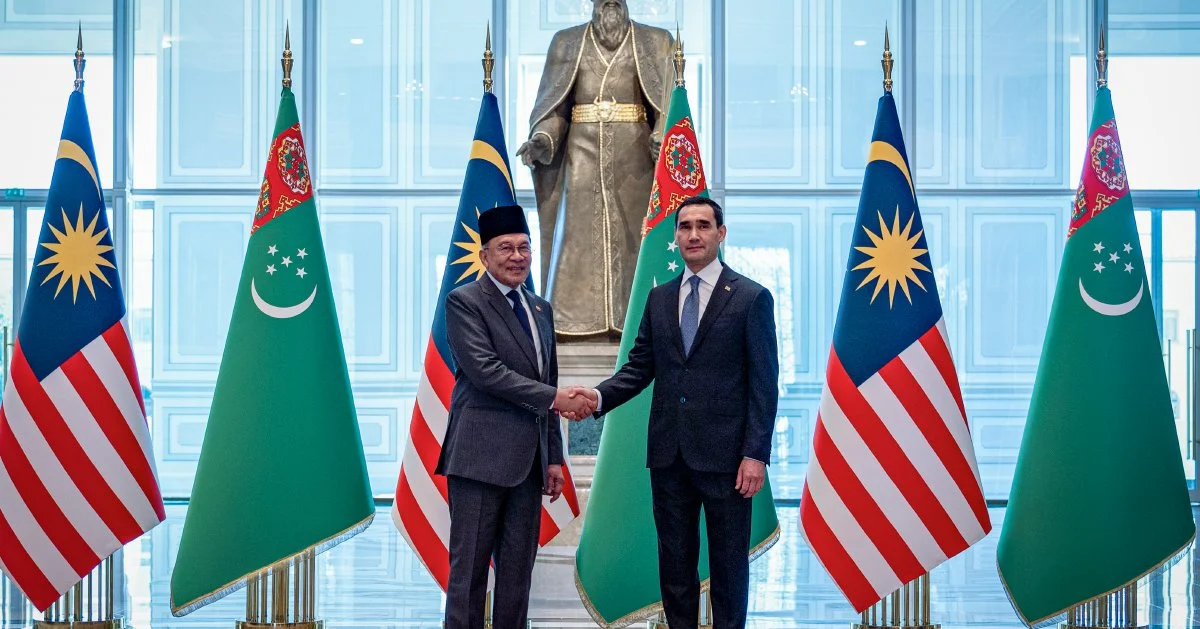
Malaysia's state-owned energy giant Petroliam Nasional Bhd (Petronas) is positioning itself as the centrepiece of reinvigorated bilateral ties between Kuala Lumpur and Turkmenistan, capitalising on momentum generated by Prime Minister Datuk Seri Anwar Ibrahim's recent official journey to the Central Asian nation. The company's established operational footprint across Turkmenistan's energy sector now promises to unlock broader avenues for economic partnership and strategic collaboration that extend well beyond the petroleum industry.
Petronas has maintained a significant presence in Turkmenistan for several years, with accumulated expertise in exploration, production, and development of hydrocarbon resources in one of Asia's most energy-rich regions. This institutional knowledge and operational track record position the Malaysian corporation as a trusted partner capable of navigating the complexities of Central Asian energy markets. The company's technical capabilities and experience managing offshore and onshore operations across multiple jurisdictions lend credibility to its expansion plans in the country.
The timing of this energy-driven partnership carries particular strategic significance for Malaysia. Turkmenistan possesses vast proven reserves of natural gas, with some estimates placing it among the world's top ten resource holders. For Malaysia, which increasingly seeks to diversify its energy procurement sources and strengthen ties with non-traditional partners, this alignment presents an opportunity to secure long-term energy security. The Central Asian nation's geographic position also offers Malaysia potential access to broader trade corridors and markets stretching across the Caucasus and towards Eastern Europe.
Petronas's expanded engagement in Turkmenistan reflects a broader Malaysian diplomatic strategy to strengthen economic partnerships in emerging regions. Prime Minister Anwar Ibrahim's visit underscores the government's commitment to looking beyond Southeast Asia, pursuing opportunities in developing economies that offer complementary advantages. Energy cooperation frequently serves as the foundation for deeper political and economic relationships, as the sector demands sustained investment, technical collaboration, and long-term commitment from both parties.
For Turkmenistan, collaboration with Petronas introduces access to Malaysian capital, technical expertise, and global market connections. The Central Asian nation, despite resource wealth, has faced historical isolation and limited access to diverse international partnerships. Petronas's involvement signals an opening towards Malaysian and broader Asian investment, potentially attracting additional business interest from the region. The partnership also demonstrates Turkmenistan's willingness to deepen ties with Asian nations beyond traditional relationships with China and Russia.
The energy sector serves as a natural entry point for broader economic collaboration. Successful hydrocarbon development projects typically require supporting infrastructure, financial services, telecommunications, and skilled labour—sectors where Malaysian companies and investors maintain competitive advantages. Beyond oil and gas, the partnership framework could facilitate Malaysian engagement in construction, engineering, logistics, and manufacturing sectors serving the energy industry and Turkmenistan's wider economy.
At the geopolitical level, Malaysia's enhanced presence in Central Asia through Petronas operations contributes to a more balanced regional dynamic. The region has traditionally been dominated by Russian and Chinese influence, with limited engagement from Southeast Asian nations. Malaysia's diplomatic and commercial activity here signals the country's aspirations as a truly pan-Asian player capable of projecting influence and building partnerships across vast geographic distances. This positioning aligns with Malaysia's stated foreign policy objective of maintaining strategic autonomy and fostering diverse international relationships.
The hydrocarbon sector remains central to global energy transition discussions. Petronas's operations in Turkmenistan occur within a context of shifting energy markets, where traditional oil and gas producers face mounting pressure to adapt. The company's involvement in Central Asian energy development positions it to gain valuable experience in transitioning economies, understanding renewable energy integration, and managing carbon-intensive operations in an increasingly climate-conscious world. These learnings carry implications for Malaysia's own energy strategies.
Investment flows accompanying Petronas's expanded activities bring tangible economic benefits to both nations. Malaysian contractors, suppliers, and service providers gain access to Central Asian markets, while Turkmenistan receives capital inflows, technology transfer, and employment opportunities. The petroleum sector historically generates multiplier effects throughout broader economies, supporting local business development and skills acquisition. Over time, successful projects can catalyse confidence in Malaysia among other Central Asian investors and trading partners.
The partnership's success depends upon sustained political commitment from both governments and effective execution by Petronas management. Clear regulatory frameworks, transparent operational standards, and commitment to local content development become critical variables. Malaysia's experience managing complex energy partnerships across Southeast Asia and the Middle East provides a foundation, though Central Asian operating environments present unique challenges ranging from geographic isolation to differing governance standards.
Looking forward, this energy cooperation framework may serve as a launching point for expanded regional engagement. Successful Malaysian-Turkmenistan collaboration could encourage similar initiatives with neighbouring Kazakhstan, Uzbekistan, and Azerbaijan, establishing Malaysia as a preferred partner in Central Asian energy development. Such positioning would complement Malaysia's existing ASEAN leadership role and strengthen the country's claim to genuine multi-directional foreign engagement.
The emergence of Petronas as a driver of Malaysia-Turkmenistan relations ultimately reflects evolving global economic dynamics where energy security, strategic partnership, and mutual economic benefit intersect. As traditional supply chains reconfigure and nations seek reliable international partners, Malaysia's willingness to engage seriously in Central Asia through capable institutions like Petronas demonstrates strategic vision extending beyond immediate Southeast Asian concerns.

