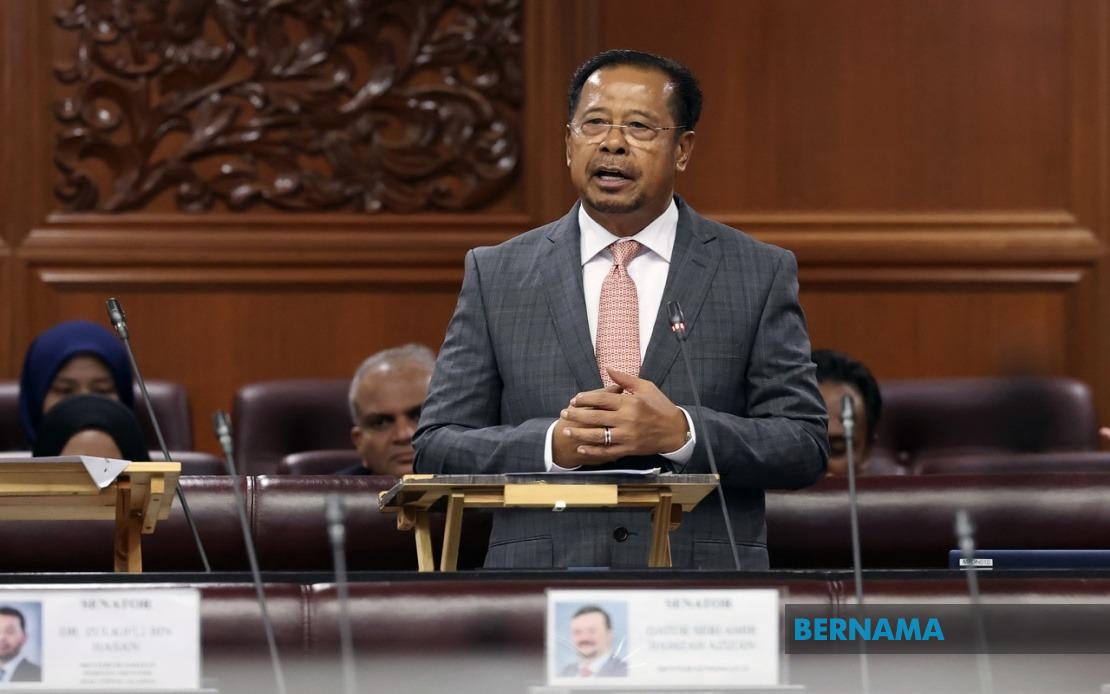
The Ministry of Energy Transition and Water Transformation (PETRA) has initiated an ambitious year-long research initiative focused on formulating a comprehensive Industrial Water Reclamation Policy designed to bolster Malaysia's approach to managing finite water resources. According to Deputy Minister Datuk Seri Abdul Rahman Mohamad, this endeavour represents a critical stepping stone toward reshaping how the nation's industries consume and reuse water in an era of mounting environmental pressures and demographic growth.
The proposed policy framework will serve as a blueprint for guiding multiple industrial sectors in adopting reclaimed water technologies and practices. Deputy Minister Abdul Rahman highlighted that industries spanning food and beverage manufacturing, data centres, semiconductor production, and municipal cleaning services stand to benefit significantly from implementing such protocols. The diversity of targeted sectors underscores recognition that water-recycling solutions must be tailored to the specific operational requirements and technological capacities of different industrial users.
Central to the government's rationale is the principle that reclaimed water need not meet potable drinking standards to serve most industrial applications effectively. By distinguishing between water quality requirements for human consumption versus industrial processes, policymakers aim to unlock substantial efficiency gains without compromising public health or safety. This segmented approach reflects international best practices adopted by water-stressed nations grappling with similar resource constraints.
The government frames this initiative within its broader commitment to fortifying national water security through prudent resource stewardship. Malaysia, despite its reputation for abundant rainfall, faces localised scarcity challenges, particularly during dry seasons and in rapidly urbanising regions. Industrial water demand compounds pressures on conventional supply infrastructure, making reclamation a strategically necessary complement to existing water management strategies rather than merely a supplementary option.
The 12-month study will encompass rigorous technical, legal, financial, and economic analyses that extend well beyond superficial feasibility assessments. Researchers will examine the engineering specifications required to establish reclamation infrastructure, evaluate regulatory frameworks needed to govern reclaimed water quality standards, and calculate the financial viability of different implementation models. This multidisciplinary approach acknowledges that policy success hinges not only on technical soundness but also on economic viability and legal clarity.
Infrastructure requirements receive particular attention within the study's scope, as PETRA recognises that policy ambitions cannot materialise without adequate physical systems. The assessment will likely identify gaps in current wastewater treatment capacity, recommend upgrades to existing facilities, and potentially identify new infrastructure investments necessary to enable industrial-scale water recycling. Such infrastructure planning is essential given that Malaysian industrial zones span geographically dispersed regions with varying technical and financial capacities.
Quality control mechanisms represent another critical pillar of the investigation. Deputy Minister Abdul Rahman emphasised that establishing credible standards for reclaimed water will be fundamental to building industry confidence and public acceptance. The study will assess testing protocols, monitoring frameworks, and accountability structures needed to ensure that recycled water consistently meets specified safety and performance parameters. Without robust quality assurance systems, even economically sound reclamation projects may struggle to gain adoption among cautious industrial users.
Integrating diverse stakeholder perspectives forms an integral component of PETRA's policy development approach. The ministry is conducting systematic engagement sessions with state governments, water operators, Indah Water Konsortium (IWK), and industrial representatives to gather insights from organisations with practical implementation experience. State-level participation proves particularly crucial given Malaysia's federal structure, which assigns water management responsibilities jointly between federal and state authorities. Securing subnational government alignment early in the policy design phase should facilitate smoother adoption during implementation phases.
The involvement of IWK, which operates wastewater treatment infrastructure across much of the country, ensures that policy recommendations remain grounded in operational realities. Industrial stakeholders contribute essential perspectives regarding technological feasibility, cost acceptability, and adoption barriers specific to their respective sectors. By convening these diverse actors during the research phase rather than after policy announcement, PETRA positions itself to develop recommendations with stronger consensus support and fewer implementation surprises.
For Malaysia's semiconductor and data centre industries—both increasingly water-intensive and economically strategic—this reclamation policy carries particular significance. These sectors require substantial cooling water volumes and have demonstrated willingness to adopt advanced technologies when justified by operational or environmental considerations. Success in these flagship industries could establish precedents encouraging broader adoption across other manufacturing domains and gradually normalise industrial water recycling as standard practice.
The policy also connects to regional water governance trends, as several Southeast Asian neighbours are similarly exploring reclamation strategies amid rapid industrialisation and climate variability. Malaysia's systematic policy development process may yield insights applicable across the region and position the country as a knowledge leader in water-stressed Asian contexts. The study's findings could inform regional discussions about water security and transboundary river management increasingly important as Southeast Asian nations contend with shared water resources.
Once completed, the Industrial Water Reclamation Policy will require implementation mechanisms including regulatory oversight, technical training for industrial operators, and potentially financial incentives encouraging early adoption. The 12-month timeline suggests PETRA anticipates completing the study within the current government's mandate period, potentially enabling policy announcement and preliminary implementation during this term. The coming months will determine whether Malaysia can successfully bridge the gap between water policy ambition and industrial practice, establishing a model that could define national water management for decades ahead.

