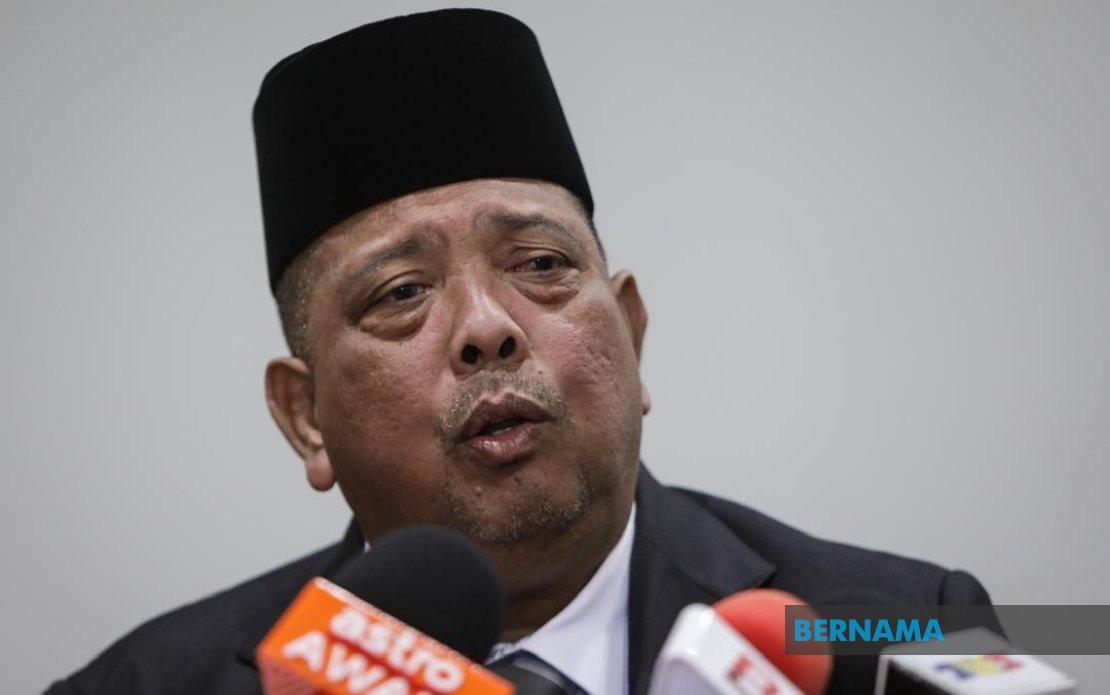
Perlis Menteri Besar Abu Bakar Hamzah has relinquished his position on Parti Pribumi Bersatu Malaysia's Supreme Leadership Council, a move he announced in Kangar on July 9. The resignation letter, submitted the previous week to national party headquarters, reflects his decision to concentrate entirely on steering Perlis through the final year of the current state legislative assembly term, which concludes next year. Abu Bakar remains both Perlis Bersatu state chief and Kangar division chief despite his withdrawal from the party's highest decision-making body.
The timing of Abu Bakar's resignation carries particular significance given the compressed timeframe for completing his administration's agenda. With approximately twelve months until the legislative term expires, he indicated that the workload of managing state affairs—particularly investor attraction and fulfilment of key performance indicators—has become incompatible with the responsibilities of sitting on the Supreme Leadership Council. This calculation reflects a pragmatic acknowledgement that competing commitments at the national party level would dilute his focus on the state's immediate priorities, making a clean break from the higher-tier party role the most sensible course.
The decision gains additional weight from a June 3 pronouncement by the Raja of Perlis, Tuanku Syed Sirajuddin Jamalullail, during the opening of the state legislative assembly sitting. The royal decree specifically authorised Abu Bakar to continue leading Perlis without interference from other quarters, effectively providing constitutional cover for his concentrated state focus. This endorsement from the palace underscores the legitimacy of his new direction and signals that state-level governance now takes absolute precedence in his political calendar.
Abu Bakar's announcement occurred during a broader celebration of regional connectivity: a welcoming ceremony for a delegation from Thailand's Satun province, coinciding with the resumption of cross-border ferry services between Kuala Perlis and Satun. The Kuala Perlis-Satun ferry had remained suspended throughout the COVID-19 pandemic, making its restoration a tangible achievement in border-region economic and social reopening. By making his resignation statement in this context, Abu Bakar linked his renewed commitment to state administration with concrete deliverables such as international transport links and cross-border cooperation.
The ferry service resumption itself merits attention as a barometer of post-pandemic normalcy in Southeast Asian border regions. For Perlis, which depends significantly on cross-border trade and tourism, the revival of this connection signals movement toward pre-pandemic economic patterns and represents the kind of investor-friendly infrastructure development that Abu Bakar cited as a priority. The ceremonial atmosphere of the announcement—welcoming a foreign delegation while simultaneously stepping back from national party machinery—suggests a calculated pivot toward regional engagement and state-level economic stewardship.
Abu Bakar additionally disclosed that Datin Marzita Mansor, assemblyman for Sena and state executive councillor, had similarly resigned from the Bersatu Supreme Leadership Council in her capacity as an MPT member. However, verification attempts from Bernama remained inconclusive at the time of reporting, leaving ambiguity about whether Marzita's departure formed part of a coordinated move or represented separate calculations. The pattern of two senior Perlis figures stepping back from national party council responsibilities within the same period suggests possible alignment around a shared understanding that state priorities must supersede higher-tier party duties.
From a broader Malaysian political perspective, Abu Bakar's move reflects mounting tensions between national party structures and state-level administrative demands, particularly in smaller states like Perlis where the menteri besar necessarily shoulders both state executive responsibilities and party roles. This structural tension has periodically surfaced across Malaysian politics, with state leaders occasionally finding themselves pulled in conflicting directions by national party machinery. Abu Bakar's explicit prioritisation of state governance over party council membership signals a hierarchy of allegiances that privileges delivery on state-level commitments.
The resignation also carries implications for Bersatu's internal balance and decision-making processes. With one year remaining in Perlis's legislative term, Abu Bakar is essentially signalling that he will operate as a semi-detached figure from the party's top leadership until the next state election or dissolution. This arrangement permits him to maintain his state party chief designation—which carries symbolic and organisational weight—while stepping back from the substantive governance demands of the national Supreme Leadership Council. For Bersatu, this constitutes a relatively clean separation that avoids outright defection or dramatic party-level friction.
Investor attraction emerged repeatedly in Abu Bakar's explanation for his move, suggesting that economic development has become a central plank of his state administration's mandate during this final year. Malaysian states increasingly compete for domestic and foreign investment, and Perlis, despite its geographic advantages as a northern border state, must work harder than more economically developed peers to attract business. By freeing himself from national party council obligations, Abu Bakar signals his intention to invest personal and administrative capital into making Perlis a more attractive destination for capital and enterprise.
The geographical and chronological contexts of the announcement merit note. Kangar, Perlis's capital, sits at the heart of state administration, reinforcing Abu Bakar's narrative about state-focused governance. The July timing, roughly halfway through the year and with about twelve months until the legislative term's end, positions the resignation as a deliberate mid-term recalibration rather than a reactive crisis response. This sequencing suggests careful planning and coordination with relevant stakeholders, including potentially the palace, whose royal endorsement had just been publicly articulated.
Looking forward, Abu Bakar's move establishes a clear roadmap for the Perlis administration through the next state election or dissolution. His commitment to KPI fulfilment and investor development, now liberated from party council demands, sets benchmarks against which his final year in office will be judged. For Malaysian political observers, his decision underscores the perennial challenge of balancing national party responsibilities with state-level governance imperatives—a dynamic that will likely recur as other state leaders navigate comparable tensions between competing hierarchies of obligation and loyalty.

