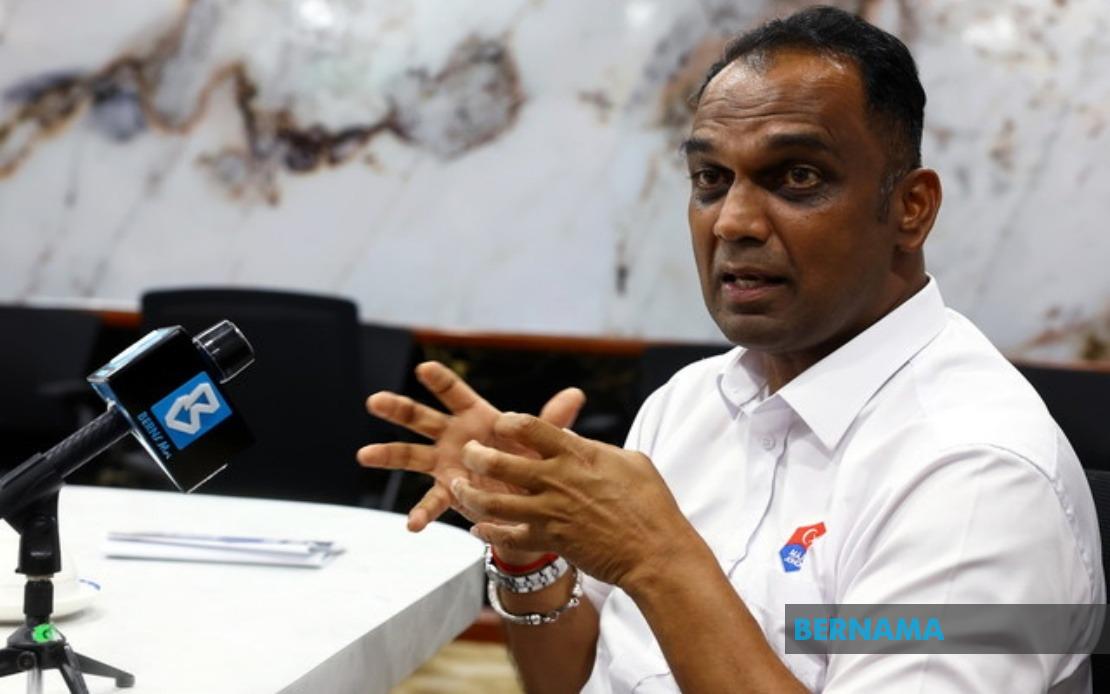
P. Pannir Selvam, the Barisan Nasional candidate contesting the Perling seat in the 16th Johor State Election, is charting a distinctly personal campaign strategy that emphasises direct voter contact over digital campaigning. Making his debut in state-level politics, the former Johor Bahru City Council member is placing considerable faith in what he terms "pocket talks"—small-group conversations held across the constituency—as his primary mechanism for building electoral support ahead of polling day on July 11.
The strategy reflects a deliberate choice to prioritise traditional grassroots engagement methods, even as political campaigns across Malaysia increasingly embrace social media and digital platforms. While Pannir Selvam acknowledges the growing reach and influence of online communication tools in modern electioneering, he contends that nothing substitutes for the authenticity and depth of personal interaction. According to his campaign philosophy, the informal setting of small-group talks allows candidates to connect more genuinely with constituents, leaving an impression that extends beyond the transactional nature of most contemporary political messaging.
Beyond merely introducing himself and outlining his platform, Pannir Selvam argues that these pocket talks serve a dual purpose: they narrow the perceived distance between elected representatives and the communities they serve, while simultaneously functioning as listening forums where local grievances and priorities can be surfaced and understood. This two-way dialogue, he believes, equips candidates with a more nuanced grasp of constituency-specific challenges and demonstrates to voters that their concerns are taken seriously. For a first-time state-level candidate, this approach may also help build credibility by presenting him as accessible and genuinely interested in constituent feedback rather than simply seeking votes.
The candidate's confidence in this method appears bolstered by positive feedback he has received during campaigns across the Perling state assembly district. Pannir Selvam reports that voter response during pocket talks has been encouraging, suggesting that his approach resonates with at least segments of the electorate. This reception has reportedly motivated him to intensify his ground presence as the election draws closer, indicating that the strategy remains central to his campaign plan rather than serving as a secondary tactic.
An important dimension of Pannir Selvam's candidacy is the high-profile support of his father, Datuk KS Balakrishnan, a prominent political figure in Johor with substantial experience in state governance. Balakrishnan served five terms as the Permas Assemblyman and held a position on the Johor state executive council, giving him considerable credentials in public administration and electoral politics. At 84 years old, the elder statesman has remained actively involved in campaigning for his son, reportedly undertaking ground visits regardless of weather conditions. This intergenerational political engagement adds a narrative dimension to the campaign, suggesting continuity in public service within the family while also leveraging Balakrishnan's established reputation and network within Johor political circles.
Pannir Selvam has emphasised the mentoring role his father has played in shaping his approach to public service. According to the candidate, Datuk Balakrishnan has consistently advocated for sincere, honest, and integrity-driven governance as the foundation of effective political representation. The advice reportedly extends to practical aspects of constituency management, including handling public issues without regard to communal divisions and responding constructively to criticism. For a newcomer to state politics, this intergenerational transmission of political values and experience provides a form of legitimacy and guidance that may reassure voters about his readiness for elected office.
Turning to specific campaign pledges, Pannir Selvam has identified two prominent infrastructure and quality-of-life issues as priorities should he win the Perling seat: traffic congestion and inadequate parking facilities in the vicinity of Taman Perling Public Market. These are quintessentially local concerns that resonate with everyday experiences of residents and reflect the kind of practical, constituency-focused agenda that grassroots campaigning is designed to highlight. The candidate's background with the Johor Bahru City Council positions him as someone with experience navigating municipal administration and implementing infrastructure improvements, lending credibility to his pledges to address these specific challenges more effectively than opponents.
The Perling state assembly district encompasses 109,992 registered voters, making it a constituency of substantial size and electoral significance. The contest itself is triangular, featuring not only Pannir Selvam's Barisan Nasional candidacy but also Alan Tee Boon Tsong representing Pakatan Harapan and Boo Wei Han standing for Parti Bersama Malaysia. This three-way race suggests a politically competitive environment where no single coalition can assume straightforward victory, potentially amplifying the importance of grassroots mobilisation and voter engagement strategies that distinguish individual candidates.
The broader Johor state election context underscores the stakes at play. The 16th Johor State Election involves a total of 172 candidates competing for 56 state assembly seats, indicating a comprehensive political contest across the state. Early voting was scheduled for July 7, with the main polling day set for July 11, providing a defined campaign timeline for all contestants. The scale of the election—both in terms of candidate numbers and seat distribution—reflects Johor's importance as a major state within Malaysia's federal structure and suggests that outcomes in individual constituencies like Perling carry implications for broader state-level political dynamics.
For Malaysian political observers, Pannir Selvam's campaign approach offers insight into the persistence of traditional grassroots engagement strategies within contemporary electoral politics. Even as political communications increasingly migrate to digital platforms, the continued emphasis on face-to-face voter contact by serious candidates suggests that the perceived effectiveness of personal relationships and direct dialogue remains significant in shaping electoral outcomes. The approach may be particularly valuable in constituencies with diverse demographic compositions and locally-specific concerns, where one-size-fits-all messaging proves insufficient for building winning coalitions.
The candidacy also illustrates the enduring role of political dynasties and family networks in Malaysian state politics. The prominent involvement of Datuk Balakrishnan in supporting his son's campaign reflects broader patterns whereby established political figures leverage their networks, experience, and reputations to facilitate the advancement of family members into elected office. While such dynamics reflect particular features of Malaysian political culture, they simultaneously raise questions about meritocratic selection and the accessibility of political careers for candidates without family political backgrounds. For Pannir Selvam, however, his father's support and mentoring appear calculated to position him as a candidate of proven values and administrative competence rather than merely as a recipient of political patronage.

