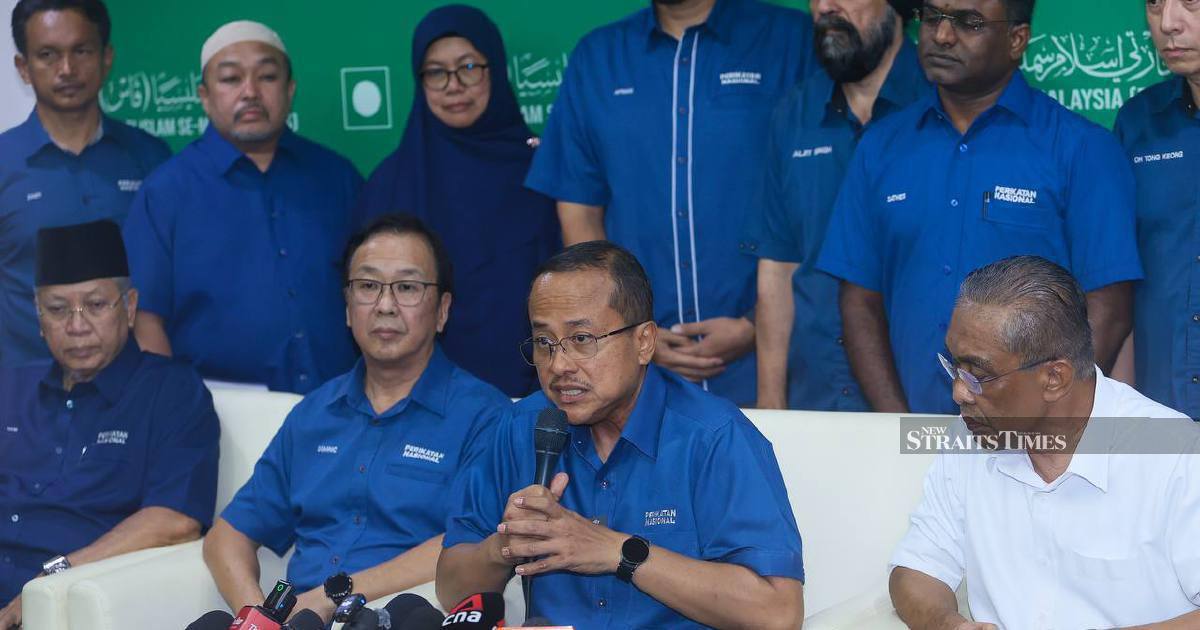
Perikatan Nasional has expanded its membership roster by two parties following an emergency Supreme Council gathering, according to coalition chairman Datuk Seri Dr Ahmad Samsuri Mokhtar, though the bloc notably sidestepped substantive discussion of its broader strategic direction during the closed-door proceedings.
The decision to bring fresh faces into the Islamist-led coalition reflects an ongoing effort to broaden PN's appeal and consolidate its position as a significant political force in Malaysian politics. The admission of new members typically signals confidence in growth prospects and an attempt to strengthen parliamentary representation, though the identities of the incoming parties and their specific contributions to the coalition's platforms remain unclear from the initial announcement.
What stands out about the meeting's outcome is what did not occur. When pressed on whether coalition leadership discussed Wawasan—a term frequently invoked in recent political discourse to describe shared ideological direction—Samsuri offered a muted response, essentially indicating the topic had not featured prominently in deliberations. This omission raises questions about whether PN's constituent parties have achieved consensus on the bloc's fundamental values and long-term objectives, or whether leadership has deliberately shelved contentious discussions to prioritize short-term coalition stability.
Equally telling was the chairman's apparent reluctance to engage substantively with inquiries regarding PN's logo and visual identity. Coalition rebranding efforts often signal ideological repositioning or internal power realignment, and the apparent unwillingness to discuss such matters publicly suggests either that internal divisions persist on symbolism or that leadership considers such conversations premature. For a coalition structured around ostensibly shared principles, the reluctance to clarify foundational symbols and visions could undermine messaging consistency and internal party cohesion.
The emergency nature of the Supreme Council meeting itself warrants scrutiny. Such hastily convened sessions typically address immediate political exigencies—responding to defections, consolidating legislative advantages, or managing crisis situations—rather than deliberative strategic planning. The decision to admit two new parties through expedited procedures implies that recruitment was driven by practical considerations rather than ideological alignment or comprehensive vetting processes.
For Malaysian political observers, PN's expansion strategy demonstrates a calculated approach to power accumulation ahead of potential electoral contests. The coalition, which coalesced around Malay-Muslim concerns and Islamic governance frameworks, has sought to position itself as an alternative to the long-dominant Barisan Nasional while maintaining distance from the Pakatan Harapan-led government configuration. New party membership could enhance parliamentary numbers, secure additional ministerial positions if coalition politics shift, or provide platforms for regional or special-interest representation.
However, the coalition's apparent reluctance to articulate unified Wawasan and clarify its visual branding indicates underlying tensions that expansion alone cannot resolve. Broad-based coalitions frequently struggle with identity coherence when composed of parties with divergent electoral bases and policy priorities. PN's constituent members range from conservative Islamic parties to Malay-nationalist formations to smaller regional outfits, making consensus on overarching vision inherently difficult. Papering over these differences with tacit silence may preserve short-term unity but risks longer-term credibility questions.
The strategic implications extend beyond PN itself. Malaysia's political landscape increasingly features fluid coalition arrangements where parties shift allegiances based on calculated advantage rather than principled commitment. The apparent ease with which PN admits new members—without apparent requirement for detailed public explanation of alignment or shared purpose—reflects broader patterns of transactional politics. Southeast Asia's largest democracies have witnessed similar dynamics, where coalition mathematics often supersede ideological coherence.
From a governance perspective, coalition expansion raises accountability concerns. Malaysian voters increasingly expect political formations to articulate clear platforms, values statements, and policy directions rather than operate as opaque power-broking mechanisms. PN's refusal to discuss Wawasan and branding issues publicly suggests leadership may prioritize internal logistics over democratic transparency. When political coalitions operate without transparent criteria for membership or explicit shared visions, questions about their legitimacy and representativeness inevitably intensify.
The two new parties' entry into PN also creates implications for Malaysia's broader party system balance. Each coalition expansion adjusts the mathematical foundations of potential government formation, influences legislative voting patterns, and can trigger cascading realignments elsewhere in the party spectrum. Opposition formations may respond by pursuing their own coalition adjustments, or independent parliamentarians may gravitate toward coalitions perceived as ascendant.
Looking forward, PN leadership faces mounting pressure to clarify what the coalition actually represents beyond parliamentary arithmetic. Whether the avoided discussion of Wawasan and logo matters reflects genuine lack of consensus, deliberate avoidance of divisive topics, or simple organizational disinterest remains unclear. However, sustained ambiguity on foundational questions of coalition identity and purpose ultimately weakens the bloc's appeal to voters seeking coherent political alternatives.