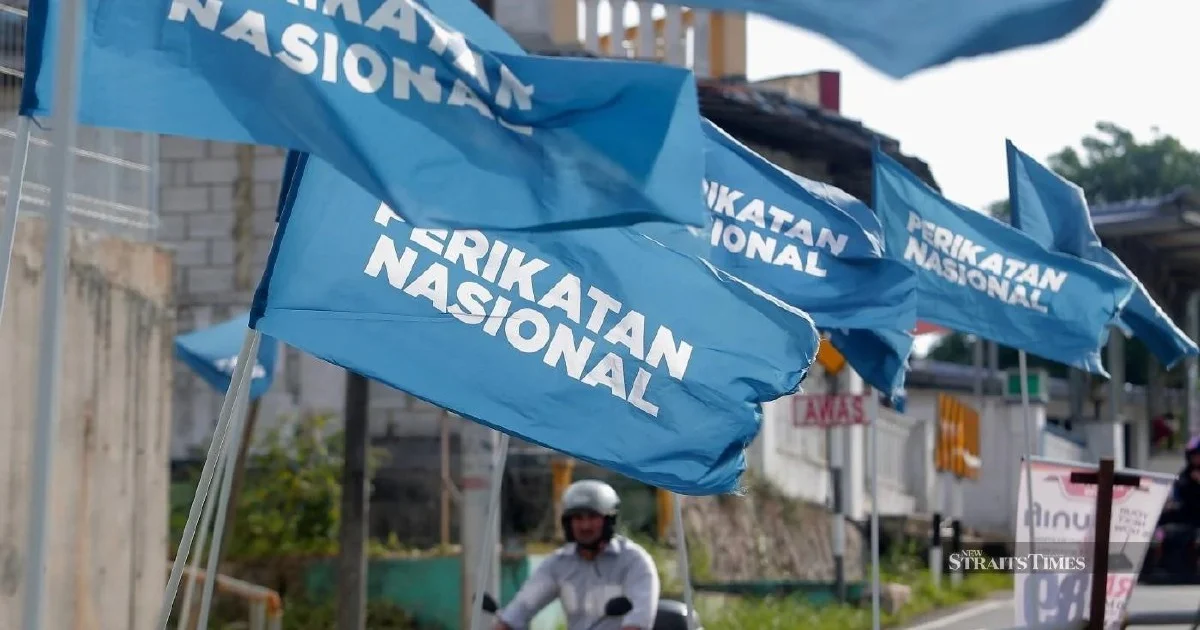
Perikatan Nasional (PN) has moved swiftly to quash circulating online allegations that the opposition coalition intends to withdraw from the forthcoming Johor state election. Deputy chairman P. Punithan issued a decisive statement dismissing the viral claims as completely unfounded and categorizing them as deliberate misinformation designed to undermine the coalition's political standing ahead of the critical state poll.
The emergence of these rumours comes at a particularly sensitive moment in Malaysia's political calendar, as speculation intensifies regarding the timing and conduct of electoral contests in individual states. Johor, as the nation's second-largest state by population and a traditional stronghold of competing political forces, represents strategically significant ground for all major coalitions. The circulation of such claims, whether genuinely mistaken or deliberately seeded into public discourse, can meaningfully influence voter behaviour and coalition morale in the weeks preceding any election announcement.
PN's rapid and explicit rebuttal underscores the coalition's determination to maintain clarity about its electoral intentions and to prevent misinformation from gaining traction among its supporters and the broader electorate. The decision to directly address what might otherwise be dismissed as mere social media chatter reflects the coalition's understanding that in contemporary Malaysian politics, uncontradicted rumours can calcify into conventional wisdom. By explicitly denying the claim, PN ensures that its official position remains the primary narrative in mainstream political discourse.
The coalition's response also highlights the strategic value PN places on Johor as a venue for demonstrating electoral competitiveness. Since the formation of PN following the 2020 federal elections, the coalition has sought to establish itself as a credible nationwide political force capable of competing in diverse electoral contexts. A voluntary withdrawal from any significant state election would contradict this strategic objective and might invite questions about the coalition's viability as a national alternative.
Johor carries additional political significance given its historical dominance by the United Malays National Organisation (UMNO), which has traditionally governed the state with substantial federal backing. However, Malaysia's political landscape has grown increasingly fragmented and volatile since 2020, creating opportunities for rival coalitions to contest previously secure territory. PN's participation in Johor elections represents part of a broader strategy to challenge established political arrangements and to position itself as capable of winning support across different regional contexts.
The viral claim's circulation also points to the intense information environment surrounding Malaysian state elections. Social media platforms facilitate rapid dissemination of both authentic political announcements and deliberately crafted false claims, often making it difficult for voters to distinguish between reliable information and fabrication. The velocity and scale at which misinformation spreads means that political coalitions must now invest significant resources in real-time fact-checking and narrative management, a responsibility that extends beyond traditional media relations into digital spaces where many voters now acquire political information.
For PN specifically, the need to rebut these claims extends beyond immediate damage control. The coalition must maintain credibility among its core supporters while simultaneously attempting to broaden its appeal to persuadable voters in states like Johor. Any perception that PN lacks confidence in its electoral prospects or commitment to competing in important state contests could undermine both fundraising efforts and volunteer mobilization—elements essential to mounting competitive campaigns across multiple constituencies simultaneously.
The incident also demonstrates the vulnerability of political communications to disruption and misrepresentation in Malaysia's crowded media ecosystem. Unlike coordinated campaign announcements through established channels, viral claims spread through decentralized social media networks where verification mechanisms are weak and motivation to spread sensational claims often outweighs commitment to accuracy. Political parties must therefore remain perpetually vigilant, monitoring online discourse for false claims and responding with sufficient speed and clarity to prevent misinformation from embedding itself in public understanding.
Looking forward, PN's explicit reaffirmation of its intention to contest the Johor election signals the coalition's commitment to sustained competition across Malaysian electoral venues. The coalition continues developing its organizational infrastructure and policy platforms across different states, building the capacity to mount simultaneous campaigns should multiple state elections occur in rapid succession—a real possibility given the unpredictability of state-level political dynamics and the approaching end of several state assemblies' five-year terms.
The broader context of Malaysian coalition politics suggests that such public clarifications will likely become increasingly frequent as election timing remains uncertain and political calculations remain fluid. With federal parliamentary representation subject to considerable volatility and state-level politics increasingly assertive, voters and observers can expect continued jostling among Malaysia's major political coalitions as they position themselves for electoral contests that could substantially reshape the country's political configuration.