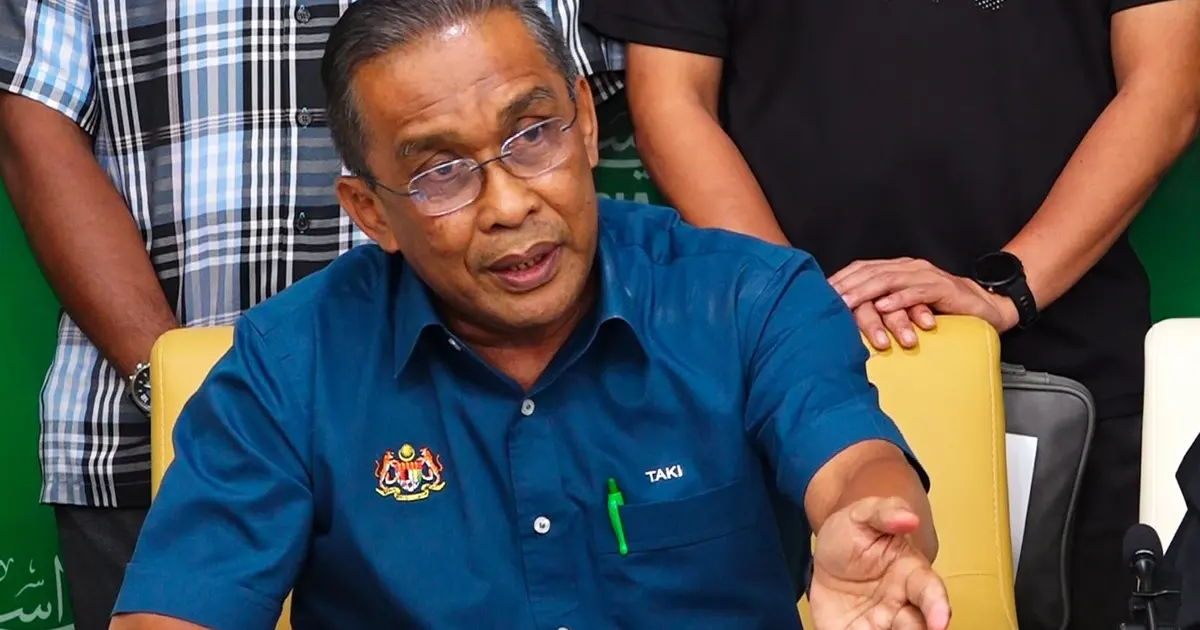
Perikatan Nasional secretary-general Takiyuddin Hassan has indicated that forthcoming discussions between PN and Barisan Nasional over arrangements for Melaka's state elections will proceed without Bersatu's involvement, marking a significant shift in coalition dynamics ahead of potential polls in Malaysia's southern state.
While formal negotiations have not yet commenced, Takiyuddin's statement signals that such talks are imminent and will follow a framework that deliberately sidelines Bersatu, the party led by former Prime Minister Muhyiddin Yassin. This development reflects ongoing tensions within the broader opposition coalition and suggests deepening fractures that could reshape electoral strategies across the peninsula.
The exclusion of Bersatu from PN-BN discussions carries substantial implications for Melaka's political landscape. The state has served as a testing ground for coalition arrangements, with previous state elections demonstrating how national-level partnerships translate into local power-sharing agreements. Understanding the mechanics of seat allocation and campaign coordination in Melaka often provides insight into how larger coalitions will function at federal level.
For Malaysian political observers, the separation of Bersatu from these talks represents more than a procedural matter. It reflects the complex realignment taking place within opposition politics, where the relationship between PN's core components and BN's established structure remains fluid. Bersatu's exclusion suggests that PN's negotiating team—potentially centred on PAS and PKR elements—may be pursuing terms that don't accommodate the party's preferences or demands.
The timing of these discussions carries particular weight given Melaka's electoral history. The state has experienced multiple transitions in recent years, with the 2023 state elections producing a closely contested result. Any fresh electoral exercise would likely prove highly competitive, making seat allocation decisions between PN and BN consequential for both coalitions' prospects of controlling the state government.
Takiyuddin's confirmation that talks will proceed in the near future, despite not having formally begun, suggests that groundwork and preliminary positioning are already underway among senior party figures. This behind-the-scenes activity typically precedes public announcements of formal negotiations, indicating that discussions about framework, demands, and red lines may already be occurring at leadership level.
The separation of Bersatu raises questions about its role within the broader PN structure. As a party that joined PN relatively recently and has experienced internal challenges, Bersatu's exclusion from key coalition negotiations could signal diminished influence within the opposition alliance. This may also reflect the varying appetites for cooperation with BN among PN's constituent parties, with some more amenable to partnerships than others.
For BN, engaging directly with PN components while excluding Bersatu may represent a strategic preference for negotiating partners perceived as more aligned with its interests or more willing to accept conventional power-sharing arrangements. Barisan's traditional approach to electoral cooperation emphasises stability and established protocols, factors that might resonate differently across PN's membership.
The Melaka situation also carries implications for how opposition coalitions might function at the federal level. State-level arrangements often serve as testing grounds for approaches that parties hope to implement nationally. The structure of these PN-BN discussions, including which parties participate, provides signals about potential coalition configurations for future national elections.
Malaysian voters in Melaka will likely scrutinise how these coalition negotiations ultimately affect campaign messaging, candidate selection, and policy positions. The exclusion of Bersatu from formal talks doesn't necessarily prevent the party from fielding candidates or campaigning, but it may limit its influence over how the broader coalition structures its electoral approach.
The forthcoming discussions between PN and BN also occur within the context of broader political uncertainty in Malaysia. Coalition arrangements remain fluid, with various parties continuing to explore partnerships and realignments. Melaka's electoral dynamics will likely reflect and potentially influence these wider political currents.
Takiyuddin's statement, while confirming the exclusionary approach, provided limited detail about the substance of anticipated discussions or timelines for reaching agreements. This opacity is typical of pre-negotiation positioning, where public pronouncements aim to establish broad parameters while preserving flexibility for actual bargaining.
The coming weeks will reveal whether talks materialise on the timeline Takiyuddin suggested and what concrete outcomes emerge regarding seat allocation, campaign coordination, and policy alignment. For Malaysian political observers, these Melaka negotiations represent an important test case for how opposition coalitions manage internal divisions while attempting to present unified challenges to incumbent governments.

