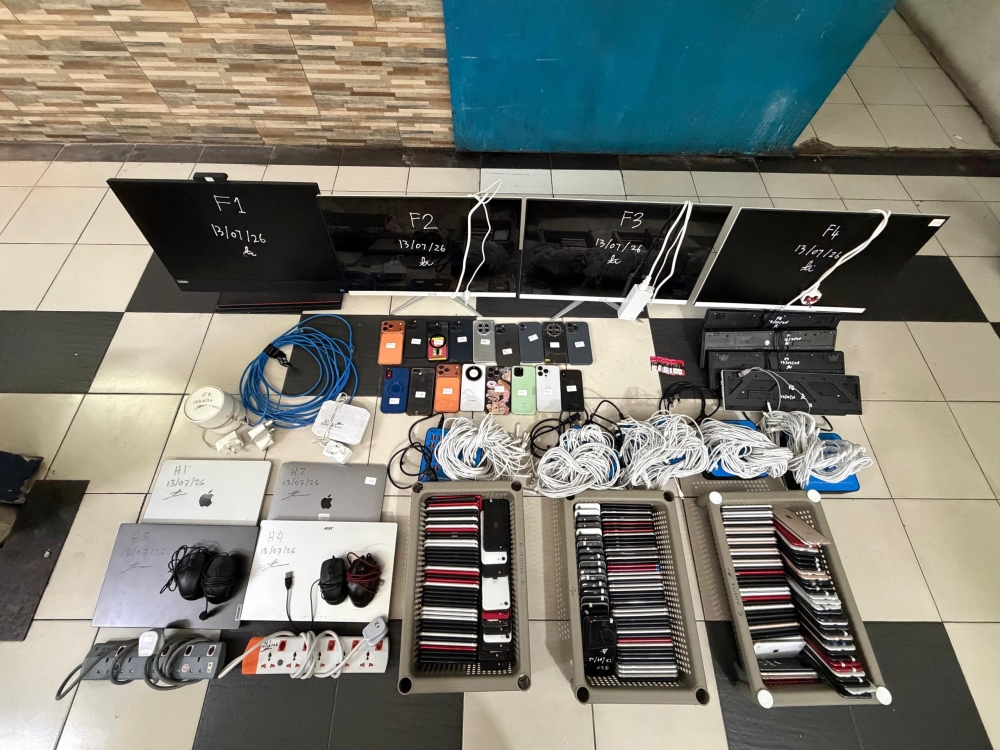
Perak police have dismantled what authorities believe to be a coordinated online fraud operation, culminating in the arrest of 18 Chinese nationals across two separate raids conducted in the Ipoh area. The operation, carried out in mid-July, represents the latest in a series of enforcement actions targeting transnational cybercriminal syndicates that have increasingly established bases throughout Malaysia to conduct schemes targeting victims across Southeast Asia and beyond.
The dual raids represent a coordinated intelligence-gathering effort that underscores the growing sophistication of regional law enforcement responses to organised online fraud. Malaysian authorities have witnessed a proliferation of such operations in recent years, with criminal networks exploiting Malaysia's geographic position, telecommunications infrastructure, and relatively accessible commercial office spaces to establish what amount to call centres for large-scale deception schemes. The ability to identify and neutralise these networks in real time demonstrates evolving capacity within state police forces to detect and disrupt such operations before they can victimise larger numbers of individuals.
Online fraud syndicates operating from Malaysian bases typically target victims in multiple jurisdictions simultaneously, employing sophisticated social engineering techniques, impersonation, and digital manipulation to extract money or personal information from unsuspecting individuals. These networks often recruit both local and foreign operatives, with foreign participants frequently occupying more senior roles within organisational hierarchies. The arrest of such a significant contingent of foreign nationals suggests authorities have targeted a substantial node within a larger ecosystem of coordinated criminal activity.
The Perak operation adds to mounting pressure on these networks across Malaysia. Law enforcement agencies in Kuala Lumpur, Selangor, and other states have conducted similar operations with increasing frequency, suggesting either intensifying vigilance on the part of authorities or expanding criminal activity—or both. Such raids typically yield equipment including computers, mobile devices, and telecommunications apparatus used to execute fraud schemes, alongside documentation detailing victim lists and operational procedures.
For Malaysian citizens and residents, the proliferation of these syndicates represents an ongoing threat despite enforcement efforts. Fraud networks have become increasingly brazen in their targeting strategies, exploiting emotional triggers and urgency-based narratives to pressure victims into rapid decision-making. Common schemes involve impersonation of government agencies, financial institutions, or legitimate e-commerce platforms, with perpetrators employing spoofed contact information to establish initial credibility with potential victims.
The regional dimensions of this criminal ecosystem warrant attention from policymakers across Southeast Asia. Criminal networks operate across borders with considerable fluidity, relocating operations when jurisdictions intensify enforcement, and maintaining redundancy by distributing operational functions across multiple countries. Malaysia's central position within the region makes it particularly vulnerable to becoming a hub for such activities, necessitating sustained and sophisticated countermeasures that extend beyond individual police operations.
International cooperation has become increasingly vital to disrupting these networks effectively. Intelligence sharing among regional law enforcement agencies, combined with coordination on extradition and asset recovery, creates friction within criminal supply chains. The effectiveness of the Perak operation may partly reflect such cooperative frameworks, though specific details regarding international coordination remain undisclosed in typical police statements.
The arrested individuals now face investigation and potential prosecution under relevant provisions of Malaysian criminal law, though outcomes in such cases often reflect broader challenges within the judicial system regarding transnational crime prosecution. Language barriers, jurisdictional complexities, and the resource-intensive nature of such cases mean that prosecution success rates vary considerably. Additionally, determining the ultimate command structures and financial beneficiaries of these operations frequently requires sustained investigative effort extending far beyond initial arrests.
Beyond law enforcement responses, educational initiatives targeting potential victims have become increasingly important. Malaysian authorities and civil society organisations have invested effort in public awareness campaigns designed to alert citizens to common fraud methodologies and encourage verification practices before responding to unsolicited communications. Such prevention-focused approaches complement enforcement actions by reducing the pool of vulnerable individuals upon whom criminals can prey.
The Perak operation demonstrates that Malaysian law enforcement possesses demonstrable capacity to identify and act against transnational criminal networks operating within its jurisdiction. However, the continuing emergence of such syndicates suggests that enforcement action alone, while necessary, remains insufficient to address the underlying economic incentives that make Malaysia an attractive operational base for international fraud networks. Addressing these root causes—encompassing regulatory frameworks, financial transparency, and broader economic development strategies—remains essential to reducing Malaysia's vulnerability to becoming a transnational cybercrime hub.

