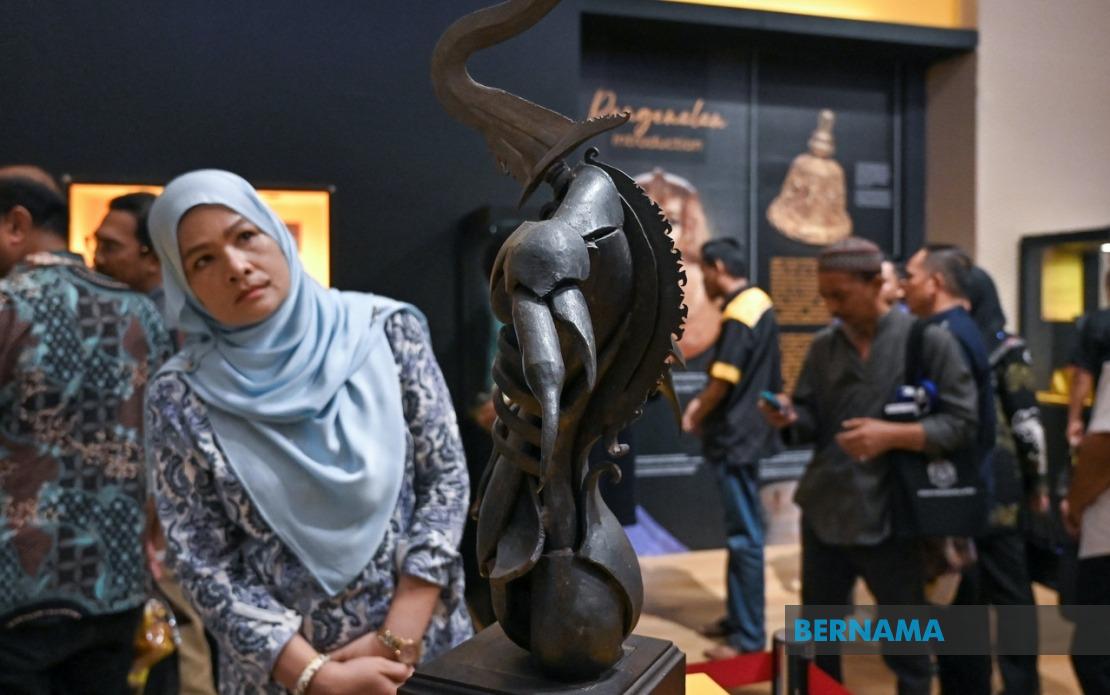
The Perak Museum in Taiping has opened an ambitious exhibition that brings together 140 carefully curated metal heritage pieces, offering visitors an unprecedented glimpse into the intersection of craftsmanship, spirituality and cultural identity within the Malay world. Titled 'Magic and Metal: Spirit, Power and Art', the exhibition runs from June 1 through December 31 and represents a landmark moment for the institution, as it marks the first time these early metal-based collections have been assembled and presented to the public in such a comprehensive manner.
According to Perak Museum director Mohd Nasrulamiazam Mohd Nasir, the exhibition is organised around three thematic pillars—spirit, power and art—that collectively illuminate how metal objects served far deeper purposes than mere utilitarian function within traditional Malay communities. Rather than presenting these artefacts simply as historical curiosities, the curatorial approach seeks to contextualise them within their original spiritual and symbolic frameworks, allowing viewers to understand the belief systems and worldviews that rendered metal an especially potent medium in Malay culture. This interpretive strategy distinguishes the exhibition from conventional museum displays that might foreground purely aesthetic or chronological dimensions.
The assembly of such a substantial collection required extensive collaboration beyond the museum's own holdings. The exhibition benefits from strategic partnerships with prominent collectors and heritage organisations, including sculpture collections loaned by Raja Syahriman Raja Aziddin, silver ornaments from Yayasan Al-Amin, and an important selection of traditional Malay weaponry belonging to private collector Nor Azahar Ibrahim. These partnerships underscore a broader shift within Malaysian heritage institutions toward leveraging community networks and private collections to create richer, more textured presentations of national cultural material.
Among the most significant pieces on public view is a 19th-century Malay traditional weapon featuring an ornate snail-shell hilt, which once belonged to Sultan Abdullah Muhammad Shah II, the 26th Sultan of Perak. This particular artefact carries particular weight, as it bridges the domains of political authority and spiritual power, embodying the hierarchical and symbolic structures that underpinned Malay sultanates during the colonial era. Equally compelling is an 18th-century suit of Bugis warrior armour, representing the broader maritime trading networks and military cultures that characterised the precolonial and early colonial Southeast Asian region. A spoon and fork set belonging to Raja Laut Ibni Sultan Muhammad Shah, son of Selangor's third sultan, demonstrates how even domestic objects possessed ceremonial and genealogical significance within royal contexts.
The exhibition received official endorsement from the Department of Museums Malaysia, with the opening ceremony conducted by the department's director-general, Datuk Kamarul Baharin A. Kasim. This institutional backing reflects the exhibition's alignment with broader national objectives to position museums as vital repositories of historical knowledge and cultural research. The Department of Museums Malaysia has increasingly emphasised the role such institutions play in fostering public understanding of heritage while simultaneously strengthening the evidence base for conservation and scholarly inquiry into Malaysia's diverse cultural traditions.
The Perak Museum has set an ambitious visitation target of 100,000 visitors over the exhibition's seven-month run, reflecting confidence in both the intrinsic appeal of the collection and the growing regional interest in Southeast Asian material culture. Early figures suggest momentum, with nearly 20,000 visitors already recorded at the time of the press conference announcing the exhibition's opening. This pace, if sustained, would comfortably exceed the museum's target and might position 'Magic and Metal' as one of the region's more successful heritage exhibitions in recent years.
For Malaysian audiences, the exhibition carries particular resonance in the current cultural and political landscape. As questions of national identity and historical preservation become increasingly central to public discourse, exhibitions that illuminate the sophistication and complexity of precolonial and early modern Malay societies serve an important educational function. They provide evidence countering reductive or dismissive historical narratives that have sometimes marginalised Southeast Asian material cultures in favour of Western-centric frameworks. The Perak Museum's approach thus functions on multiple levels: as an aesthetic experience, as a vehicle for historical understanding, and as an implicit assertion of the value and validity of Malay cultural knowledge systems.
The thematic emphasis on spirit and power within Malay metalwork also invites contemporary reflection on how traditional societies conceptualised agency, efficacy and causation. In many precolonial Malay contexts, certain metal objects—particularly weapons, ornaments and ceremonial items—were understood to embody agency or spiritual force rather than serving as passive tools in human hands. This worldview, fundamentally different from secular-materialist perspectives dominant in modern thought, nonetheless shaped how communities understood their relationship to the material world and to power itself. The exhibition's curatorial commitment to honouring these frameworks rather than dismissing them as superstition represents a more intellectually mature and respectful approach to cultural heritage.
The exhibition also speaks to broader Southeast Asian dynamics of heritage preservation and institutional development. As the region's economies expand and middle classes grow, museums and heritage institutions are receiving increased attention and resources. Yet many institutions remain dependent on colonial-era collections and frameworks, sometimes limiting their ability to present truly culturally grounded interpretations of material heritage. The Perak Museum's initiative to forge partnerships with contemporary collectors and cultural organisations suggests an institutional model better attuned to regional needs and perspectives, one that potentially could be replicated by other museums throughout Malaysia and Southeast Asia more broadly.
The 'Magic and Metal' exhibition ultimately represents more than a collection of objects on display; it constitutes a statement about how Malaysia understands and values its own heritage at a moment of significant national transformation. By presenting metal artefacts within frameworks that respect their original spiritual and cultural meanings rather than reducing them to historical specimens, the museum models a form of cultural stewardship that takes seriously the intellectual and philosophical dimensions of heritage preservation. For Malaysian readers and regional visitors, the exhibition offers an opportunity to engage with material manifestations of sophisticated precolonial societies while considering what those societies might teach contemporary communities about alternative ways of understanding power, spirit and human creativity.

