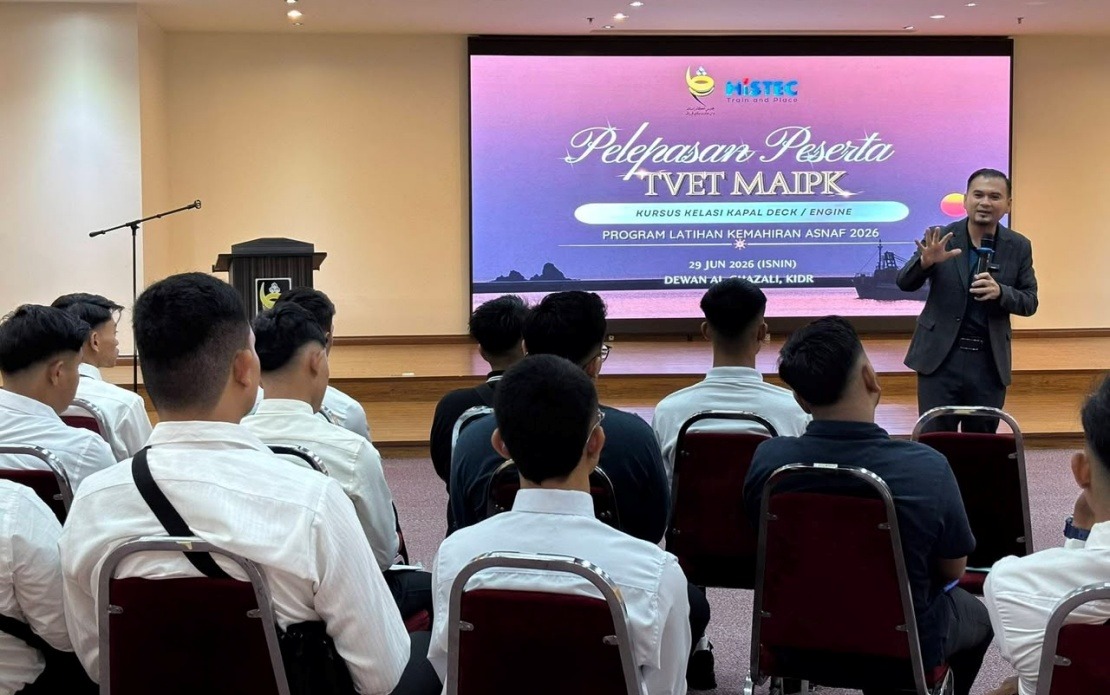
The Perak Islamic Religious and Malay Customs Council (MAIPk) has demonstrated renewed commitment to vocational education by directing substantial resources towards maritime skills development. The council announced a RM470,000 sponsorship package enabling 25 asnaf—economically disadvantaged—youth to enrol in specialised ship crew training, covering both deck and engine specialisations. This initiative represents a strategic investment in human capital development within one of Southeast Asia's vital economic sectors.
The financial commitment, calculated at RM18,800 per participant, underscores MAIPk's belief that technical and vocational pathways constitute essential mechanisms for breaking cycles of poverty. Rather than viewing TVET as a secondary educational option, the council frames it as a transformative platform capable of fundamentally reshaping socioeconomic trajectories for vulnerable population segments. This perspective aligns with regional efforts to address skills gaps in industries facing persistent labour shortages.
The selected participants will complete their training at Ranaco Education and Training Institute in Chukai, Terengganu, over a three-month intensive period. The curriculum combines classroom instruction with hands-on maritime operations, culminating in professional certification and acquisition of a seaman's licence—essential credentials for legitimate maritime employment. This structured approach ensures graduates possess both theoretical knowledge and practical competencies demanded by contemporary shipping operators.
Maritime employment offers compelling advantages for participants seeking sustainable income growth. The shipping industry provides relatively stable career trajectories, competitive compensation packages, and opportunities for skill progression. For asnaf youth often constrained by limited educational credentials or family circumstances, maritime crew positions represent genuine pathways to middle-income livelihoods. The sector's international nature also exposes workers to cross-cultural experiences and professional networks extending beyond Malaysia.
MAIPk's initiative reflects broader recognition that TVET deserves elevated status within Malaysia's educational ecosystem. While academic pathways remain important, demographic shifts and evolving labour market demands increasingly favour technical specialists. The maritime sector specifically faces recruitment challenges across Asia-Pacific, with vessel operators struggling to attract qualified crew members. Malaysian initiatives addressing this supply gap position the nation as a reliable source of trained maritime personnel for regional and global operators.
The programme's employment guarantee component distinguishes it from purely educational investments. Immediate placement support ensures participants transition directly from training to productive roles, eliminating typical graduate unemployment periods. This practical orientation benefits not only individual participants but also Malaysian maritime industries seeking reliable workforce solutions. Consistent crew quality enhances operational safety, regulatory compliance, and competitive positioning for Malaysian shipping enterprises.
The socioeconomic implications extend beyond immediate earnings improvements. Employment stability enables participants to pursue further skill development, support family members, and contribute tax revenues. Evidence from regional TVET programmes demonstrates that skills-focused interventions generate multiplier effects throughout local economies. As trained crew members earn higher incomes, they increase consumption, support dependents, and invest in their communities, creating positive feedback loops benefiting broader economic development.
The Asnaf Empowerment Division's leadership of this initiative, with General Manager Amirudin Osman officiating the send-off ceremony at Kompleks Islam Darul Ridzuan, signals institutional commitment to implementation. This administrative structure suggests MAIPk plans systematic programme evaluation and potential expansion based on outcomes. Success metrics could include employment retention rates, income progression, and participant satisfaction—data valuable for refining future interventions.
MAIPk's approach merits examination within Malaysia's broader Islamic social finance landscape. Zakat funds, which Islamic councils administer, increasingly support skills development recognising that sustainable poverty alleviation requires capability-building rather than temporary assistance. This maritime initiative demonstrates how religious institutions can leverage their financial resources and community trust to address structural economic challenges affecting vulnerable populations.
The initiative arrives at opportune timing. Post-pandemic maritime industries are expanding as global trade intensifies and supply chain diversification accelerates. Malaysia's geographic position and existing maritime infrastructure create competitive advantages for developing crew expertise. By positioning asnaf youth to capture emerging employment opportunities, MAIPk contributes to inclusive economic growth aligning with national development objectives.
Regional perspectives further contextualise this investment's significance. Southeast Asian maritime sectors compete internationally for skilled workers, with neighbouring countries similarly investing in crew training. Malaysia's commitment to asnaf empowerment through TVET demonstrates that skills development transcends purely commercial considerations—it embodies values of social justice and inclusive prosperity. This positioning potentially enhances Malaysia's reputation as a maritime hub valuing both competence and equitable opportunity distribution.
The programme's success will depend on sustained quality at Ranaco Education and Training Institute, effective industry coordination ensuring genuine placement opportunities, and ongoing participant support throughout early career phases. Comprehensive data collection and outcome tracking will prove essential for demonstrating whether this model merits scaling to other economic sectors or geographical regions within Malaysia.
Ultimately, MAIPk's maritime initiative exemplifies how institutional actors can productively address labour market mismatches while advancing social objectives. By channelling resources toward demand-driven skills in sectors offering genuine employment prospects, the council creates opportunities for asnaf youth to build independent livelihoods and contribute meaningfully to Malaysia's economic competitiveness.

