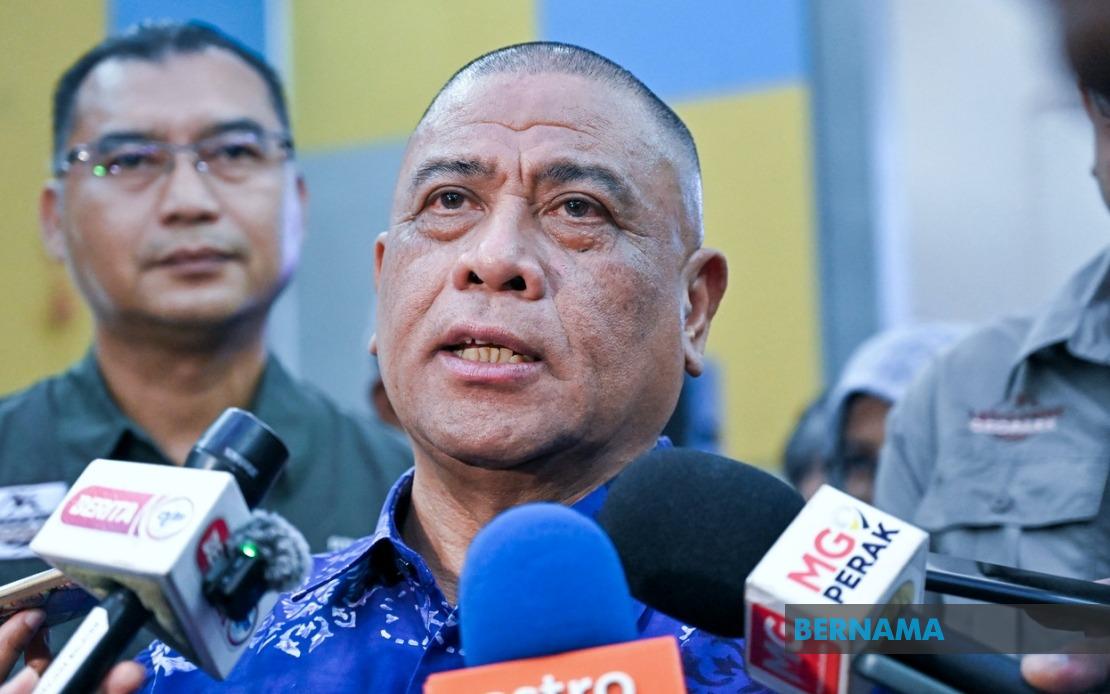
Perak's government has expressed confidence that heterodox Islamic teachings remain under firm control within the state, even as proponents attempt to distribute propaganda through online channels and transnational networks. Menteri Besar Datuk Seri Saarani Mohamad made the assertion, emphasising that oversight mechanisms continue functioning effectively to identify and manage emerging risks related to religious doctrine that diverges from mainstream Islamic practice.
The Perak administration relies on a multi-tiered governance structure to track and respond to such developments. The State Security Committee, chaired by Saarani, coordinates intelligence gathering and policy responses. Supporting this effort are regular situational updates provided by the Perak Islamic Religious Department (JAIPk) and the Perak Mufti Department, both of which furnish analyses to senior leadership regarding the prevalence and nature of doctrinal deviation. This institutional architecture reflects recognition that managing religious orthodoxy requires sustained institutional engagement rather than ad-hoc interventions.
Sultan Nazrin Shah, the constitutional head of Islam in Perak, remains apprised of developments through formal briefings. The Sultan was recently updated by Deputy Mufti Datuk Zamri Hashim and JAIPk Director Datuk Harith Fadzilah Abdul Halim on the matter, underscoring the significance state authorities assign to keeping the monarchy informed of religious affairs within its domain. This information-sharing protocol demonstrates the formal channels through which Perak's religious governance operates.
The state government has established procedural protocols for addressing public concerns regarding teachings perceived to contradict orthodox Islamic doctrine. Citizens who lodge complaints or express concerns trigger investigations by JAIPk and the Mufti Department, which examine allegations systematically before implementing any enforcement measures. This complaint-driven mechanism, combined with institutional monitoring, creates multiple entry points for identifying potential deviant groups or teachings operating within Perak's borders.
At the national level, the challenge of managing doctrinal heterodoxy has grown considerably more complex. Minister in the Prime Minister's Department (Religious Affairs) Senator Datuk Zulkifli Hasan characterised the government's response as a comprehensive, whole-of-government strategy designed to counter the proliferation of non-orthodox teachings. The Department of Islamic Development Malaysia (JAKIM), working alongside state-level Islamic religious departments, has adopted increasingly proactive and stringent monitoring postures. This coordinated approach reflects concern that isolated state-by-state efforts lack sufficient scope to address transnational and digital dimensions of religious heterodoxy.
The evolution of how heterodox teachings disseminate has substantially altered enforcement challenges across Malaysia. Historically, clandestine meetings and closed-door gatherings characterised the spread of such doctrines, enabling authorities to identify networks through physical surveillance and community reporting. However, contemporary propagation strategies leverage social media platforms and encrypted messaging applications, rendering traditional intelligence-gathering methods less effective. The shift to digital channels has expanded the potential reach of non-orthodox teachings while simultaneously complicating detection and intervention efforts.
Camouflaging strategies employed by groups promoting deviant teachings compound enforcement difficulties. Rather than openly declaring heterodox religious positions, some organisations operate under ostensibly benign rubrics including self-development programmes, humanitarian or charitable ventures, wellness and alternative therapy initiatives, and informal religious education circles. This architectural concealment makes distinguishing between legitimate civil society activities and vectors for doctrinal deviation substantially more challenging for religious authorities. Communities may encounter teachings that subtly diverge from orthodox positions without recognising the theological heterodoxy embedded within seemingly conventional frameworks.
The digital dimension of this challenge has cross-border implications that extend beyond Malaysia's regulatory capacity. Teachings disseminated through international online networks often originate from sources beyond Malaysian jurisdiction, making conventional enforcement approaches ineffective. This territorial limitation has prompted the national government to emphasise inter-agency cooperation and to encourage state-level religious departments to enhance their digital monitoring capabilities. The transnational character of contemporary religious heterodoxy thus requires Malaysia to develop enforcement strategies that account for information flows not constrained by geographical boundaries.
For Malaysian policymakers and civil society observers, the Perak government's confidence in its containment capabilities must be weighed against the substantive structural challenges Zulkifli Hasan articulated. The migration of heterodox teachings to digital platforms represents a fundamental transformation in dissemination mechanisms that existing regulatory frameworks were not designed to address. Even states with robust institutional capacity, institutional resources, and political commitment to monitoring religious affairs face mounting difficulty in tracking and counteracting teachings that operate through decentralised online networks. The confidence expressed by Perak's leadership may reflect effective state-level coordination, but broader national trends suggest the challenge is expanding rather than contracting across Malaysia.

