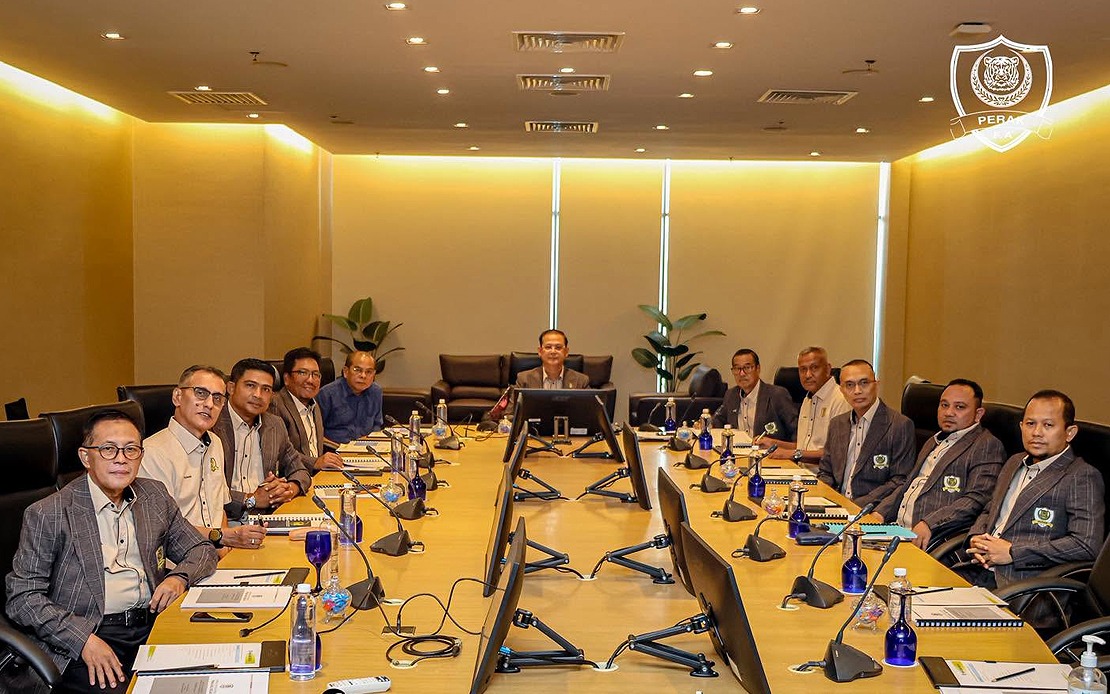
The Perak Football Association has announced plans to recruit a new head coach to lead Perak through the 2026-2027 Liga A1 Semi-Pro season, responding to a fresh regulatory requirement introduced by the Amateur Football League. The decision reflects shifting governance standards across Malaysian semi-professional football, where enhanced coaching credentials have become mandatory for competitive progression. This move signals the state association's commitment to professionalising its technical operations and aligning with national football development benchmarks.
Under the new Amateur Football League directive, every competing team must now employ a head coach holding an AFC Pro Diploma Coaching License, commonly known as Pro-A certification. This requirement elevates the minimum coaching standard across the semi-professional tier, ensuring that clubs implement contemporary tactical frameworks and sports science principles. For Perak, the mandate necessitates a systematic search for a candidate who exceeds basic licensing thresholds and brings substantive experience across multiple levels of football.
The Perak Football Association has articulated a comprehensive recruitment strategy extending beyond mere credentials. The organisation seeks a coach demonstrating proven expertise in grassroots football development, exposure to modern coaching methodologies, and a demonstrated performance track record spanning state, national, and international contexts. This multifaceted approach recognises that sustainable competitive success requires technical leadership grounded in player development philosophy rather than short-term results alone.
Notably, the appointment strategy incorporates Perak's broader state development framework. The Football Association has aligned the coaching recruitment with the Perak Sejahtera 2030 Plan, embedding football development within the state government's wider socioeconomic aspirations. This integration demonstrates how sporting infrastructure increasingly serves as a vehicle for achieving developmental objectives, particularly in cultivating youth talent pipelines and building institutional capacity in competitive sports.
Outgoing coach Syamsul Saad, a former player, concluded the previous season with a fifth-place league finish alongside respectable cup performances, including a Malaysia Cup quarterfinal appearance and MFL Challenge Cup semifinal berth. His tenure established a foundation upon which successor management will build, and the association's decision to seek external expertise suggests a desire to accelerate competitive trajectory while maintaining continuity with players and support staff.
The Association has pledged to retain existing coaching personnel rather than implementing wholesale structural changes. The incoming head coach will integrate with the established support framework, creating a collaborative technical environment where different expertise reinforces overall team performance. This measured approach minimises disruption whilst introducing fresh strategic direction, recognising that effective organisations balance innovation with institutional stability.
Perak has committed to contract renewals for players who satisfied performance evaluation criteria, ensuring squad continuity and demonstrating commitment to athlete retention. This retention strategy acknowledges that competitive rebuilding functions more effectively when established squad members remain engaged with evolving tactical systems. The policy balances meritocratic selection principles with organisational loyalty, encouraging player development whilst maintaining standards.
Beyond the primary Liga A1 semi-professional competition, Perak will compete in the Liga A2 Amateur category and the President's Cup, multiplying competitive platforms and expanding exposure opportunities for emerging talent. These additional competitions provide crucial development pathways for young players graduating from grassroots programmes, preventing talent gaps between amateur and semi-professional levels. The three-tiered competitive structure reflects strategic thinking about systematic player development.
The Association highlighted its successful grassroots development pipeline, reporting approximately 70 players between 18 and 24 years old emerging from developmental programmes spanning SUKMA Malaysia Games participation, Liga A1 Semi-Pro competition, and Liga Perak Sejahtera 2030. This substantial youth cohort represents institutional investment in long-term talent cultivation, suggesting that Perak's football strategy operates across generational timeframes rather than short-term performance cycles. The production of this player volume indicates successful identification and nurturing systems at grassroots level.
Perak's development programme demonstrates how state football associations increasingly adopt comprehensive talent management frameworks integrating multiple competition levels. Rather than focusing exclusively on professional outcomes, contemporary strategic planning emphasises systematic pathways enabling young athletes to progress through appropriately calibrated competitive environments. This approach aligns Malaysian football development with international best practices emphasised by FIFA and continental confederations.
Menteri Besar Datuk Saarani Mohamad has provided continuous governmental support to football development initiatives, reflecting recognition that sporting excellence contributes to state competitive positioning. Political backing ensures sustained resource allocation and institutional credibility, enabling football associations to implement long-term strategies without funding volatility. This governmental engagement underscores football's evolving significance within Malaysian state policy frameworks.
The appointment of a new head coach represents more than routine personnel management; it exemplifies how Malaysian semi-professional football increasingly professionalises through regulatory standardisation and strategic planning. For Perak, securing a coach meeting heightened qualification standards whilst aligning with state development objectives positions the association competitively whilst contributing to broader football capacity development across the region. This initiative demonstrates Malaysian football's evolving sophistication in balancing competitive ambition with systematic player development.

