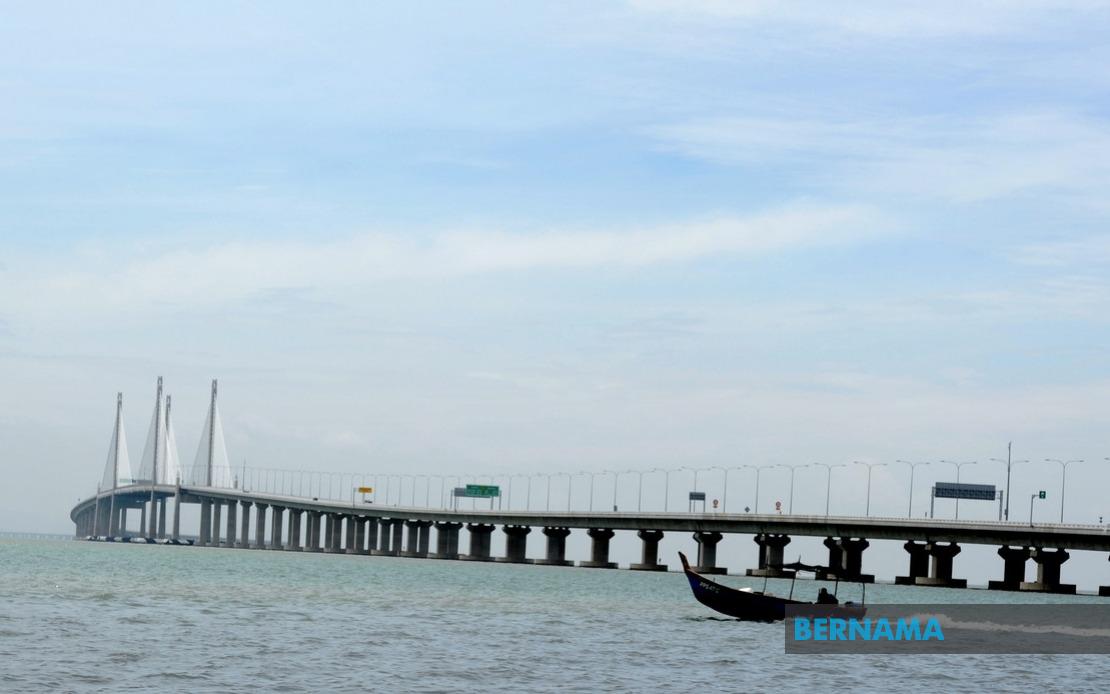
The Sultan Abdul Halim Mu'adzam Shah Bridge, Penang's vital Second Bridge link between the island and mainland, will undergo a temporary closure of its eastbound carriageway on the evening of August 8, beginning at 8 pm and lasting until 3 am the following morning. Bridge operator Jambatan Kedua Sdn Bhd announced the overnight shutdown to accommodate the Cultural Night Run 2026, a community sporting event expected to draw substantial participation across the bridge's span.
The decision to host this running event on one of Penang's most critical transport corridors underscores the region's growing emphasis on combining infrastructure usage with public recreation and wellness initiatives. The Cultural Night Run represents an increasingly popular format in Malaysian cities, where major transport arteries are temporarily repurposed to serve sporting and cultural purposes, transforming everyday commuter routes into public spaces for community engagement. This particular event on the Second Bridge is positioned as a signature gathering that takes advantage of the structure's unique vantage points and pedestrian appeal.
Operators have structured the closure to minimise disruption by maintaining the westbound direction entirely open throughout the event period. This approach ensures that traffic flowing from the mainland toward Penang island remains uninterrupted, preserving at least half of the bridge's bidirectional capacity. Additionally, alternative routes from Bandar Cassia and connections from Batu Kawan Industrial Park through to the North-South Expressway will continue operating normally, providing bypass options for vehicles heading toward the expressway network rather than directly into the island.
For drivers requiring access to the mainland during the closure window, authorities have explicitly recommended using the Penang Bridge as the primary alternative. The original Penang Bridge, which opened in 1985 and carries significantly higher traffic volumes than its newer counterpart, serves as Penang's primary arterial connection. While this redirection may increase congestion on the older bridge during peak night-time hours, traffic management systems are typically activated to handle the temporary surge. Motorists should anticipate potential delays if travelling during popular commute windows, particularly the early evening period between 8 pm and 10 pm when many individuals complete their daily activities.
The seven-hour window creates a specific window of inconvenience that, while substantial, remains limited enough to avoid creating extended economic disruption. This timing appears deliberately chosen to capture evening participation while minimising impact on overnight commercial logistics and international trade movements that increasingly occur during night hours across Southeast Asia. Many freight operations maintain schedules that avoid daytime congestion, making this overnight closure a calculated compromise between event requirements and regional commercial considerations.
Jambatan Kedua Sdn Bhd's operational directive emphasises compliance with temporary traffic control measures throughout the closure period. Traffic signs and management personnel will guide remaining vehicles along the westbound carriageway while ensuring that event participants have secure passage across the bridge structure. The instruction reflects standard protocols for managing mixed-use events on high-capacity infrastructure, where pedestrian safety and vehicular flow must coexist within clearly demarcated zones.
From a broader infrastructure perspective, the utilisation of major bridges for cultural and sporting events has become an established practice in major Malaysian cities, particularly in Kuala Lumpur, Shah Alam, and now increasingly in secondary urban centres like Penang. This trend reflects evolving urban planning philosophies that view infrastructure not merely as functional transport corridors but as civic spaces capable of hosting community-building activities. The Second Bridge, since its completion in 2008, has become sufficiently integrated into regional consciousness that its temporary repurposing for cultural purposes generates public interest rather than merely administrative inconvenience.
For residents and regular commuters in the Penang metropolitan area, this closure represents a practical reminder to plan alternative routes and departure times. The cultural event's scheduling during off-peak commute hours suggests organisers have consulted with transport authorities to identify optimal timing. However, individuals with rigid schedules or specific mainland destinations should factor additional travel time into their planning, as the Penang Bridge alternative may experience congestion beyond its normal levels.
The event also highlights Penang's continuing investment in lifestyle and wellness activities that complement its economic and administrative functions. As a major commercial and tourism destination, the state increasingly leverages its natural and constructed assets to strengthen community bonds and enhance quality-of-life perceptions. Hosting significant running events on iconic infrastructure bridges creates memorable civic moments while reinforcing public identification with regional symbols like the Second Bridge.
Beyond immediate operational considerations, this closure exemplifies how modern infrastructure management requires balancing competing demands. Transport planners must accommodate economic necessity, public safety, community engagement, and event promotion simultaneously. The decision to permit the Cultural Night Run demonstrates confidence in Penang's traffic management systems and the public's willingness to adapt to temporary inconveniences for broader community benefit. Future similar events will likely follow comparable protocols, establishing precedent for infrastructure sharing between commercial and cultural purposes.

