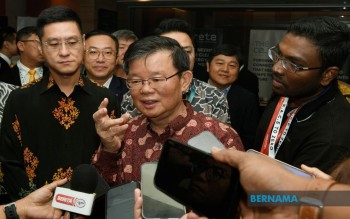
Twenty-five companies have signalled their intention to tap into Penang's newly established Climate Mitigation Fund, which offers preferential financing coupled with sustainability guidance for businesses navigating the energy transition. Five of these applicants are already undergoing formal evaluation, signalling momentum behind the state's efforts to integrate environmental compliance with industrial competitiveness. Chief Minister Chow Kon Yeow announced the milestone during the R.A.C.E To Zero: Penang Edition event in George Town, emphasising that the fund represents a practical mechanism through which manufacturers can access capital to implement adaptation strategies across their operations.
The Climate Mitigation Fund operates as a joint initiative between the Penang state government and Alliance Bank, underpinned by the Penang Green Industry Programme. The scheme currently carries an initial war chest of RM20 million—composed of RM5 million in state coffers and RM15 million from the banking partner—though financial commitments could eventually reach RM100 million. This tiered funding structure reflects confidence among both public and private stakeholders that demand for green financing will justify deeper investment. By combining government seed capital with commercial banking resources, the fund positions itself as a sustainable mechanism rather than a temporary subsidy, potentially establishing a replicable model for other Malaysian states grappling with industrial decarbonisation.
Eligible small and medium enterprises as well as mid-tier companies can access loans of up to RM500,000, a sum carefully calibrated to address typical adaptation costs without exceeding the financing capacity of smaller manufacturers. Critically, this financing extends beyond mere capital provision. Participating firms receive sustainability assessments, expert advisory services, and performance grants that reduce the net cost of environmental upgrades. This multi-layered support acknowledges a persistent challenge facing Malaysian manufacturers: many lack in-house expertise to conduct energy audits or identify optimal renewable energy solutions. By bundling finance with technical assistance, the fund removes an often-overlooked barrier to adoption.
Chow's commentary during the launch event revealed the strategic rationale underpinning Penang's accelerating climate agenda. The state recorded RM436.9 billion in electrical and electronics exports last year, constituting approximately 68 per cent of Malaysia's total E&E shipments—a concentration that simultaneously represents opportunity and vulnerability. Global multinational corporations headquartered in North America and Europe increasingly embed carbon reduction requirements into procurement contracts, effectively imposing environmental standards on their Southeast Asian supply chains. For Penang's predominantly export-oriented manufacturing base, sustainability is transitioning from a compliance burden to a competitive prerequisite. Companies that cannot demonstrate access to renewable energy or prove declining carbon intensity across operations risk exclusion from premium supply networks, directly threatening market share and investment flows.
The shift reflects broader transformations in global capital allocation and consumer demand. Traditional manufacturing selection criteria—talent availability, infrastructure quality, logistics efficiency, unit costs—remain relevant. However, multinational purchasing departments now routinely ask suppliers about electricity sourcing and Scope 2 emissions reduction pathways. This represents a qualitative change in how industrial location decisions get made. Penang's industrial park operators and state planners recognise that passivity on energy transition could gradually erode the region's attractiveness as a manufacturing hub, particularly as competing jurisdictions in Vietnam, Thailand, and Indonesia simultaneously invest in renewable infrastructure and green financing schemes.
Understanding this competitive dynamic helps explain Penang's rollout of the Penang Energy Framework, unveiled in November 2024. The framework establishes dual targets: a 25 per cent reduction in energy intensity by 2030, coupled with renewable energy comprising at least 10 per cent of the state's total energy mix within the same timeframe. These metrics reflect realistic ambition given Penang's geographic constraints. The state's limited land area precludes large-scale utility solar farms typical in flatter, more sparsely populated regions. Consequently, rooftop installations emerge as the primary mechanism for distributed renewable generation. Under revised building codes, newly constructed commercial and industrial facilities must allocate at least 75 per cent of usable roof area to solar panels or demonstrate equivalent renewable energy sourcing through third-party contracts aligned with their Tenaga Nasional Berhad tariff classifications.
Beyond rooftop solar, Penang is exploring complementary renewable pathways adapted to its unique constraints. The Penang Water Supply Corporation is studying floating solar installations atop its reservoir systems—a technology gaining traction across Southeast Asia as a water-efficient approach to generation. Silicon Island, Penang's emerging technology and manufacturing enclave, will integrate renewable energy from inception rather than retrofitting existing facilities, with a dedicated Green Tech Park anchored by solar capacity. This development sequencing reflects learned lessons from other jurisdictions where renewable energy infrastructure gets bolted onto legacy industrial layouts with suboptimal efficiency outcomes. By designing sustainability into new projects from the outset, Penang maximises renewable integration while minimising costly retrofits.
Energy efficiency constitutes another critical pillar within the state's transition strategy. Penang is introducing standardised energy intensity metrics that allow manufacturers to measure consumption benchmarks, compare performance against peers, and identify improvement opportunities through data-driven analysis. State government buildings and local authority properties are undergoing comprehensive renewable energy and efficiency assessments, with new facilities targeting at least five per cent renewable sourcing from total energy consumption. Existing government facilities face encouragement—though not mandates—to pursue similar targets. This mixed approach reflects political pragmatism; setting binding efficiency requirements across all public infrastructure could generate budget pressures, while voluntary frameworks maintain momentum without creating fiscal strain.
Significantly, Penang's energy initiatives align with the federal government's National Energy Efficiency Action Plan 2.0, which targets an 11.6 per cent reduction in national energy demand by 2035. This vertical policy integration carries strategic importance often overlooked in analyses focused on individual state programmes. Malaysia's electricity system remains fundamentally integrated at the national level, with generation, transmission, and distribution regulated by federal bodies. State-level clean energy mandates carry limited effect if unaligned with national grid planning, fuel procurement strategies, and tariff structures. By anchoring Penang's 2030 targets to compatible federal 2035 objectives, policymakers enhance the credibility and achievability of both frameworks. Manufacturers perceiving state and national governments as genuinely committed to energy transition are more inclined to invest capital in long-term renewable infrastructure rather than treating the shift as temporary political theatre.
The convergence of the Climate Mitigation Fund launch with these broader policy frameworks suggests Penang is constructing a comprehensive ecosystem designed to facilitate industrial decarbonisation. Finance flows become more attractive when supported by physical infrastructure, regulatory clarity, and skilled advisory services. The initial cohort of 25 interested companies and five applications under review represents a moderate but encouraging start. Success with these early adopters could trigger larger uptake as neighbouring manufacturers observe that green adaptation neither decimates profitability nor requires abandoning operational efficiency. Over time, the fund and its accompanying programmes may catalyse a qualitative restructuring of Penang's industrial base—one where lower-carbon production becomes economically superior rather than merely environmentally desirable. For a region dependent on export markets increasingly hostile to carbon-intensive supply chains, such transformation represents less an optional amenity and more an essential precondition for sustained competitiveness.

