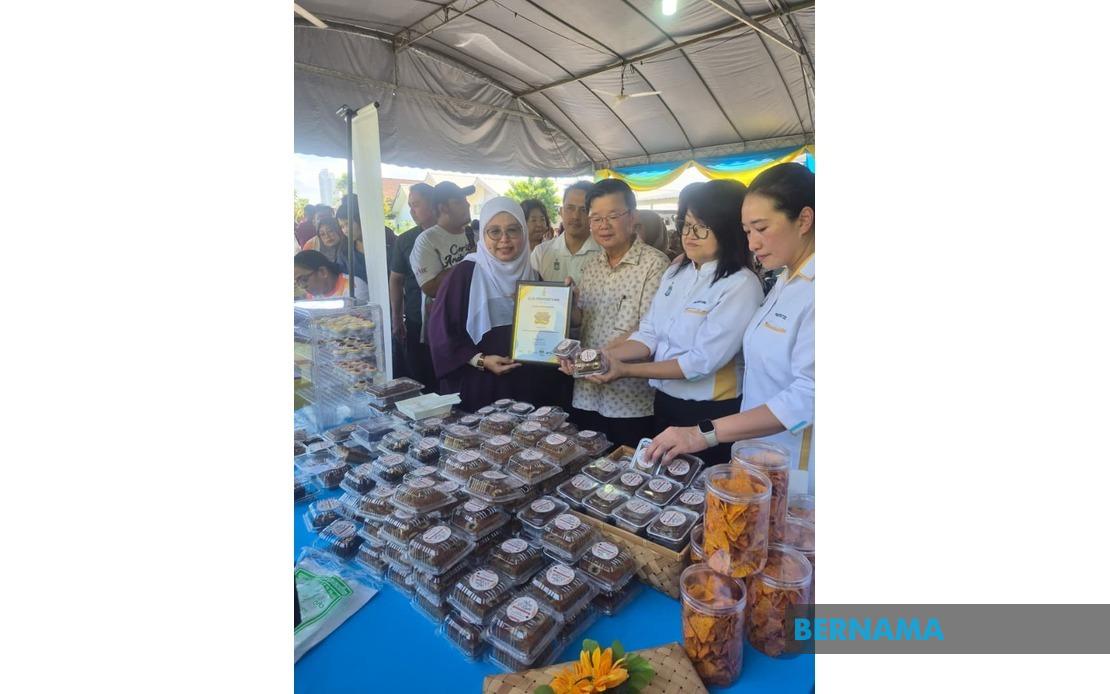
The Penang state government has signalled its patience with the stalled Jelutong landfill reclamation initiative is approaching an end, declaring it will terminate the project if the operating company cannot secure the required environmental clearance within a final deadline to be determined. Chief Minister Chow Kon Yeow delivered the ultimatum during a public appearance in Bukit Mertajam, emphasising that after years of extensions and unmet conditions, the state must now take decisive action on the long-delayed RM1 billion infrastructure undertaking.
Chow's statement represents a hardening of the government's stance towards PLB Engineering Bhd, the developer that has held rights to the project since a 2020 joint development agreement was signed with the Penang Development Corporation. The company faces mounting pressure to clear a critical hurdle: obtaining Environmental Impact Assessment approval from Malaysia's Department of Environment. The DOE had previously rejected the project's EIA report, effectively freezing all work on what is meant to be a two-part development transforming the 34-hectare closed Jelutong landfill site and adjoining coastal waters along Persiaran Karpal Singh.
The chief minister's tough messaging reflects mounting frustration within the state administration over repeated delays. According to Chow, the previous state government had granted the developer five separate extensions to meet DOE requirements, yet additional compliance conditions have continued to emerge, creating an expanding list of obligations that the company must satisfy. This pattern of escalating requirements has become a sticking point, with Chow acknowledging that the company faces genuine difficulties in adapting to these sequential demands, some of which impose substantial technical or financial burdens.
Yet Chow stopped short of announcing the length of the final extension period, instead pledging that details would be released in due course. This measured approach suggests the state government is still in active negotiations with PLB Engineering, with ongoing correspondence about how the company should address the DOE's concerns. The developer has reportedly submitted feedback responding to previous government communications, indicating a dialogue remains open even as patience wears thin.
The landfill restoration component of the project holds genuine environmental and public health significance for Penang. The site, now dormant, still requires proper rehabilitation to prevent contamination and land subsidence issues that could affect surrounding areas. This necessity complicates the government's position: while officials grow impatient with delays, they recognise that abandoning the project entirely would leave the site in its current problematic state. Chow stressed that rehabilitation work remains essential, keeping the door open for alternative approaches.
If PLB Engineering ultimately cannot meet the deadline, the state government has signalled willingness to explore appointing a different contractor. Chow indicated that when the time comes to make this transition, the state would evaluate suitable alternatives and potentially rebid the project to another qualified entity. This contingency planning suggests officials are preparing for a scenario in which the current arrangement ends and the development reverts to the government's direct control.
The environmental assessment process has proven to be the critical bottleneck. Malaysia's EIA requirements are designed to ensure that major infrastructure and land reclamation projects comprehensively address potential ecological impacts, particularly concerning the coastal marine environment adjacent to Persiaran Karpal Singh. Reclamation work in such areas requires demonstrating that impacts on fisheries, mangrove ecosystems, and water quality can be adequately managed. These assessments demand rigorous data collection, modelling, and mitigation strategies that can take considerable time to develop and revise.
For Malaysian developers and state governments alike, the Jelutong situation illustrates the tension between project ambition and environmental governance. The RM1 billion investment represents significant capital and potential economic benefits for Penang, yet it cannot proceed without satisfying legitimate regulatory requirements that protect natural resources and public welfare. This dynamic is increasingly common across Southeast Asia, where competing pressures for development and environmental stewardship create extended timelines and complicated negotiations.
The project's origins trace to 2020, when it was awarded to PLB Engineering through a joint development agreement involving the Penang Development Corporation and the state government. The structure suggests this is not a simple developer-led commercial venture but a more complex partnership arrangement where state agencies retain direct interests. This may explain the government's reluctance to summarily terminate the agreement, even as frustration builds over missed milestones.
For Penang residents and businesses, the extended delays represent lost opportunity. The rehabilitation of the landfill site and creation of reclaimed land could potentially unlock new commercial, residential, or recreational development in one of the state's established urban zones. Yet such benefits cannot materialise without first resolving the environmental questions that have stalled the project for several years now.
Chow's announcement that a final deadline will be forthcoming should focus minds at PLB Engineering, the Penang Development Corporation, and the Department of Environment. The company now faces a clear choice: either mobilise resources to complete all outstanding EIA requirements within the timeframe the state will set, or risk losing the concession entirely. For the state government, setting and enforcing this deadline offers a pathway to break the cycle of extensions while maintaining options for moving forward with the essential landfill rehabilitation work, whether through the current developer or through an alternative arrangement.

