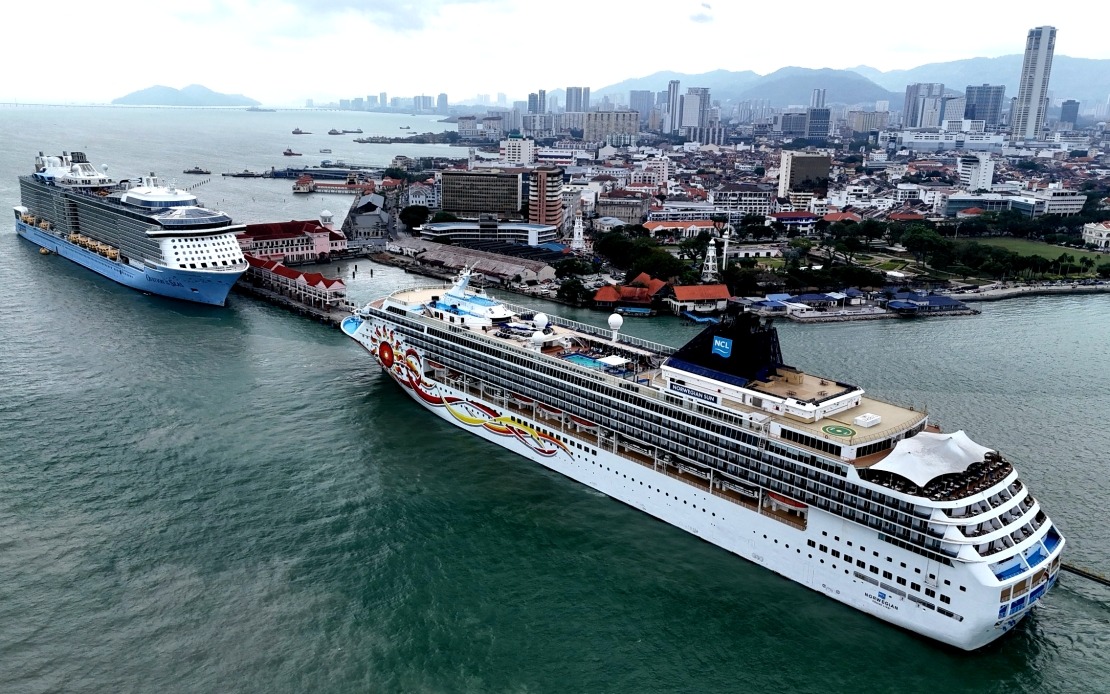
The Penang Port Commission (SPPP) has reinforced its commitment to distributing the advantages of port expansion across all layers of Malaysian society, with particular emphasis on assisting disadvantaged populations in alignment with the Malaysia MADANI national agenda. This reaffirmation came during commemorative events held in George Town celebrating the commission's seven-decade history and the inauguration of its 2026 National Month initiative.
Datuk Yeoh Soon Hin, heading the SPPP, articulated the organisation's evolution beyond its core mandate of advancing port infrastructure and commerce. Over 70 years of operation, the commission has progressively integrated community welfare and social development into its operational philosophy, positioning itself as a stakeholder in broader national prosperity rather than merely a commercial entity. This dual-track approach reflects Malaysia's contemporary emphasis on inclusive growth and ensuring that economic development translates into tangible improvements for ordinary Malaysians, not simply shareholders and corporate interests.
The MADANI framework, which underpins the current government's development philosophy, prioritises equitable distribution of economic gains and strengthening social safety nets. SPPP's reiteration of commitment to these principles during its anniversary celebrations demonstrates how statutory bodies are being repositioned within this broader national narrative. For a port authority—historically focused on logistics, trade facilitation, and operational efficiency—to prominently feature welfare contributions and community initiatives signals a deliberate shift in how state-linked organisations perceive their societal responsibilities.
During the anniversary tea reception attended by Yang Dipertua Negeri Tun Ramli Ngah Talib and his wife Toh Puan Raja Noora Ashikin Raja Abdullah, the commission distributed financial contributions to 185 beneficiaries drawn from welfare homes across Penang. These recipients encompassed three vulnerable categories: orphans lacking family support structures, persons with disabilities facing employment and social integration challenges, and single mothers navigating economic hardship while raising children independently. This targeted distribution approach indicates a strategic focus on Malaysia's most economically precarious populations rather than broad, undifferentiated charitable giving.
Yeoh's address highlighted the philosophical underpinning of SPPP's welfare activities, framing development and prosperity as inherently shareable outcomes that demand intentional mechanisms for redistribution. The presence of the state's highest constitutional authority and his spouse at the welfare distribution component of the anniversary event was not ceremonial happenstance but rather institutional signalling that such activities merit gubernatorial endorsement and participation. This visibility elevates social responsibility from a peripheral corporate activity to a core component of the commission's identity and public perception.
The initiative extends beyond simple cash transfers to encompassing volunteer services and community programmes executed in partnership with external organisations. By institutionalising multiple pathways for engagement—financial contributions, volunteer labour, and collaborative programming—SPPP creates diverse opportunities for stakeholder participation while distributing the responsibility for social welfare across a broader ecosystem rather than concentrating it within the commission alone. This multiplication of engagement channels potentially increases both the reach and sustainability of initiatives compared to isolated charitable distributions.
Yeoh explicitly urged ongoing participation from diverse constituencies in supporting such programmes, framing corporate welfare as a collective responsibility rather than an exclusive organisational undertaking. This rhetorical approach encourages other port industry stakeholders, suppliers, employees, and related commercial entities to integrate similar commitments into their operational frameworks. In the context of Penang's competitive positioning as a major regional port handling significant maritime trade volumes, such social initiatives may also function as soft power that enhances the port's reputation and stakeholder relationships.
The National Month celebration component—marked by the presentation of Jalur Gemilang flags to ten port industry companies—interweaves patriotic observance with commercial and social activities. This integration suggests that organisational commitment to national symbols and national development priorities should manifest across multiple dimensions simultaneously. Port operators and industry participants accepting these flags do so against a backdrop of visible corporate social responsibility, creating implicit expectations regarding their own conduct and social engagement.
For Malaysian readers, particularly those in Penang and other port cities, this development illustrates how major infrastructure operators are increasingly expected to justify their existence and profitability through demonstrated social contributions. Port operations generate substantial economic value through trade facilitation, employment creation, and government revenue; however, modern governance expectations demand that these economic benefits translate into visible improvements for vulnerable populations. SPPP's welfare initiatives represent an attempt to demonstrate this translation and strengthen the legitimacy of continued government support for port infrastructure investment.
The broader regional context matters significantly here. Southeast Asian ports operate in increasingly competitive environments where multiple jurisdictions vie for cargo and investment. Differentiating factors increasingly include not merely operational efficiency and tariff competitiveness but also organisational reputation, environmental stewardship, and social responsibility. By prominently featuring its welfare commitments during its 70th anniversary, SPPP positions Penang port within a narrative of responsible capitalism and inclusive development—attributes that may appeal to shipping lines, cargo owners, and government partners evaluating port partnerships.
Yeoh's strategic timing of these reaffirmations during a major anniversary celebration suggests deliberate institutional brand-building. The conjunction of historical commemoration, welfare distribution, and patriotic observance creates a comprehensive narrative wherein SPPP presents itself not as a purely commercial entity seeking profit maximisation but as a developmental institution aligned with national aspirations for inclusive prosperity. This positioning may prove strategically valuable as the commission navigates regulatory environments, seeks infrastructure investment approvals, and competes for cargo business in increasingly crowded regional port markets.

