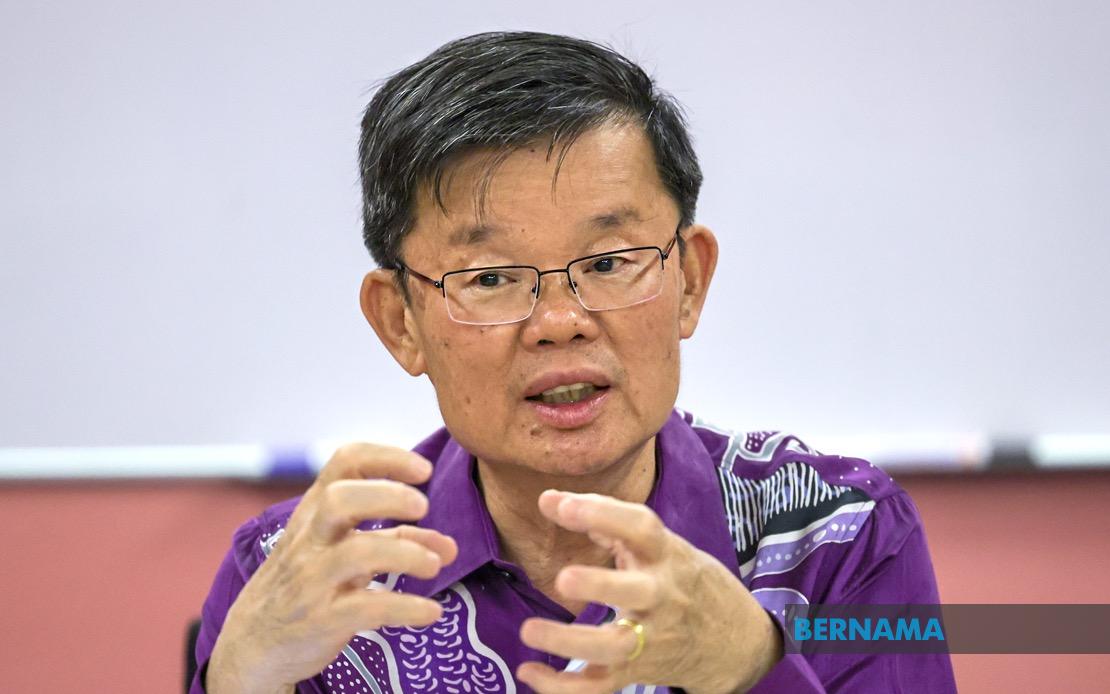
Penang Pakatan Harapan will continue to retain its Barisan Nasional state executive councillor throughout the current administration cycle, extending through the next general election. Chief Minister Chow Kon Yeow, who chairs the regional PH coalition, announced the decision following a formal meeting of party leaders in George Town, signalling the partnership forged during the 2023 state polls remains intact despite the significant electoral gap between the two coalitions.
The choice to maintain the current arrangement reflects the broader electoral agreement struck between PH and BN when they secured 29 of Penang's 40 state seats in the 2023 contest. By preserving the BN representative's position as State Rural Development, Agrotechnology and Food Security Committee chairman—currently held by Datuk Rashidi Zinol—Penang's leadership demonstrates commitment to the wider Unity Government framework that has defined Malaysian politics since the 2022 federal election. This decision carries symbolic weight beyond the state capital, suggesting that regional PH-BN cooperation may extend further into the next electoral cycle.
Chow framed the decision as part of a larger strategic calculus to strengthen inter-party collaboration while pressing forward with PH's reform agenda. He emphasized that PH sees value in deepening ties among coalition partners before the next general election, viewing this period as an opportunity to build rather than fracture alliances. The statement implies that PH leadership believes electoral mathematics and political stability favour maintaining the current partnership structure, at least through this electoral period.
The Penang leadership has drawn specific lessons from recent state election outcomes in Johor and Negeri Sembilan, prompting a comprehensive review of the party's competitive position. The plan involves systematic analysis of every state seat from multiple angles—demographic, geographic, and organisational—to determine optimal candidate selection and campaign strategies. This methodical approach suggests PH recognises vulnerabilities that cannot be overlooked or assumed away, particularly given the volatility that marked those recent state contests.
Reinforcing its electoral narrative has become a priority for the coalition in Penang. Chow acknowledged that public perception often shifts more rapidly than measurable improvements in policy outcomes, a crucial insight for opposition-turned-ruling parties struggling with implementation timelines. PH intends to address this perception gap by being more forthright about past shortcomings rather than solely highlighting achievements. This represents a subtle but important strategic shift toward narrative authenticity.
Digital platforms will receive heightened attention as PH seeks to communicate more effectively with voters, particularly younger demographics increasingly disengaged from traditional political messaging. The coalition recognises that social media, messaging applications, and online forums now shape political discourse, particularly among urban and semi-urban populations who form crucial swing voter blocs.
The Undi18 voter group—Malaysians eligible to vote from age 18—represents a strategic frontier that PH plans to engage more intensively. With no prior voting history and potentially distinct policy priorities around climate action, employment prospects, and digital rights, these younger voters could shift electoral outcomes in competitive constituencies. Early relationship-building and policy dialogue may prove decisive in marginal seats.
Chow pointed to administrative stability and institutional integrity as competitive advantages the Penang government maintains. The state administration's track record in economic development, foreign investment attraction, and job creation form the foundation of PH's electoral case. However, he cautioned against complacency, recognising that sustained performance alone cannot guarantee political survival without effective communication and genuine public engagement.
The 2023 result that produced this arrangement saw DAP's dominant performance—capturing all 19 seats it contested—contrasted sharply with BN's two seats. PKR contributed seven seats while Amanah secured one. This composition reflects DAP's commanding position in Penang politics and its fundamental role in anchoring the state coalition. The disparity in seat counts meant that BN's continued participation required explicit PH consent, making the decision to retain the executive councillor position a gesture toward maintaining the broader federal Unity Government arrangement.
For Malaysian political observers, Penang's decision signals that the Unity Government experiment remains viable at the state level despite various tensions and challenges evident elsewhere. The commitment to retain BN representation suggests PH calculates that electoral risk from maintaining opposition rivals in state government is offset by benefits of federal stability and coalition coherence. This reflects the particular political mathematics of the Penang context, where PH's strength may reduce perceived threats from having BN officials in administrative roles.
The statement also reveals internal PH confidence in its organisational capacity and messaging. Rather than viewing BN as a threat requiring isolation, PH leadership appears comfortable with competitive coexistence within a power-sharing framework. This confidence may reflect polling data, organisational assessments, or simply strategic decisions to prioritise stability over confrontation in the immediate electoral period.
Moving toward the next general election, PH's Penang strategy combines institutional consolidation with narrative renewal and targeted voter engagement. The decision to retain BN's executive councillor anchors this approach in continuity and partnership while the simultaneous emphasis on addressing weaknesses and modernising communications demonstrates awareness that past performance provides no guarantee of future electoral success in Malaysia's volatile political environment.

