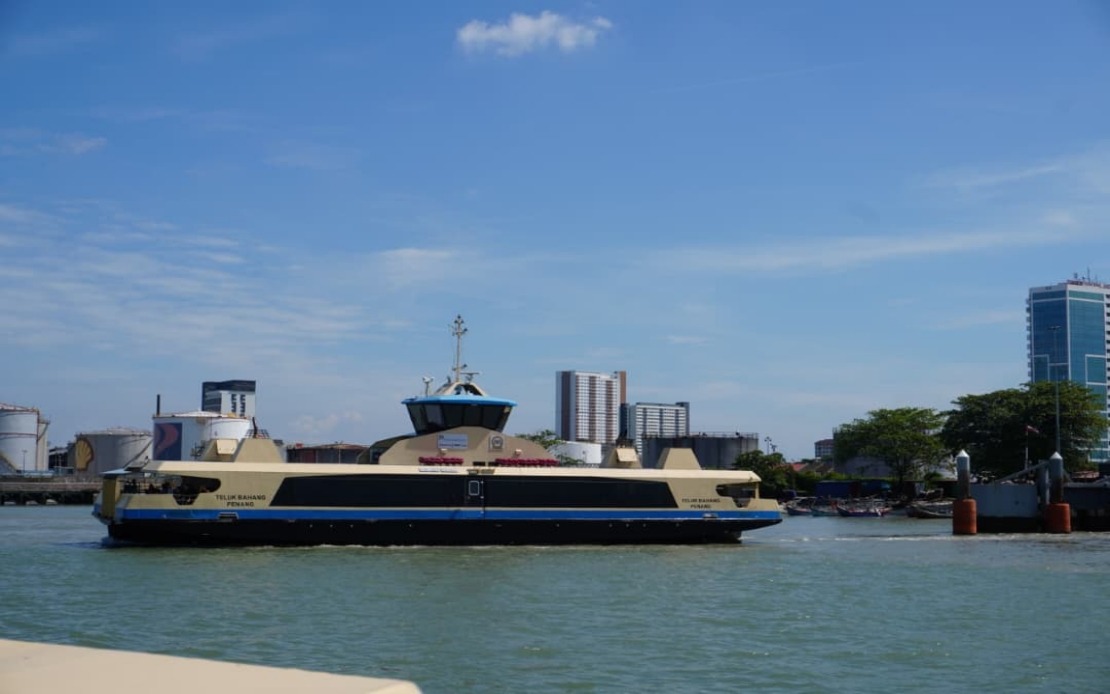
Penang's two ferry terminals will waive fares for all Malaysian passengers on August 31, marking a celebratory gesture timed to coincide with the nation's 69th National Day. The complimentary service has been arranged through collaboration between Penang Port Commission (SPPP) and operating partner Penang Port Sdn Bhd (PPSB), with SPPP chairman Datuk Yeoh Soon Hin announcing the plan as part of broader efforts to enhance public mobility during festive occasions.
The free passage will apply across both the Sultan Abdul Halim Terminal in Seberang Perai and the Raja Tun Uda Terminal in George Town, operating under the standard ferry timetable without service alterations. This approach ensures that commuters and day-trippers can access the strait-crossing service without disruption to regular scheduling, maintaining predictability for those planning their journeys across the Penang passage.
Financial savings from the initiative will be substantial for regular users. Foot passengers normally pay RM2 per single journey, while two-wheeled vehicle operators are charged RM2.50 per crossing. Those using the service both directions on National Day will recover up to RM5 in savings, figures that accumulate significantly when projected across the anticipated passenger volumes.
Historical data from the previous National Day ferry promotion provides insight into anticipated usage. During last year's festivities, the terminals recorded 9,185 pedestrian journeys and transported 1,874 two-wheeled vehicles across both directions. These numbers underscore the ferry's relevance as an alternative transport corridor, particularly when road congestion peaks during public holidays when many Malaysians venture out to celebrate.
The initiative carries strategic transportation objectives beyond mere festive goodwill. Officials emphasise that removing fare barriers encourages commuters to shift from private vehicles to public transit, thereby addressing chronic traffic congestion around the Penang Bridge and Second Penang Bridge toll plazas. During National Day periods, when holiday travel patterns intensify, such modal shifts can meaningfully reduce vehicular volumes on critical road corridors. This aligns with broader regional sustainability agendas emphasising efficient, lower-emission public transport networks.
In a complementary gesture marking SPPP's 70th anniversary, the commission has partnered with the Penang Ferry Museum to launch the 'Kids Go Free Merdeka Special' campaign. Children aged 12 and below will enjoy complimentary museum admission from August 29 through August 31, 2026, linking the ferry operator's anniversary milestone with National Day celebrations. This multi-day programming extends the festive period and encourages families to experience the region's maritime heritage during the holiday break.
For Malaysian residents contemplating inter-island travel during the National Day long weekend, the free ferry option presents a cost-effective alternative to toll-based road crossings. The financial proposition becomes particularly attractive for groups and families who might otherwise consolidate their movements onto toll highways. Such behavioural shifts, if sufficiently widespread, contribute meaningfully to traffic load distribution and enhance overall transport network efficiency across Penang.
The coordination between SPPP and PPSB reflects evolving perspectives within Malaysian transport infrastructure management. Rather than viewing public transit solely through operational or financial lenses, authorities increasingly frame ferry and bus services as strategic tools for congestion mitigation and air quality improvement. Penang's promotion demonstrates how leveraging existing infrastructure—ferries that run regardless of promotional campaigns—through temporary fare removal can achieve dual objectives of public engagement and transport planning goals.
Regional comparisons highlight Penang's proactive stance. Other Malaysian states have implemented selective public transport waivers during national celebrations, yet sustained coordination between port operators and municipal authorities remains inconsistent. Penang's structured approach, with predetermined terminals, clear passenger categories, and linked cultural programming through the ferry museum partnership, sets operational standards worth examining across the federation.
As Malaysia approaches its 69th National Day, celebrations will increasingly centre on public gatherings and family outings. The availability of affordable, accessible transport becomes critical infrastructure supporting national festivities. The Penang ferry initiative, though geographically limited, demonstrates how transport policy can reinforce national observance while simultaneously addressing persistent urban challenges like congestion and air pollution.
The broader implications for Southeast Asian transport planning merit consideration. As the region's cities expand and congestion deepens, governments face growing pressure to incentivise public transit adoption. Penang's model of temporary fare removal tied to significant public occasions offers replicable lessons: identify existing infrastructure with available capacity, coordinate with operators to eliminate marginal costs during peak demand periods, and link the initiative to broader sustainability and celebration narratives that resonate with public values and behaviour.

