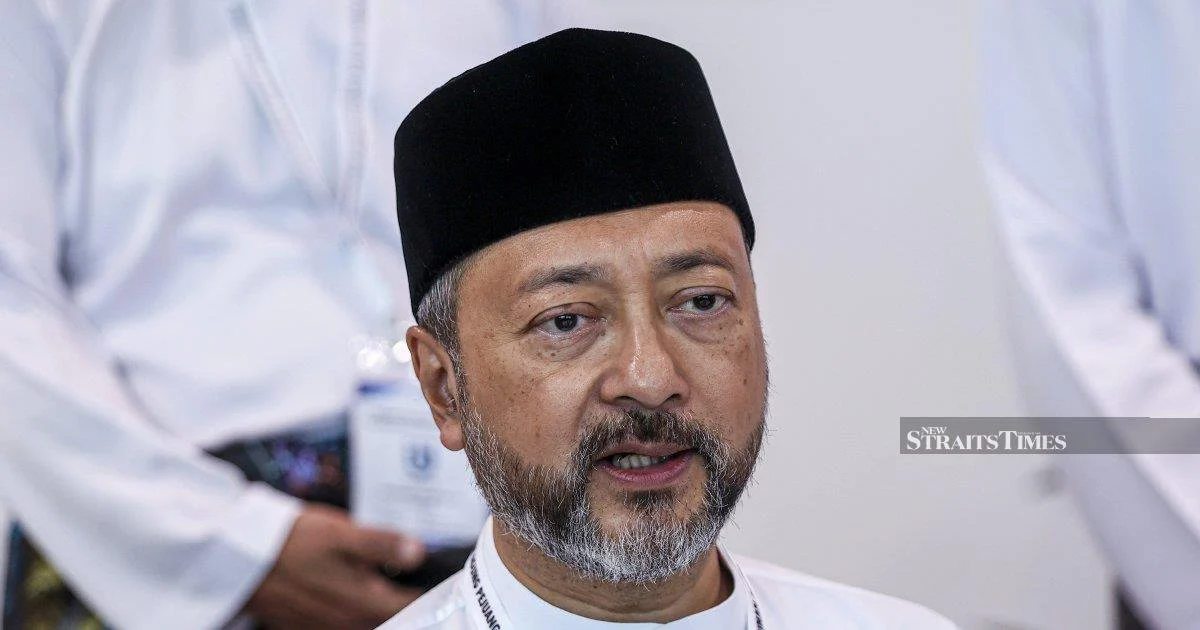
Parti Pejuang Tanah Air's integration into Perikatan Nasional signals the commencement of a comprehensive drive to bring together disparate political factions and confront escalating difficulties facing the nation, announced Datuk Seri Mukhriz Mahathir, the party's president, in a statement released here on Tuesday.
The addition of Pejuang to the PN coalition represents a significant shift in Malaysia's political landscape, as the coalition seeks to strengthen its parliamentary position and present a unified front on major governance issues. Mukhriz's characterisation of the move as merely the opening salvo in a broader consolidation effort suggests that PN leadership envisions further expansion of its ranks in the months ahead, potentially drawing in other smaller parties or independent-minded politicians seeking a coalition home.
For Malaysian observers, this development carries considerable weight beyond simple seat arithmetic. The PN coalition, which already comprises PAS, Perikatan Seberang Perak, and other components, now incorporates Pejuang's membership base and parliamentary representation. This expansion reflects a calculated strategy to build sufficient critical mass to influence national legislative outcomes and shape the policy agenda across multiple sectors simultaneously.
Mukhriz's framing of the admission as part of a "broader unity effort" rather than a tactical alliance highlights the ideological positioning that PN is attempting to cultivate. By emphasising shared commitments to addressing national challenges—ranging from economic management to institutional reform—the coalition is constructing a narrative that transcends narrow partisan interests. This messaging approach aims to appeal to swing voters and uncommitted political constituencies who prioritise effective governance over factional loyalty.
The timing of Pejuang's entry warrants scrutiny given Malaysia's complex political dynamics. The party, established with roots in certain demographic constituencies and ideological positions, brings particular voter demographics and regional strongholds to PN's portfolio. Understanding which constituencies and voter groups Pejuang mobilises becomes essential for assessing whether this merger genuinely strengthens PN's competitive position or merely represents a reshuffling of existing anti-government sentiment without expanding the coalition's ultimate reach.
From a Southeast Asian perspective, Malaysia's coalition politics function as a barometer for regional political trends. The consolidation impulse that Mukhriz describes—drawing together parties with varying histories and platforms—reflects broader patterns visible across the region where traditional two-bloc competition has fragmented into more complex, fluid arrangements. Thailand, Indonesia, and the Philippines have all experienced similar coalition-building dynamics in recent years, suggesting that Malaysia's political maturation involves navigating multipolar arrangements rather than binary confrontations.
The stated emphasis on confronting "growing national challenges" deserves deeper examination. Malaysian politics rarely occurs in a vacuum; references to mounting difficulties typically encompass economic inequality, fiscal sustainability, institutional legitimacy, and public service efficiency. How effectively PN can translate its expanded numerical representation into coherent policy responses to these challenges will largely determine whether the coalition strengthens its foundation for future electoral contests or merely accumulates bodies without genuine cohesion.
Pejuang's absorption into PN also raises questions about internal coalition management. Integrating parties with distinct organisational cultures, leadership hierarchies, and voter expectations requires sophisticated negotiation around ministerial positions, policy influence, and resource allocation. Previous Malaysian coalition experiences—including both BN's long-standing arrangements and Pakatan Harapan's formation and subsequent difficulties—demonstrate that formal membership agreements often prove insufficient when competing priorities emerge under governance pressure.
The longer-term implications for Malaysia's opposition coalition merit consideration as well. As PN consolidates and expands, it necessarily reshapes the competitive landscape facing Pakatan Harapan and other opposition groupings. Whether these rival coalitions respond through their own consolidation efforts or through alternative strategies will substantially influence upcoming electoral contests at both state and federal levels. The fluid nature of current Malaysian politics suggests that today's alignments may prove temporary unless sustained by genuine policy alignment and electoral success.
Mukhriz's emphasis on addressing "national challenges" through unified effort also carries implicit criticism of the current government's perceived capacity or commitment to managing these difficulties. This framing allows PN to position itself as a competent alternative capable of delivering superior governance outcomes. Whether voters ultimately accept this proposition will depend partly on PN's ability to translate internal cohesion into demonstrable policy achievements or credible governance proposals that resonate with multiple constituencies.
Looking forward, Pejuang's entry into PN should be understood as part of Malaysia's ongoing realignment rather than a conclusive settlement of the political configuration. The peninsula's competitive landscape remains sufficiently volatile that future defections, mergers, or formations of new coalitions remain plausible. What matters now is whether PN's expanded membership translates into organisational strength that can sustain collective action on behalf of its constituent parties' interests and, ultimately, capture sufficient electoral support to form government.