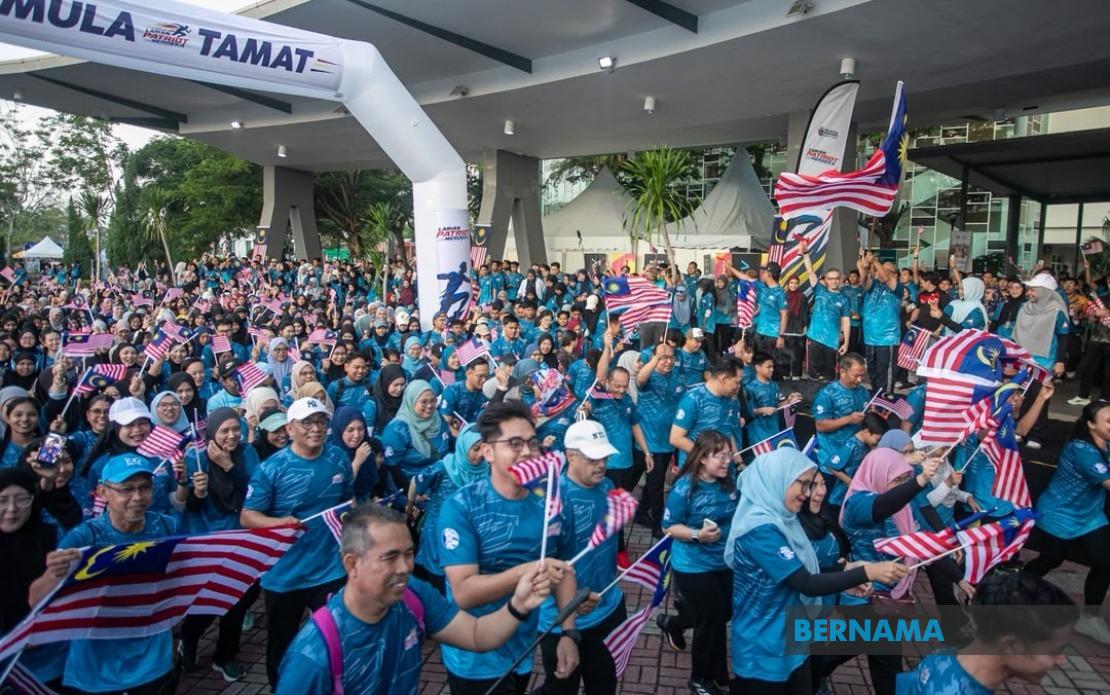
The early morning streets of Ipoh came alive on July 19 when approximately 2,000 participants converged on the Sultan Azlan Shah Ministry of Health Training Institute to take part in the Patriot Merdeka Run, an event organised to launch the 2026 National Month and Malaysia Day celebrations alongside the Fly the Jalur Gemilang Campaign. Arriving before sunrise, the gathering revealed the depth of community enthusiasm for patriotic observance, with families, children, and individuals from diverse backgrounds assembling at the venue to demonstrate their connection to the nation.
The event opened with a spirited mass aerobics session that set an energetic tone for the morning, transforming the training institute grounds into a hub of collective movement and purpose. Following the warm-up, participants united in waving the Malaysian flag, creating a visual display that underscored themes of national cohesion and shared identity. This symbolic gesture, repeated across hundreds of citizens, crystallised the event's core message about belonging and mutual commitment to Malaysia's values.
At 7.30 am, Communications Ministry secretary-general Datuk Abdul Halim Hamzah signalled the commencement of the 2.5-kilometre fun run, during which the Jalur Gemilang remained prominently visible throughout the course. The distance and pace were deliberately calibrated to ensure accessibility for runners of varying fitness levels, reinforcing the inclusive philosophy behind the event's design. Organisers deliberately chose a format that would accommodate families with young children, acknowledging that patriotic observance functions best when it embraces all age groups and physical abilities.
What distinguished this gathering was the visible pride displayed through sartorial choices, with numerous participants wearing clothing that incorporated the red, white, blue, yellow, and black colours of the national flag. Parents shepherded small children through the route while maintaining the celebratory spirit, and the mutual encouragement exchanged between runners created an environment of solidarity rather than competition. These scenes, repeated across the 2.5-kilometre stretch, transformed a sporting activity into a statement of national allegiance that transcended the purely ceremonial.
Beyond the surface-level spectacle, the Patriot Merdeka Run served a dual purpose in contemporary Malaysian civic life. Firstly, it addressed growing concerns about sedentary lifestyles and health outcomes by framing physical activity as an opportunity for community connection rather than individual achievement. Secondly, and more significantly for Malaysia's political landscape, it provided government institutions with a mechanism for cultivating patriotic sentiment through grassroots engagement rather than top-down messaging. This approach reflects a broader strategy to strengthen the emotional bonds between citizens and the nation-state.
The organisers articulated their vision explicitly: the event functioned as an instrument for deepening public understanding of independence's significance while reinforcing community cohesion across demographic divides. In a country where concerns about social fragmentation and polarisation frequently surface in public discourse, such initiatives carry particular weight. By creating spaces where Malaysians from different backgrounds physically participate in shared expression of national identity, government agencies attempt to counteract divisive narratives and foster tangible experiences of unity.
The Patriot Merdeka Run occupied a strategic position within the broader calendar of 2026 National Day and Malaysia Day celebrations. As one of the opening events, it carried symbolic importance in framing the tone and messaging of upcoming commemorations. Prime Minister Datuk Seri Anwar Ibrahim's scheduled presence at the 10 am official launch ceremony further underscored the political significance attached to these celebrations. The timing ensured that the run would generate momentum and public interest that would carry forward through subsequent events marking the nation's milestones.
For Malaysian readers, particularly those in Ipoh and the surrounding Perak region, the event represented a tangible manifestation of national patriotic programming. Such activities, while seemingly routine, contribute to the texture of civic life and provide platforms for ordinary citizens to participate directly in national observance. The turnout of 2,000 individuals suggests substantial community receptiveness to these initiatives, indicating that patriotic sentiment remains accessible through well-designed public events that emphasise participation over passivity.
The broader implications for Southeast Asia warrant consideration, as Malaysia's approach to combining health promotion, community building, and patriotic expression offers a model that other regional governments might study. In an era when national cohesion faces pressures from globalisation, digital fragmentation, and competing identities, Malaysia's investment in physical, public demonstrations of unity carries strategic value. The Patriot Merdeka Run exemplifies how governments can leverage recreational activities as vehicles for strengthening national identity and social bonds simultaneously.
Looking forward, the success of the Ipoh gathering will likely influence how subsequent MPBKKJG 2026 events are conceptualised and executed. Should participation levels remain robust and public sentiment stay positive, organisers may expand similar initiatives to other urban centres across Malaysia, creating a nationwide network of patriotic commemoration activities. This decentralised approach to national celebration allows communities beyond the capital region to participate meaningfully in state-sanctioned patriotic expression, potentially broadening the political legitimacy derived from such events.

