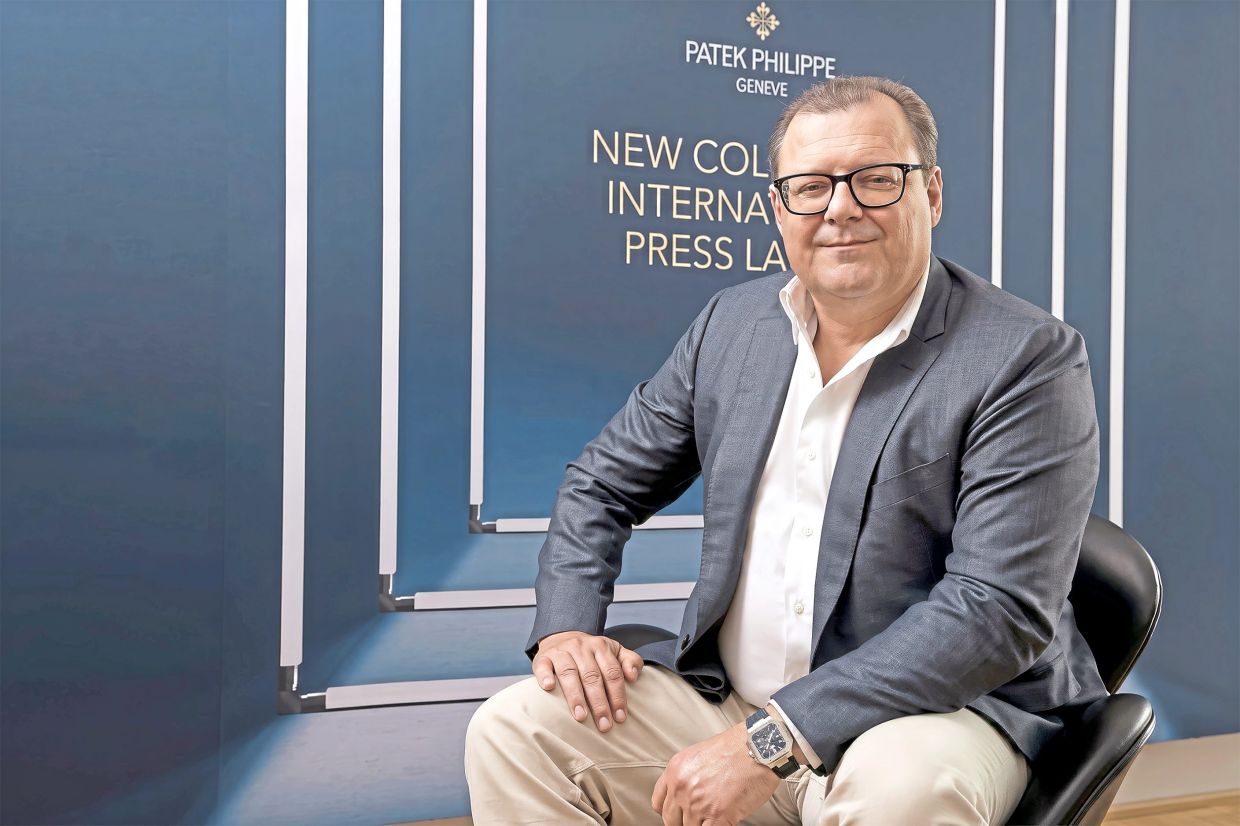
Thierry Stern does not sound like a fourth-generation heir to one of Switzerland's most prestigious watch manufacturers. Rather, he speaks with the fervour of someone utterly consumed by horology—which, he maintains, is precisely the way it must be. During an interview at Watches and Wonders 2026 in Geneva, the 55-year-old president of Patek Philippe articulated a philosophy that extends far beyond corporate platitudes: genuine love for watches is not a luxury but a prerequisite for anyone seeking to lead the maison. Without it, he suggests, no amount of business acumen will suffice.
The distinction matters profoundly in an industry where customers are themselves experts, capable of discerning authenticity from mere commercial calculation. Stern speaks from experience, having observed that clients can immediately sense whether those steering a brand truly care about their craft. This principle has guided his leadership of Patek Philippe, a company that for nearly two centuries has occupied a rarified position in Swiss watchmaking—alongside only Rolex, Cartier, Audemars Piguet, and Omega among the world's largest luxury horologers. For Stern, the stakes of maintaining that position are existential; complacency invites irrelevance, yet recklessness threatens the very identity that makes the brand valuable.
This balancing act becomes particularly acute as Patek Philippe approaches a significant milestone: the 50th anniversary of the Nautilus, a timepiece that revolutionized perceptions of what a luxury watch could be. When designer Gerald Genta's creation debuted in 1976, featuring an unconventional porthole-inspired case and integrated bracelet, it provoked outrage among watchmaking traditionalists who viewed the design as industrial, garish, and fundamentally incompatible with Patek Philippe's austere heritage. Stern recalls the controversy with undisguised amusement, noting that he was merely six years old when the watch's critics issued their pronouncements—most of whom, he observes wryly, are no longer around to witness the Nautilus's transformation into one of the world's most coveted timepieces.
Today, the Nautilus commands waiting lists extending years into the future, with auction results that frequently defy rational economic logic. The watch has transcended its original identity as a sportier alternative to Patek Philippe's dress pieces to become a cultural phenomenon, pursued by collectors and enthusiasts across continents. For the 50th anniversary, the company has unveiled three limited-edition Nautilus references crafted in white gold and platinum, along with a whimsical desk clock drawing inspiration from the watch's distinctive aesthetic. These releases represent Stern's deliberate choice to avoid the obvious path of adding complications such as a tourbillon, which characterised previous major anniversary releases. Instead, he chose to remain grounded in what he considers the Nautilus's fundamental DNA: a pure, elegantly simple hour-and-minute display.
The new models feature remarkably slim 6.9-millimetre cases powered by Patek Philippe's historic Calibre 240 with its distinctive micro-rotor, a movement that itself carries decades of technical refinement. The ergonomic realignment of the case and bracelet required years of meticulous development, reflecting Stern's conviction that even incremental improvements warrant substantial investment when they enhance the wearer's experience. This approach reflects lessons learned during his formative years, when he travelled extensively alongside his father Philippe Stern, who then led the company. The elder Stern's guidance proved formative: understanding client needs required genuine engagement with retailers and end-users, not merely top-down strategic planning conducted from Geneva headquarters.
Stern's philosophy embraces a seemingly paradoxical stance: Patek Philippe cannot afford to remain static, yet must avoid changes that betray its foundational character. He articulates this tension by acknowledging that avoiding risk amounts to stagnation, a particularly perilous position for a house seeking to maintain its preeminence across generations. Innovation, in this context, does not mean abandoning core values but rather expanding their expression into new territories. The introduction of the Aquanaut in the late 1990s exemplifies this calculated approach—the watch offered a younger, sportier alternative to the Nautilus without undermining the latter's distinct identity or the broader Patek Philippe portfolio.
This measured approach to change reflects deeper understanding about how luxury brands maintain relevance across shifting consumer preferences and generational transitions. Stern recognizes that each new cohort of collectors brings different expectations and aesthetic sensibilities, yet the brand's authority rests upon its historical depth and uncompromising standards. The risk lies in misreading which changes enhance legacy and which ones diminish it—a distinction that demands the very passion he considers indispensable. A leader operating from mere calculation might introduce flashier complications or trend-chasing aesthetics; one motivated by genuine passion for watchmaking itself makes decisions rooted in what truly serves the craft and its practitioners.
For Malaysian and regional Southeast Asian watch enthusiasts and collectors, Patek Philippe's evolution under Stern's stewardship carries particular significance. The brand's presence in this part of the world reflects both the region's growing wealth and its increasingly sophisticated engagement with horological culture. Waiting lists for Patek Philippe watches extend across Asia, with secondary markets in Singapore, Hong Kong, and Malaysia reflecting prices that dwarf retail valuations. Understanding Stern's philosophy—that passion guides strategy and that calculated evolution preserves legacy—offers insight into why Patek Philippe commands the premiums it does and why ownership carries such cultural weight in an era of democratized luxury.
Ultimately, Stern's insistence on passion as a prerequisite rather than a byproduct reveals something fundamental about how family-led luxury enterprises distinguish themselves in an age of private equity consolidation and corporate homogenization. When the steward of a great house genuinely cares about the product beyond its commercial potential, that authenticity reverberates throughout every decision—from material selection to case finishing to the timing of new releases. For Patek Philippe, this philosophy has transformed a 175-year-old Swiss watchmaker into a brand that commands extraordinary cultural authority and commercial success, proving that in horological leadership, as in so much else, the deepest commercial wisdom often begins with simple human passion.

