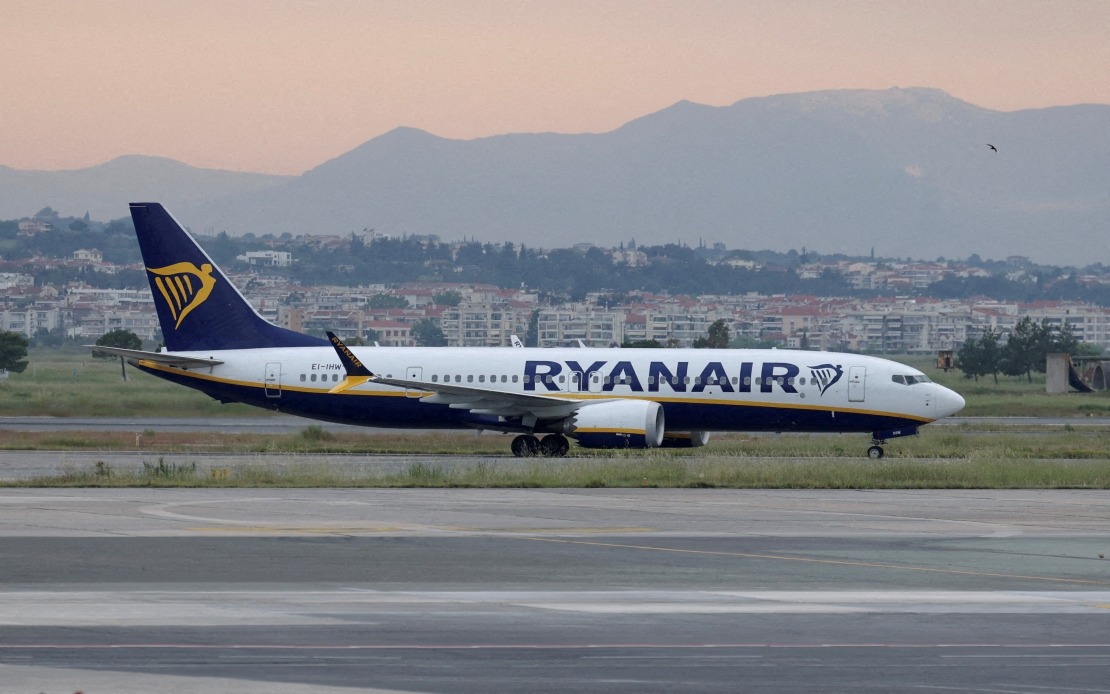
A Ryanair flight operating between Thessaloniki in Greece and Memmingen in southern Germany turned back to its departure airport on Friday after a window panel unexpectedly fractured during flight, creating a harrowing situation for passengers and crew on board. The incident unfolded shortly after the aircraft had taken off, when a sudden loud bang prompted immediate alarm among those aboard, followed by the visible shattering of a cabin window.
According to passenger accounts relayed to news agencies, the window failure exposed a traveller to dangerous conditions, with his upper body extending partially through the opening. The severity of the situation was immediately apparent, as other passengers nearby acted decisively to pull the man back into the cabin before the situation deteriorated further. Eyewitnesses described the chaotic moments following the window rupture, with emergency oxygen masks automatically deploying throughout the aircraft cabin and frightened passengers screaming as they grappled with the unfolding emergency.
Video footage recorded by travellers and subsequently shared across social media platforms captured the panic that gripped the cabin interior, providing vivid documentation of the terrifying ordeal. The oxygen mask deployment systems triggered automatically as designed, a critical safety feature that activated in response to pressure changes resulting from the window breach. The rapid succession of events—the loud bang, window breakage, oxygen mask descent, and passenger injuries—created an intensely stressful environment for everyone aboard.
The pilot in command made the immediate decision to abort the scheduled flight to Memmingen and initiate an emergency return to Thessaloniki Airport. This decision prioritised passenger safety over schedule adherence, a standard protocol in aviation emergencies. The return journey consumed approximately 20 minutes, during which the aircraft descended and the pilot coordinated with airport authorities to prepare for the unexpected landing. Ground services were alerted to prepare for a medical emergency upon arrival.
The injured passenger, identified as a Serbian national, was promptly attended to by emergency medical personnel upon landing at Thessaloniki Airport. He was subsequently transported to a medical facility in Thessaloniki for treatment of injuries sustained during the window rupture incident. The severity of his injuries and the nature of medical care required remained unspecified in initial reports, though the fact that he was transported to hospital indicated serious concerns about his condition.
As of the time of reporting, both Ryanair and the competent Greek aviation authorities had refrained from issuing formal public statements regarding the incident. This silence during the preliminary phase is typical of aviation incidents, where operators and regulators prefer to gather complete information before communicating publicly. However, Greek broadcaster ERT confirmed that an official investigation had been initiated to establish the cause of the window failure and determine whether any systemic issues existed.
The incident raises important questions about aircraft cabin integrity and maintenance protocols. Modern commercial aircraft undergo rigorous certification and inspection procedures to ensure that cabin components, including windows, meet exacting safety standards. Window failures at cruise altitude or during flight represent extremely rare occurrences in commercial aviation, as windows are engineered to withstand substantial pressure differentials and environmental stresses. The investigation will likely examine whether the failure resulted from manufacturing defects, pre-flight inspection oversights, maintenance issues, or structural damage incurred during previous operations.
For Malaysian and Southeast Asian travellers, this incident serves as a stark reminder of the inherent safety features built into modern aircraft design. The automatic deployment of oxygen masks and the rapid response of fellow passengers demonstrate how multiple layers of safety systems work in conjunction during emergencies. Aviation authorities across the region maintain stringent oversight of international carriers operating within their jurisdictions, with Ryanair flights regularly serving routes throughout Europe and beyond.
The incident also underscores the importance of passenger compliance with safety briefings and instructions provided at the beginning of flights. While this particular emergency unfolded too rapidly for formal procedures, the presence of alert and responsive fellow passengers proved crucial in preventing a potential catastrophe. Aviation authorities worldwide conduct continuous reviews of safety data from incidents like this to identify trends and implement preventive measures before problems become widespread.
Ryanair, Europe's largest low-cost carrier by passenger numbers, operates hundreds of daily flights across the continent and to destinations beyond Europe. The airline maintains a safety record comparable to other major European carriers, though like all airlines, it must address individual incidents through thorough investigation and corrective action. The rapid return to Thessaloniki and the deployment of emergency procedures suggest that crew training and aircraft systems functioned as designed during this crisis.
The investigation findings will likely be documented in an official accident investigation report, as required by European Union regulations governing civil aviation. These reports, typically completed over several months, become invaluable resources for the entire aviation industry, informing maintenance protocols, engineering improvements, and operational procedures. The specific cause of this window failure—whether material defect, impact damage, or manufacturing inconsistency—will guide future preventive measures.

