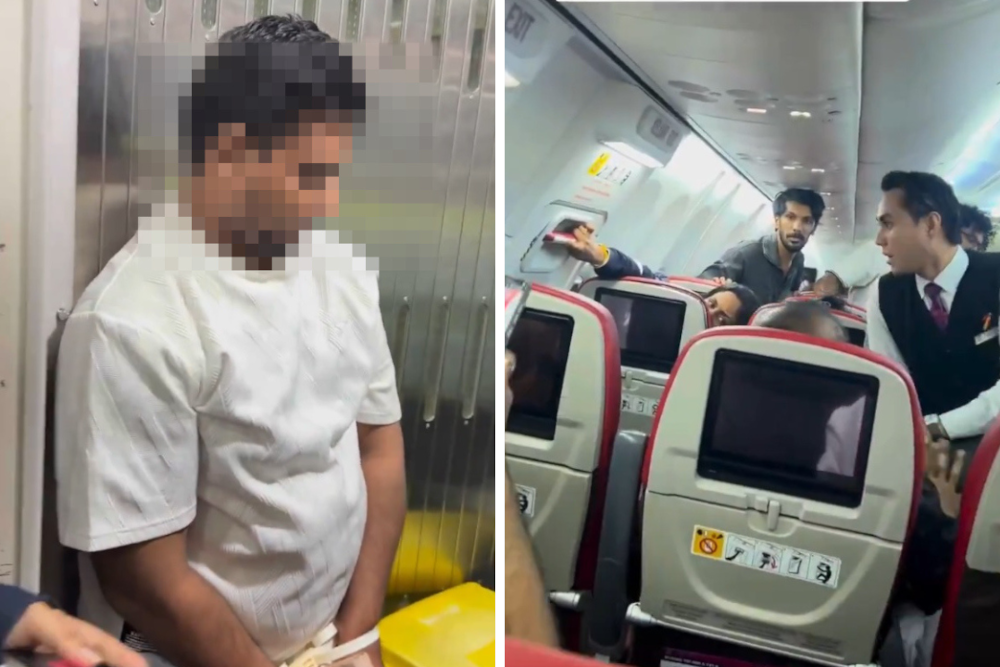
A passenger aboard a Batik Air flight travelling from Malaysia to India was arrested after attempting to open an emergency exit door whilst the aircraft was at cruising altitude of 9,144 metres. The incident, which occurred on a service originating from Kuala Lumpur, has prompted renewed scrutiny of safety procedures and passenger screening measures adopted by Malaysian carriers operating regional routes.
The man's actions aboard the aircraft triggered an immediate response from cabin crew, who managed to prevent any breach of the emergency exit. The situation was brought under control before the aircraft could be diverted or face any operational disruption. Authorities were notified upon landing, leading to the passenger's arrest and detention pending investigation.
Investigators are examining the circumstances surrounding the attempted breach, including whether the passenger was experiencing a medical or psychological episode at the time of the incident. Such cases often reveal underlying factors ranging from mental health crises to substance intoxication that may have contributed to the individual's behaviour. Understanding the root cause is essential for both law enforcement and aviation authorities seeking to prevent similar occurrences.
The incident underscores persistent vulnerabilities in aviation security despite substantial investments in screening technology and personnel training across Southeast Asian airports. Whilst border security measures at departure airports focus heavily on detecting prohibited items and individuals on watchlists, monitoring passenger behaviour during flight remains a challenge for crew members who must balance passenger comfort with vigilance.
Batik Air, a subsidiary of Malaysia Aviation Group and a major carrier for both domestic and regional services, has not issued a public statement regarding specific security protocols employed during the incident. However, the airline operates under regulatory oversight from the Malaysian Aviation Commission and must comply with international safety standards established by the International Civil Aviation Organization.
The emergency exit door itself represents one of the most critical safety features on modern aircraft. These doors are designed with multiple safeguards including complex locking mechanisms that prevent accidental or intentional opening whilst the aircraft is in flight. Even if a passenger managed to physically manipulate the door handle, the structural pressurization of the cabin at cruising altitude creates a physics barrier that would prevent the door from opening until the aircraft descends to a safe altitude.
Regional airlines operating in Southeast Asia have reported occasional incidents of disruptive passenger behaviour, though attempts to breach aircraft security remain comparatively rare. The density of air traffic over the region, combined with the economic importance of Malaysia as an aviation hub, means that maintaining public confidence in flight safety is critical for the industry's continued growth and profitability.
The arrest of the passenger follows established protocols wherein any breach of aviation security is treated with utmost seriousness by both airline operators and law enforcement agencies. The investigation will likely involve interviews with crew members, examination of flight data, and assessment of security camera footage if available, to establish a precise sequence of events and determine appropriate charges.
For Malaysian aviation authorities, incidents of this nature necessitate periodic review of crew training programmes, particularly regarding de-escalation techniques and procedures for managing unruly or threatening passengers at altitude. The International Air Transport Association maintains comprehensive guidance on passenger behaviour management, which airlines must integrate into their operational protocols.
The broader context of aviation security in Malaysia reflects a mature regulatory environment supported by cooperation between the Ministry of Transport, the Royal Malaysian Police, and civil aviation authorities. Nevertheless, the unpredictability of individual passenger actions at 30,000 feet presents an ongoing challenge that cannot be entirely eliminated through mechanical or procedural means alone.
This incident will likely feature in discussions between Malaysian aviation stakeholders and may prompt enhanced training initiatives or revised security protocols for regional carriers. The case also demonstrates the effectiveness of existing safety systems that prevented any catastrophic outcome, reinforcing the multiple layers of protection engineered into contemporary commercial aircraft.
Passengers travelling on Malaysian carriers are advised to familiarize themselves with safety briefings and comply with crew instructions at all times. The vast majority of flights operate without incident, reflecting the exceptional safety record of modern commercial aviation and the dedication of crew members trained to manage diverse in-flight situations.

