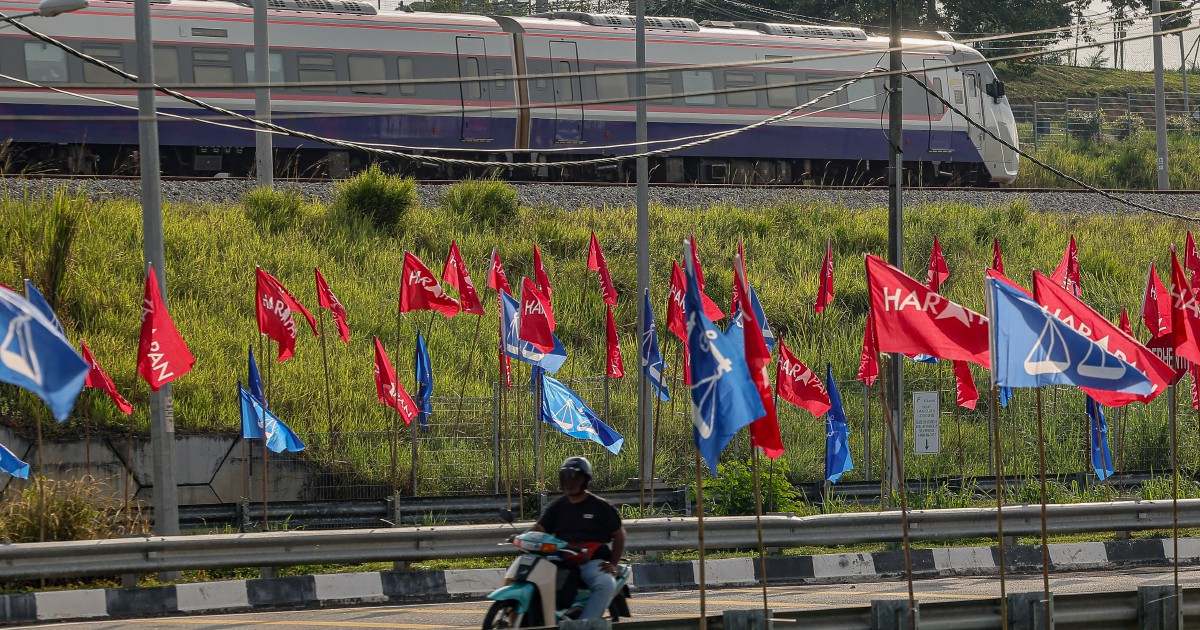
The youth wing of PAS has publicly articulated its reasoning behind an electoral accommodation with Barisan Nasional, framing the arrangement as a calculated defensive measure against rival coalition Pakatan Harapan. Speaking in Johor Baru, party representatives emphasised that their endorsement of BN candidates in selected parliamentary seats represents a pragmatic political calculation rather than a fundamental shift in alliance preferences. This clarification comes as Malaysia's political landscape continues to experience realignments following the 2022 general election, with various coalitions and parties maneuvering for advantageous positioning ahead of future electoral contests.
The decision by PAS Youth to support BN candidates reflects the increasingly complex dynamics of Malaysian coalition politics, where traditional ideological boundaries have become less rigid. Rather than maintaining strict party loyalty across all constituencies, the Islamic party has adopted a more flexible approach that considers constituency-level competitive dynamics. This tactical flexibility demonstrates how even aligned parties within a coalition framework may pursue divergent strategies depending on local political circumstances and electoral mathematics. The arrangement underscores the transactional nature of modern Malaysian political alliances, where preventing the opposition from gaining ground sometimes takes precedence over promoting a preferred coalition partner.
The significance of this development extends beyond internal PAS decision-making, as it reflects broader concerns within the PN coalition about Pakatan Harapan's organisational capacity and electoral appeal. By strategically positioning BN as an alternative to PH in specific constituencies, PAS Youth is essentially acknowledging that halting the opposition coalition's momentum takes priority over maximising PN's own electoral gains in every seat. This approach suggests that PN strategists perceive PH as the more immediate threat to their political interests, even if BN has historically been PN's rival. Such recalibrations indicate a fundamentally destabilised political environment where yesterday's enemies may become today's tactical allies.
For Malaysian voters, this development complicates the already intricate calculus of understanding which parties and coalitions genuinely represent distinct political choices. When components of one coalition selectively support another coalition's candidates, the lines between opposing political forces become blurred. This can create confusion among electorates attempting to make informed voting decisions based on coalition platforms and policy positions. The phenomenon also raises questions about voter agency and whether supporting a particular candidate effectively constitutes endorsement of the broader coalition to which they belong.
The arrangement between PAS Youth and BN also illuminates the fragmented nature of PN itself, which comprises multiple parties with distinct organisational structures and constituencies. PAS, as the coalition's most significant Malay-Muslim party by membership, wields considerable influence over electoral strategy. However, the youth wing's articulation of this tactical approach suggests internal discussions and negotiations within PN about how to optimally deploy party resources across different constituencies. The decision to allow PAS supporters in certain areas to back BN candidates implies sophisticated planning about where PN can realistically compete and where its resources might be better allocated elsewhere.
From a Southeast Asian perspective, Malaysia's evolving coalition dynamics reflect broader regional trends toward political fragmentation and realignment. Across the region, traditional political structures are weakening as parties compete for votes through increasingly localised appeals rather than coherent national platforms. The emergence of tactical electoral cooperation between nominal rivals demonstrates how parties prioritise immediate electoral survival over long-term coalition coherence. This pattern has implications for governance, as fractured coalitions prove less stable and more susceptible to sudden ruptures when circumstances change.
The economic and social implications of political instability warrant consideration as well. When coalitions engage in complex tactical arrangements, government continuity and policy consistency suffer. Investors and citizens alike benefit from relatively predictable political environments where coalition partnerships remain stable and governance priorities clear. Malaysian businesses operating regionally may find the domestic political turbulence an additional factor complicating decision-making about resource allocation and expansion plans. International observers similarly struggle to develop coherent policies toward Malaysia when its political trajectory remains uncertain.
PAS Youth's clarification also reveals internal party dynamics that deserve scrutiny. Youth wings of established parties often adopt more assertive positions than their parent organisations, reflecting the distinct political interests and generational perspectives of younger members. The youth wing's willingness to publicly announce electoral cooperation with BN may reflect enthusiasm for practical political effectiveness that differs from senior party leadership's preferences. This intergenerational tension within PAS could influence how the party's broader electoral strategy develops during campaign periods, when youth mobilisation becomes crucial for voter outreach and ground operations.
Looking ahead, this tactical approach creates uncertainty for future coalition arrangements. If PAS Youth's BN support in specific constituencies yields positive electoral results, other PN parties may seek similar accommodations with BN in their respective areas of operation. Conversely, if the strategy produces disappointing results, PAS leadership might reverse course and pursue more exclusionary electoral positioning. The outcome of these experiments with tactical cross-coalition support will significantly shape how Malaysian political coalitions organise themselves in subsequent electoral cycles. For PN, the crucial question becomes whether compartmentalised tactical cooperation with BN strengthens overall opposition performance or undermines coalition coherence by sending mixed messages to voters about underlying political commitments and ideological distinctions.

