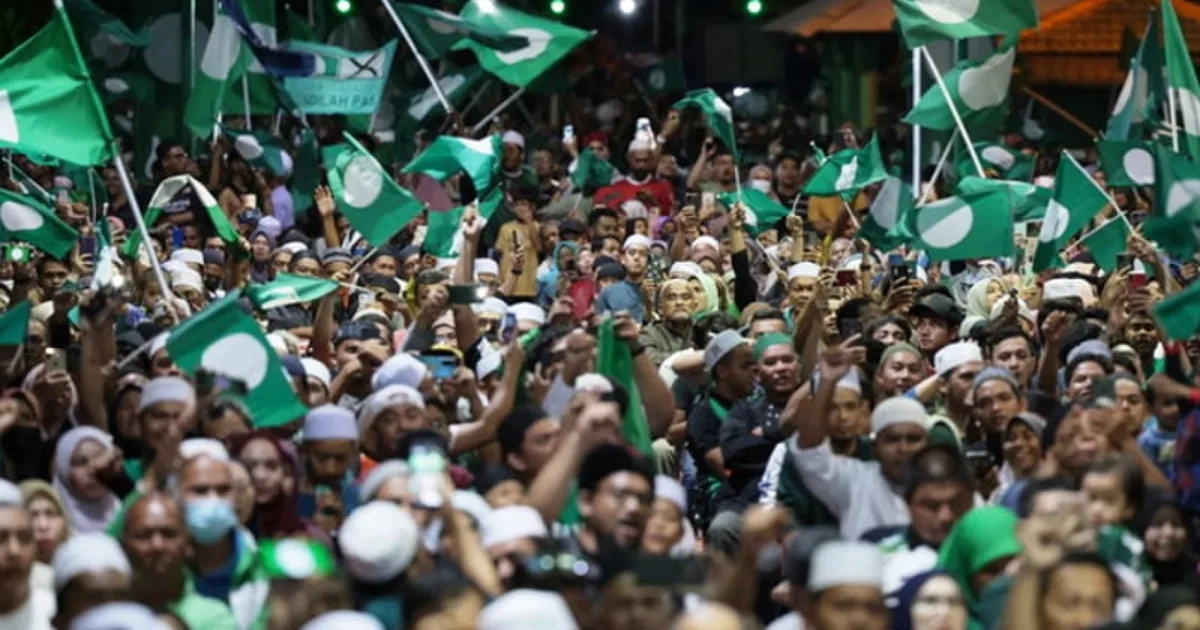
The Islamic party PAS is recalibrating its electoral strategy by pulling its campaign apparatus away from constituencies where Bersatu is fielding candidates, according to party officials familiar with the coalition's tactical planning. Instead of spreading resources thinly across multiple battlegrounds, the party is concentrating its election machinery on seats where PAS holds a stronger organisational presence and competitive advantage. This strategic reallocation signals a more disciplined approach to the division of labour within the Perikatan Nasional alliance, moving away from the overlapping candidate deployments that have sometimes weakened both parties' chances in previous contests.
The decision reflects growing pragmatism within Perikatan Nasional as the coalition seeks to maximise its total parliamentary representation by avoiding direct competition between its own components. Rather than contest seats where another alliance member is better positioned to win, PAS will concentrate its volunteer networks, ground staff, and promotional campaigns on constituencies where the party has invested heavily and possesses genuine electoral strength. This represents a maturation of coalition discipline, though it also underscores the tensions that can arise when multiple parties compete for similar voter bases and organisational resources.
Bersatu, the party helmed by former Prime Minister Muhyiddin Yassin, has emerged as a major beneficiary of this arrangement. The party's candidates in designated constituencies will now face less internal competition for campaign support and volunteer mobilisation from PAS. For Bersatu, which has worked to consolidate its position as a significant force within Perikatan Nasional despite its relatively recent formation and smaller parliamentary footprint compared to PAS, such arrangements are crucial to establishing credibility and winning seats. The understanding between the parties indicates that coalition leaders have recognised the arithmetic reality: coordinated efforts yield better overall results than fragmented campaigns.
Other component parties within the Perikatan Nasional framework will similarly benefit from PAS's redeployed resources. These smaller allies, which include parties such as Gerakan and others, often struggle to mount fully-resourced campaigns across multiple constituencies. By having PAS redirect its machinery toward mutual support rather than internal competition, these parties gain access to stronger logistical backing and volunteer coordination. This creates a cascading effect where PAS's organisational capacity ultimately strengthens the entire alliance's competitive position rather than diluting it across too many fronts.
The arrangement also has implications for how PAS constructs its campaign messaging. With resources concentrated on specific constituencies, the party can tailor voter outreach and policy emphasis to the particular concerns of those communities. PAS can deploy its religious credentials and ground presence more strategically, focusing on areas where Islamic governance and values-based politics resonate most strongly with voters. This targeted approach potentially increases conversion rates per ringgit spent and per volunteer hour deployed compared to unfocused national campaigns.
For Malaysian voters and observers, this tactical shift offers insights into how contemporary coalition politics operate at the operational level. The willingness of major parties to step back from contesting certain seats demonstrates that abstract notions of coalition unity must translate into concrete mechanisms and compromises. In a multiparty democracy where no single party commands a parliamentary majority, such arrangements between allies become central to determining which parties ultimately form government and which constituencies receive representation from particular political traditions.
The move also reflects lessons learned from previous electoral cycles where Perikatan Nasional struggled to convert voter support into parliamentary seats due to inefficient candidate distribution and resource allocation. By adopting a more coordinated approach, the alliance signals to its base that it has improved its organisational competence. This can matter psychologically to voters who might otherwise harbour doubts about the coalition's ability to govern effectively if it wins sufficient seats to form government.
However, the arrangement places some constraints on PAS's own electoral ambitions. By ceding contested seats to Bersatu, PAS necessarily forgoes opportunities to expand its own parliamentary representation in those constituencies. The trade-off only makes sense if party strategists believe they will gain more overall coalition seats through this division of labour than they would through uncoordinated competition. This calculation rests on assumptions about relative party competitiveness in different constituencies, the elasticity of volunteer effort, and voter willingness to support coalition partners.
For Bersatu specifically, the arrangement validates its position within Perikatan Nasional and provides tangible support for the party's efforts to become a significant parliamentary force. This carries particular significance given ongoing speculation about Bersatu's long-term viability as a distinct party and its relationship with other coalition components, particularly in contexts where internal party dynamics or leadership transitions might otherwise undermine coalition cohesion.
Regionally, the developments reflect broader patterns of coalition consolidation across Southeast Asia. As increasingly complex multiparty systems make single-party dominance difficult or impossible, alliances must develop sophisticated mechanisms for managing internal competition while maintaining public unity. How Perikatan Nasional manages these tensions will likely influence not only Malaysian electoral outcomes but also serve as a model for other regional coalitions navigating similar challenges in their own political systems.

