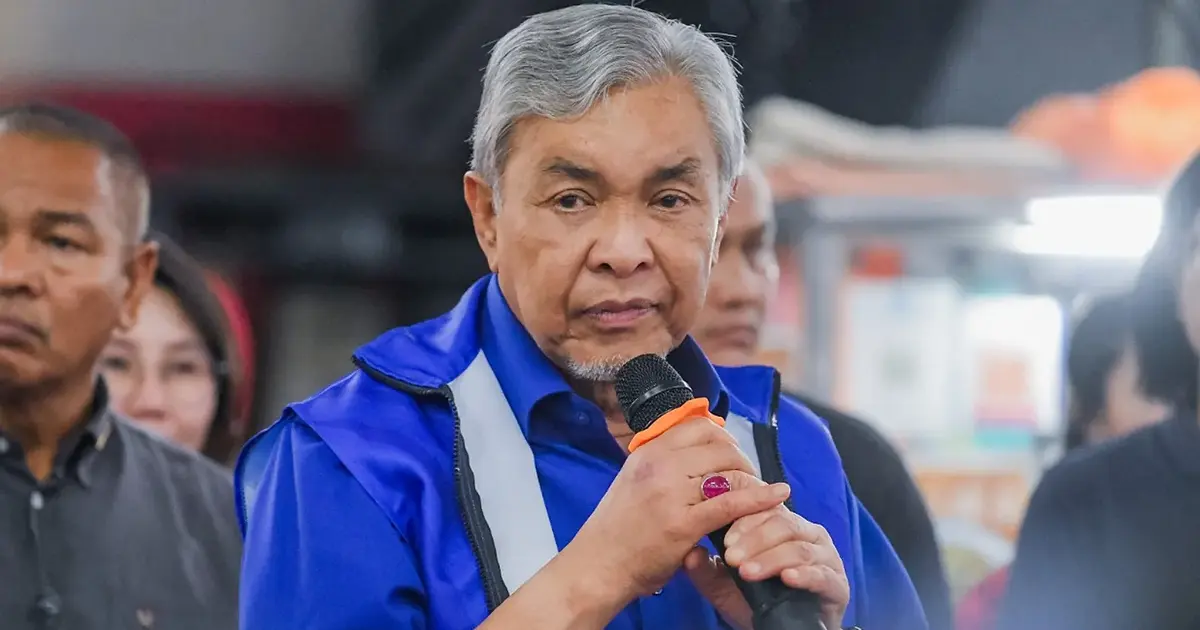
Umno president Datuk Seri Zahid Hamidi has moved to temper expectations that PAS's backing for Barisan Nasional candidates in the Johor election represents the foundation for a lasting political partnership, signalling that one-off electoral cooperation does not translate into committed coalition arrangements.
The clarification from the BN chairman underscores the complex and often transactional nature of Malaysian politics, where parties frequently collaborate on specific contests without committing to broader alliances. This distinction matters considerably given the historical tensions between Umno and PAS, two major Malay-Muslim parties that have alternated between cooperation and fierce competition for nearly two decades.
Zahid's statement arrives at a particularly sensitive moment for Barisan Nasional, which has been steadily rebuilding its political standing after suffering significant losses in the 2022 general election. The coalition has increasingly sought to position itself as the natural governing force at both federal and state levels, and electoral arrangements with other parties have become essential to its strategic calculations. However, the BN chairman's remarks reveal an underlying wariness about being perceived as capitulating to PAS or surrendering the coalition's independence in decision-making.
For context, PAS has emerged as one of Malaysia's most significant political forces following its strong performance in recent elections. The party's support in Johor represents a tangible recognition of its growing influence, particularly among rural and semi-urban voters. Yet the relationship between PAS and the traditional BN component parties remains fraught with unresolved questions about governance, religious policy implementation, and power-sharing arrangements that have repeatedly stalled formal negotiations.
Zahid's cautious framing suggests that while Umno values PAS's tactical assistance in securing Johor seats, it is unwilling to institutionalise this cooperation into a formal merger or permanent coalition framework. This reflects broader anxieties within Umno's leadership about losing party identity or influence to an increasingly assertive Islamic party that commands significant voter loyalty among Malay constituencies. The relationship essentially remains one of convenience rather than ideological alignment or shared governance philosophy.
The Johor state election presents a unique testing ground for such arrangements. Johor has historically been an Umno stronghold and remains symbolically important to the party's brand. Securing victory in the state is therefore critical to BN's narrative of recovery and relevance, even if external support becomes necessary to achieve that outcome. However, accepting PAS votes while disclaiming any alliance obligation represents a delicate political balancing act that could invite criticism from both the Islamic party and within Umno itself.
For Malaysian voters and political observers across the region, Zahid's statement exemplifies the pragmatism that increasingly characterises Malaysian coalition politics. Rather than ideologically coherent blocs unified by shared policy platforms, we see instead fluid arrangements negotiated election by election, seat by seat. This approach can deliver electoral efficiency but raises persistent questions about governance clarity and voter accountability when parties collaborate without formally acknowledging the terms of their cooperation.
The PAS factor also reflects broader shifts in the Malay-Muslim political landscape. The party's evolution from a primarily opposition force into a serious competitor for governing responsibilities has forced other parties to reassess their strategies and territorial assumptions. Umno's historical dominance cannot be taken as assured, and electoral arrangements that once seemed unthinkable have become routine political transactions. Yet the party leadership remains conscious of messaging and determined to avoid appearing subordinate or dependent.
Zahid's clarification also carries implications for federal-level politics. Any perception that PAS and Umno are moving closer together could complicate efforts to maintain the broader coalition arrangements that sustain the current Pakatan Harapan-led federal government. Regional power dynamics, competition for religious credibility, and control over Islamic policy implementation remain unresolved tensions between the parties that cooperation in a single state election does not resolve.
Moving forward, the Johor election will likely prove instructive for future political negotiations in Malaysia. The outcome will indicate whether one-off support mechanisms prove sufficient to deliver electoral victories, or whether more formal arrangements become necessary as politics becomes increasingly competitive and fragmented. For PAS, demonstrating its capacity to deliver votes while remaining outside formal coalition structures may actually strengthen its bargaining position in future negotiations, allowing the party to negotiate from a position of demonstrated electoral relevance rather than coalition dependency.
Ultimately, Zahid's statement serves as a reminder that Malaysian politics operates according to its own internal logic, one where flexibility, strategic ambiguity, and carefully calibrated public messaging often matter more than ideological consistency or transparent governance frameworks. The PAS-BN arrangement in Johor exemplifies this reality, representing neither full alliance nor complete opposition, but rather a calculated middle ground that allows both parties to advance their interests without surrendering their independence.

