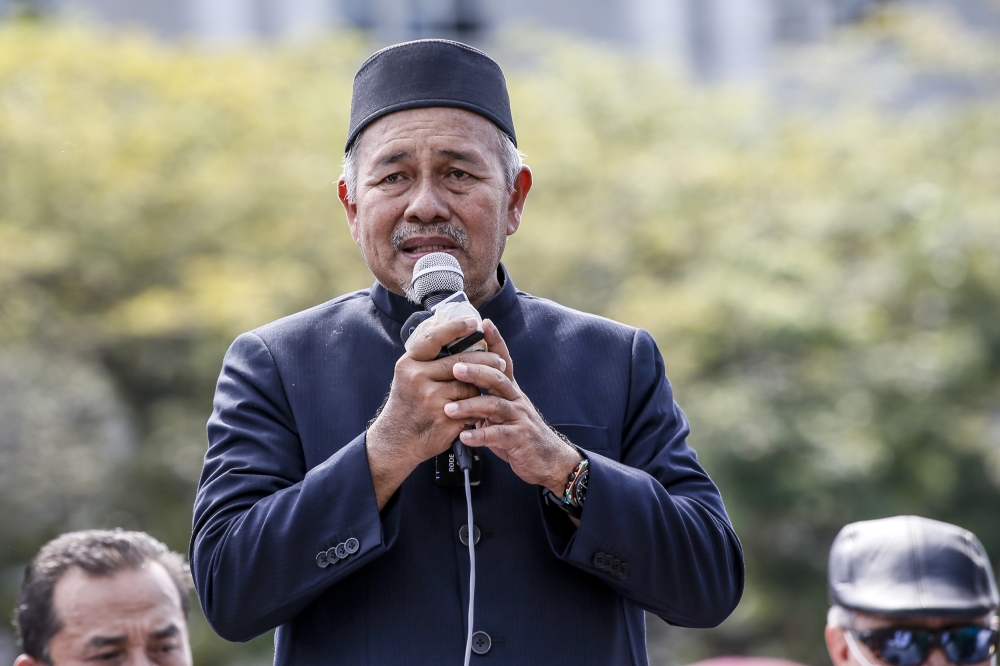
The political landscape across Malaysia's coalition governments may be poised for significant realignment, as PAS has publicly expressed its readiness to explore extending the collaborative framework between Barisan Nasional and Perikatan Nasional beyond current boundaries. The Islamic party's willingness to engage in discussions about broader cooperation suggests a carefully calibrated approach to consolidating influence across multiple tiers of government, even as existing alliances continue to shape electoral and governance dynamics in the country.
PAS's openness to talks reflects the pragmatic calculations that underpin Malaysian coalition politics, where strategic partnerships at state level frequently inform discussions about national-level configurations. The party currently operates within coalitions at various administrative levels, and broadening these arrangements would represent a natural extension of existing collaboration patterns. Such expansion would require delicate negotiations given the complex interplay between BN and PN components, each with distinct organisational structures and political constituencies that must be accommodated within any new framework.
Melaka emerges as a critical testing ground for this potential realignment. The state has historically served as a bellwether for broader political shifts in Malaysia, and any successful cooperation model developed there could establish precedent and operational experience for applying similar arrangements nationally. The strategic value of Melaka extends beyond symbolic significance; controlling the state government provides tangible resources, administrative experience, and electoral momentum that can be leveraged in subsequent negotiations at other levels.
The federal dimension of these proposed talks carries even greater weight. Malaysia's system concentrates substantial executive authority at the national level, and the composition of the federal government determines policy direction on critical matters including economic management, infrastructure development, and resource allocation. Any expansion of BN-PN cooperation at this level would reshape the fundamental governing coalition and likely trigger cascading effects across state administrations and parliamentary alignments.
PAS's strategic positioning within this context warrants careful examination. As a smaller coalition partner relative to UMNO within BN and other PN component parties, PAS must balance the benefits of coalition participation against the risk of being marginalised within larger groupings. The party's indication of willingness to negotiate suggests confidence in its bargaining position, possibly grounded in demographic strength in specific regions or legislative weightage in certain contexts. Understanding these calculations is essential for assessing whether negotiations will ultimately succeed or founder on distributional disagreements.
The existing cooperation between BN and PN already operates at multiple levels in some contexts, creating operational precedent for how expanded collaboration might function. Current arrangements have generated lessons about resource-sharing, ministerial allocation, and policy coordination that negotiators would likely draw upon when designing broader frameworks. However, scaling up cooperation introduces additional complexity, as more actors with competing interests must achieve consensus on governance structures and benefit distribution.
Regional dynamics within Southeast Asia add another layer of consideration. Malaysia's internal coalition arrangements influence its capacity to pursue coherent foreign policy and regional engagement strategies. A more unified federal governing coalition potentially strengthens the country's diplomatic position and facilitates more decisive action on transnational challenges, though this benefit depends on achieving internal consensus on policy priorities across coalition components with potentially divergent international orientations.
The timing of PAS's public statement about negotiation readiness carries political significance. Coalition governments typically evolve through incremental adjustments punctuated by periods of visible negotiation, and public expression of willingness to discuss expansion may signal that internal discussions have already advanced to a stage where broader announcement becomes strategically useful. Alternatively, the statement might serve as a trial balloon to gauge public and intra-coalition response before committing to formal negotiation processes.
Religious and ideological dimensions of PAS membership introduce additional complexity to potential BN-PN expansion discussions. As an Islamic party with stated commitments to Islamic governance principles, PAS brings particular constituencies and policy preferences that must be accommodated within any expanded coalition. The extent to which these considerations prove compatible with positions held by other coalition members, particularly secular-oriented BN and PN components, remains a significant variable in determining negotiation outcomes.
Electoral mathematics also shape the strategic calculations underpinning these discussions. Coalition configuration directly affects seat distribution, candidate selection, and resource allocation in electoral contests. Any expanded arrangement would require detailed agreements on these practical matters, potentially generating friction if expectations about benefits diverge significantly among component parties. The complexity of these negotiations typically extends negotiations beyond public statements to months of technical discussion.
Parliamentary stability considerations may drive some of these coalition discussions. Malaysia's recent political volatility, characterised by shifting majorities and changing government compositions, creates incentives for major political actors to formalise and strengthen coalition arrangements. A more durable and broadly-based governing coalition could provide the stability that markets, investors, and international partners increasingly demand from Malaysian governance structures.
The broader implications for Malaysian democracy merit consideration as well. Coalition expansion discussions occur within democratic contexts requiring public legitimacy and electoral mandates. The extent to which proposed arrangements command support among PAS members, broader coalition constituencies, and the Malaysian electorate will ultimately determine their political viability and sustainability across electoral cycles.
Movements toward coalition expansion in Malaysia typically unfold gradually, with initial expressions of willingness giving way to detailed negotiations that may require months or years to conclude. PAS's public statement should therefore be understood as an opening position rather than a definitive commitment, and observers should monitor subsequent developments for concrete indicators of negotiation progress, areas of disagreement, and the ultimate scope of any expanded cooperative arrangements that eventually emerge from these discussions.

