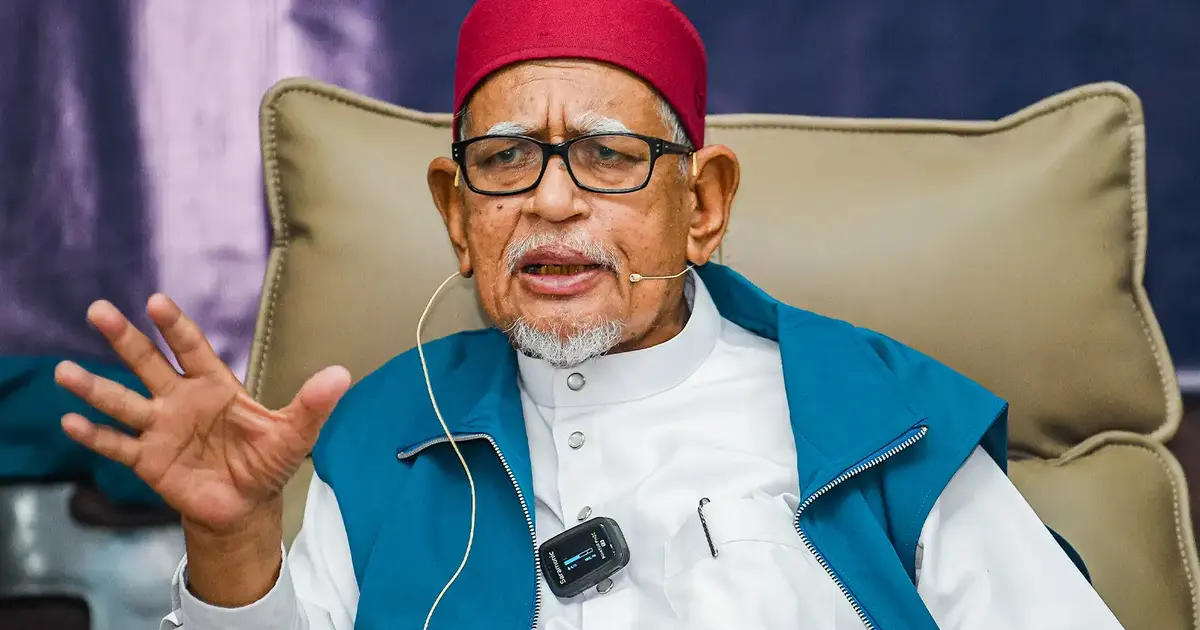
PAS president Hadi Awang has doubled down on his contentious remarks regarding DAP, signalling his willingness to mount a legal defence should the matter proceed to court. The veteran politician's steadfast position comes as he awaits potential formal charges stemming from the comments that have drawn considerable attention in Malaysian political circles.
Hadi clarified his current procedural status, noting that he has not yet been formally charged in connection with the statements. Instead, the police have exercised their authority to summon him for a recorded statement, a standard investigative procedure that precedes any decision on whether to prefer charges. This distinction carries significant weight in the Malaysian legal framework, as a police statement does not constitute a formal accusation and provides the investigating agency with the primary narrative from the subject in question.
The PAS chief's refusal to recant his remarks underscores a broader pattern in Malaysian politics where opposition figures often maintain their positions despite legal scrutiny. His determination to face whatever consequences emerge through the court system rather than apologise suggests he views the statements as justified or politically necessary. This approach has become increasingly common among Malaysian politicians navigating the contentious terrain between free speech protections and sedition or defamation laws.
Hadi's handling of the situation reflects the delicate balance Malaysian politicians must maintain between exercising their right to political expression and avoiding legal entanglement. The PAS president's confidence in his legal position may indicate that his legal advisers have assessed the statements as defensible under Malaysian law, or that he believes the public and judicial perception will favour his stance. Either way, his willingness to face court proceedings demonstrates a calculated political gambit.
The matter gains additional significance given PAS's position within Malaysia's political landscape. As a major Islamist party and component of the ruling coalition, PAS's leadership faces heightened scrutiny on their public pronouncements. Comments targeting other significant political entities like DAP inevitably attract legal and media attention, particularly when they may touch on sensitive religious, ethnic, or constitutional matters. Hadi's defensive stance therefore carries implications beyond his individual liability.
From a broader Southeast Asian perspective, this episode illustrates ongoing tensions within Malaysia's coalition politics. The partnership between different ideological factions—Islamist parties, conservative Malay-nationalist groups, and others—frequently generates friction that spills into public controversies. Hadi's comments and subsequent defence represent merely the latest manifestation of these underlying tensions that periodically surface in Malaysian political discourse.
The legal framework Hadi may ultimately navigate includes provisions in the Penal Code relating to sedition, defamation, and statements with religious implications. Malaysian courts have historically shown willingness to interpret these statutes expansively, particularly where statements might promote ill-will between different communities. However, the judiciary has also evolved in recent years, with judges demonstrating greater attentiveness to freedom of speech considerations. Hadi's court appearance, should charges materialise, could therefore set important precedents for the scope of permissible political criticism in Malaysia.
Hadi's position also reflects shifting dynamics within PAS itself. The party has undergone significant transformation in recent years, transitioning from opposition status to governmental participation. This shift has necessitated both practical compromises and rhetorical adjustments, though core party identity regarding relations with secular parties like DAP has remained contentious. Hadi's stance may therefore serve internal party purposes, reinforcing his conservative credentials among the grassroots base while demonstrating his refusal to be constrained by governmental obligations to political civility.
The investigation process itself, though preliminary, carries symbolic weight in Malaysian politics. Police summons receive extensive media coverage and often influence public perception before any legal proceedings commence. Hadi's clear messaging that he stands by his remarks serves to frame the narrative on his own terms, potentially inoculating him against accusations of cowardice or insincerity should his case eventually reach the courts. This strategic communication dimension often matters as much as the legal substance in Malaysian political disputes.
For Malaysian voters and regional observers, Hadi's stance exemplifies the ongoing contest over political expression in the country. His determination to defend his position through legal channels rather than administrative capitulation suggests confidence in his legal standing. However, it also signals that Malaysia's political actors remain willing to risk legal jeopardy in pursuit of their partisan objectives, a pattern that has characterised Malaysian politics for decades.
As the investigation proceeds, attention will focus on whether authorities ultimately prefer charges and, if so, what legal theories they advance. The eventual court proceedings, should they occur, will provide Malaysian jurisprudence with another opportunity to define the permissible boundaries of political speech in a multiethnic, multireligious democracy. Hadi's preparedness to face this legal test may ultimately prove consequential not merely for his personal situation but for the broader question of how Malaysian courts balance political freedom against competing social interests.

