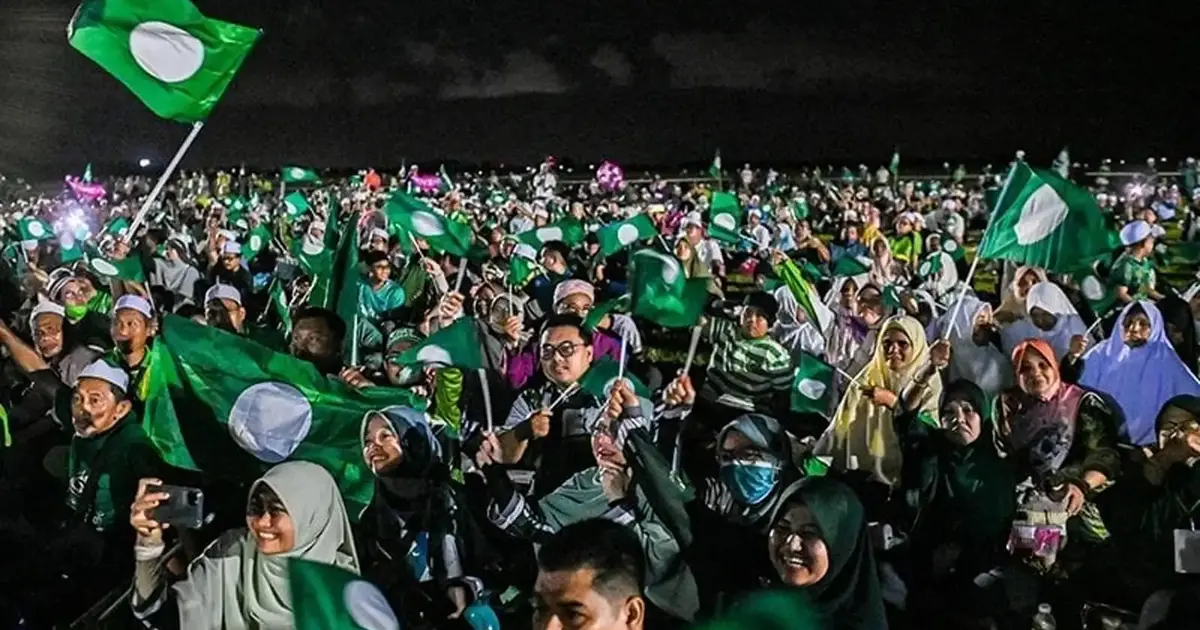
PAS President Hadi Awang has levelled accusations that Pakatan Harapan and the Democratic Action Party deliberately deployed Islamophobic rhetoric as an electoral tactic, claiming the approach was designed to stoke fear among Malaysian voters. The assertion comes amid continuing tensions within the broader opposition landscape, where the use of loaded terminology—specifically the phrase 'green wave'—has become a point of contention between coalition partners and rival political camps.
According to Hadi's account, the invocation of the 'green wave' concept served a specific strategic purpose: to associate PAS and its political agenda with a negative characterisation that resonated with voter anxieties about religious politics dominating the national agenda. Rather than engaging substantively with policy positions, he contends that opponents weaponised religious identity itself to mobilise electoral support, a tactic he views as fundamentally dishonest and divisive. This framing transforms what might be dismissed as ordinary campaign rhetoric into something more sinister—a calculated attempt to exploit sectarian sensitivities for political gain.
The distinction Hadi emphasises is crucial for understanding contemporary Malaysian political discourse. A 'green wave', in the context of recent elections, became shorthand in some circles for concerns about Islamic-oriented political movements gaining influence over state institutions and national direction. By employing this terminology, critics argued they were simply describing observable electoral patterns. Yet from PAS's perspective, such language functions as a loaded dog whistle that equates Islamic governance preferences with a threat requiring defensive voter mobilisation—thereby stigmatising both the party and the Muslim communities it claims to represent.
This complaint reflects deeper anxieties about how religious identity and political ideology intersect in Malaysian elections. When opposition parties deploy concerns about Islamic governance, they typically frame such concerns in terms of institutional balance, pluralism, or secular constitutional principles. From the PAS perspective, however, these ostensibly neutral institutional arguments mask religious prejudice, transforming legitimate political disagreement into a proxy for Islamophobia. The semantic battlefield matters enormously because language shapes how voters perceive stakes and threats.
The accusation also highlights a significant strategic challenge facing the opposition coalition. Pakatan Harapan has sought to present itself as a progressive, multi-ethnic, multi-religious alliance committed to constitutional governance and secular institutional norms. Yet when articulating concerns about Islamic-oriented political movements, DAP and allied parties risk appearing to target religious identity rather than merely policy disagreements. Whether such targeting constitutes genuine Islamophobia or legitimate institutional critique remains bitterly contested, with each side convinced of its own interpretive framework.
For Malaysian voters seeking to evaluate such claims, the underlying political dynamics warrant careful consideration. In a nation where religious sentiment runs deep and where religious identity frequently overlaps with but does not entirely determine political preference, the question of how campaigns should address these issues becomes ethically charged. Can political actors distinguish between criticising specific policy positions and stigmatising religious communities? The difficulty of maintaining this distinction in practice often collapses into the very blurriness that both sides accuse the other of exploiting.
Hadi's framing also serves an internal party purpose, reinforcing PAS solidarity and portraying the party as victimised by coalition partners who fail to recognise the legitimacy of Islamic-oriented governance perspectives. Within Malay-Muslim communities that form the party's base, narratives of external hostility and religious misunderstanding can strengthen internal cohesion and justify political independence from perceived unsympathetic allies. From this angle, the accusation functions as both external critique and internal morale-building.
The broader regional context further complicates interpretation of these disputes. Across Southeast Asia, competing visions of religious and secular governance in Muslim-majority democracies generate ongoing tension. Malaysia's approach has historically attempted to accommodate both Islamic institutional roles and secular constitutional frameworks, but this balance remains perpetually contested. When Hadi accuses opponents of Islamophobia, he implicitly challenges whether Malaysia's secular-democratic framework adequately respects Islamic perspectives or whether it privileges secular actors unfairly.
For Southeast Asian observers monitoring Malaysian political development, these tensions matter because they reveal how deeply religious and political identities remain intertwined in the region's most developed democracy. The inability of competing political camps to agree on shared definitions of legitimate religious influence versus illegitimate sectarian politics suggests that institutional structures alone cannot resolve these questions—they require ongoing negotiation through democratic processes themselves.
The practical implications extend beyond rhetorical conflict. If opposition parties genuinely deploy Islamophobic messaging rather than substantive policy critique, this represents a troubling democratic failure that targets voters on religious grounds rather than engaging their reasoning. Conversely, if PAS weaponises accusations of Islamophobia to deflect from scrutiny of specific governance proposals, this similarly exploits religious sentiment for political advantage. The Malaysian electorate deserves campaign environments where political differences can be addressed forthrightly without either demonising religious communities or using accusations of bigotry to insulate proposals from legitimate questioning.

