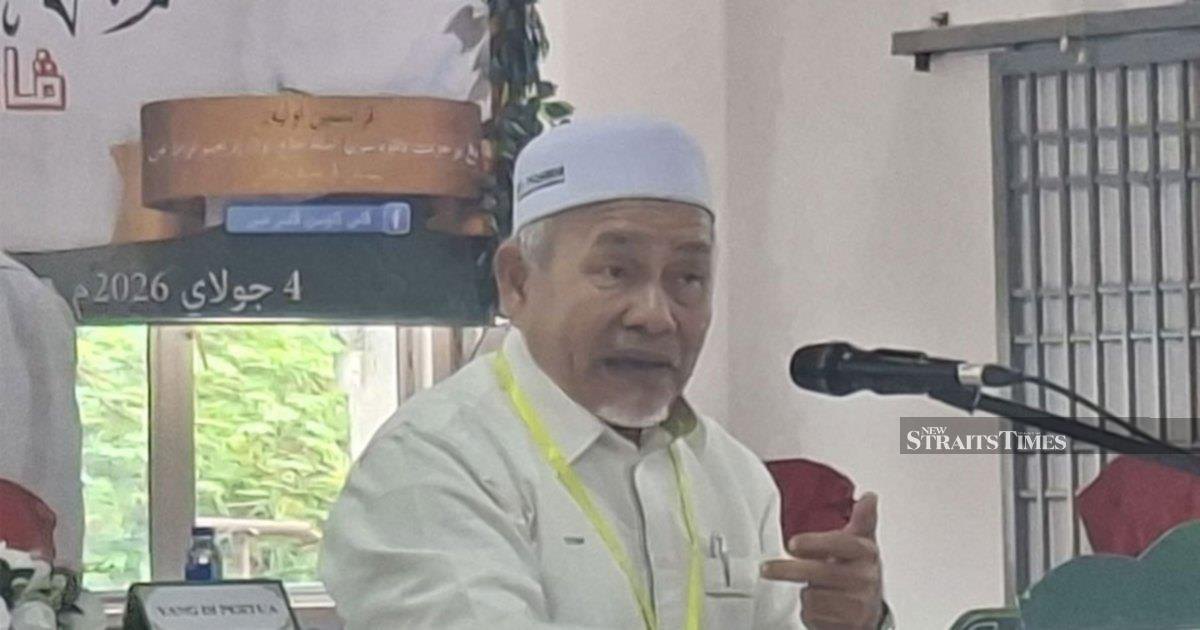
The Malaysian Islamic Party has adopted a characteristically pragmatic stance towards the looming Negri Sembilan election, publicly signalling openness to broader coalition discussions whilst channelling its immediate energies into reinforcing Perikatan Nasional's organisational and electoral machinery in the state. The apparent balancing act reflects both PAS's position as a kingmaker in Malaysian politics and the evolving dynamics of East Coast dominated alliances seeking to extend their influence into peninsular states where they have traditionally held weaker ground.
Speaking from Kota Baru, party officials articulated a position that keeps multiple strategic options available. This flexibility serves a dual purpose: it maintains PAS's leverage within the PN coalition—a grouping that has become the backbone of the party's political strategy—while preserving the possibility of tactical adjustments should political circumstances shift dramatically. The party's calculated ambiguity on coalition expansion matters partly because Negri Sembilan represents contested terrain where no single bloc has yet secured overwhelming dominance, making the electoral outcome far from predetermined.
Peikatan Nasional itself has undergone significant evolution since its formation, transitioning from a loose alliance centred primarily on PAS and PKR dissenters to an increasingly cohesive political force. Within this structure, PAS occupies a position of considerable influence, having expanded its organisational reach beyond its traditional Kelantan and Terengganu strongholds. The commitment to strengthening PN ahead of the Negri Sembilan contest reflects strategic calculations about the coalition's capacity to compete effectively in states where it lacks deep-rooted voter networks or established party machinery.
Negri Sembilan itself presents unique electoral challenges. The state has historically been contested between Barisan Nasional, which held control for most of the post-independence period, and opposition coalitions that have periodically captured power. The emergence of PN as a third significant force has complicated political mathematics considerably. Unlike Selangor or Johor, where established coalitions maintain clear structural advantages, Negri Sembilan remains relatively fluid, offering genuine opportunities for a well-organised PN apparatus to make substantial gains or even seize control, contingent on local political conditions and voter sentiment.
The tension between PAS's openness to broader cooperation and its PN-focused preparation likely reflects calculations about timing and strategic positioning. National coalitions often require careful orchestration, and moving too hastily towards new alliances whilst simultaneously managing PN commitments could create internal friction or signal weakness to coalition partners. The current approach allows PAS to position itself as a serious contender in Negri Sembilan whilst maintaining relationships with other political entities, creating optionality that translates into negotiating power.
From a Malaysian perspective, PAS's positioning matters considerably because the party continues to shape broader political outcomes despite sometimes operating behind the scenes. The party's electoral strategy increasingly emphasises state-level dominance as a pathway to national influence—a lesson learned from its successful governance of Kelantan and its efforts to consolidate power in other East Coast states. Negri Sembilan, positioned near the nation's economic centre and enjoying relative prosperity, would represent a significant scalp for any emerging coalition.
The PN consolidation strategy also suggests awareness within PAS leadership that coalition coherence remains fragile. By concentrating on organisational strengthening and internal messaging, PAS is attempting to ensure that whatever coalition finally contests the election—whether PN-only or PN plus additional partners—does so from a position of organisational strength rather than purely numerical advantage. This reflects lessons from previous elections where larger coalitions failed to translate into electoral success due to coordination problems and divided messaging.
For Negri Sembilan voters and businesses, the implications of PAS's political positioning extend beyond simple coalition arithmetic. The party's governance approach differs markedly from Barisan's more business-oriented federalism, emphasising Islamic governance frameworks and social conservatism. An election victory by PN would introduce different policy priorities regarding development, religious affairs, and social legislation. The party's flexibility on coalitions also hints that final electoral positioning may not become clear until relatively late in the campaign period, potentially creating uncertainty for investors and policy planners seeking stability.
Regionally, PAS's strategic focus on PN reflects broader trends in Malaysian politics where East Coast interests increasingly assert themselves in peninsular affairs. The party's expansion efforts challenge the traditional dominance of peninsular-based parties and represent a potential realignment of Malaysia's power structure. Negri Sembilan, as a state sitting between the East Coast and the developed heartland, becomes symbolically important as a testing ground for whether these new political configurations can compete effectively beyond their regional bases.
The coming weeks will likely clarify whether PAS's stated openness to cooperation translates into concrete alliance arrangements or remains tactical positioning. The party's emphasis on PN strengthening suggests that whatever configurations eventually emerge, they will build from a foundation of party consolidation rather than crisis-driven coalition-building. For observers tracking Malaysian politics, PAS's disciplined approach to Negri Sembilan offers valuable insights into how the party balances flexibility with strategic focus in an increasingly competitive electoral environment where traditional boundaries between coalitions continue eroding.

