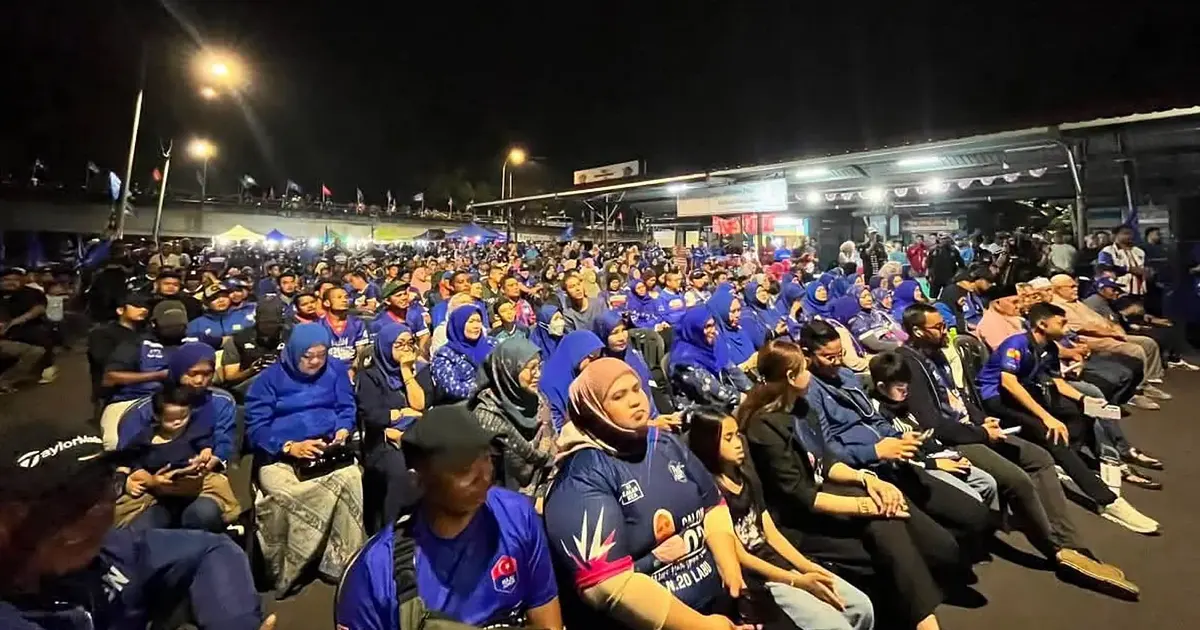
PAS has moved to address mounting concerns about its rhetorical emphasis on Malay solidarity, with party vice-president Ahmad Fadhli Shaari asserting that such messaging carries no inherent intent to foster resentment among Malaysia's diverse population. The clarification arrives amid broader questions about how the Islamic party's pursuit of ethnic unity frameworks sits alongside its governance in multiethnic states and its broader political ambitions.
Ahmad Fadhli's intervention reflects a deliberate effort to reposition PAS within Malaysia's competitive political landscape, where perceptions of inclusivity increasingly matter to voters across ethnic lines. By directly addressing Chinese and Indian voters, the party acknowledges that its messaging around Malay-Muslim constituencies can create interpretative gaps that potentially alienate other communities. This recognition suggests growing internal awareness that narrow ethnic positioning may constrain PAS's electoral reach and coalition-building possibilities at the national level.
The party's framing distinguishes between consolidating support within its core Malay-Muslim base and harbouring animosity toward other groups. According to this interpretation, emphasis on Malay unity represents an internal mobilisation strategy rather than a confrontational stance toward minorities. However, this distinction often proves difficult to maintain in practice, particularly when such messaging circulates in political spaces where racial sensitivities remain pronounced and where opposition parties may amplify selective portions of statements for partisan advantage.
Ahmad Fadhli's appeal for direct evaluation rather than reliance on third-party characterisations speaks to a broader challenge facing PAS as it seeks legitimacy beyond its traditional strongholds. When voters assess political parties through filtered information from opponents, the original context frequently becomes distorted, creating entrenched misperceptions that withstand clarifications. By inviting Chinese and Indian voters to examine PAS leaders' statements directly, the party is essentially requesting a reset of how its messaging gets interpreted across communal lines.
This positioning also reflects PAS's evolving political calculus following its participation in various state and federal coalition configurations. Parties that depend on multiethnic coalition partners or contest in ethnically mixed constituencies face constant pressure to demonstrate that their identity-focused rhetoric coexists with genuine commitment to inclusive governance. PAS's clarification therefore serves multiple audiences simultaneously: reassuring its Malay-Muslim base that their concerns remain central to party priorities while signalling to other communities that PAS governance can accommodate diverse interests.
The mechanics of PAS's appeal merit closer examination. By asking voters to judge the party based on its leaders' actual statements, PAS implicitly questions how effectively opposing parties are characterising its positions. This counter-narrative strategy acknowledges that political contestation increasingly occurs in the realm of interpretation and representation, where the ability to control one's messaging becomes as important as the substantive policy differences between parties. Malaysian voters, particularly those from non-Malay backgrounds who live in constituencies with significant PAS influence, often find themselves navigating competing claims about what the party truly represents.
Chinese and Indian voters occupy a particularly delicate position within Malaysia's political economy. Their electoral weight varies significantly by constituency, but their aggregate voting patterns can determine outcomes in hundreds of parliamentary and state seats. When major parties emphasise communal unity frameworks, these voters must simultaneously maintain their own community solidarities while assessing which parties genuinely protect their interests. PAS's invitation to Chinese and Indian voters to evaluate the party independently represents recognition of this reality and an attempt to penetrate the information barriers that typically separate Malay-Muslim dominated political messaging from non-Malay-Muslim audience comprehension.
The tension between PAS's Malay-Muslim identity and its aspirations for broader political relevance extends beyond messaging into substantive governance questions. State governments controlled by PAS must regularly address matters that affect non-Muslim and non-Malay citizens—infrastructure development, education access, business licensing, and dispute resolution. How PAS administers these functions arguably communicates more authentically than rhetorical clarifications about whether unity messaging excludes others. Voters evaluating PAS on its leaders' statements will likely balance such clarifications against observable governance outcomes in PAS-controlled territories.
The sustainability of PAS's dual positioning—maintaining Malay-Muslim mobilisation while seeking acceptance among other communities—remains uncertain. Political parties operating in highly polarised environments often struggle to maintain credibility across community lines once they have established strong identities within particular bases. PAS's history of evolving relationships with different political coalitions shows the constant tension between deepening support in core constituencies and broadening appeal necessary for national electoral competitiveness. Ahmad Fadhli's intervention represents one tactical response to this fundamental strategic dilemma.
For Malaysian politics more broadly, PAS's clarification highlights how interpreting political rhetoric remains contested and contentious. Voters from different communities genuinely hear and understand political messaging through distinct frameworks shaped by historical experience, demographic composition of their constituencies, and exposure to different information sources. When PAS asserts that Malay unity promotion excludes no one, critics argue that such framing inevitably prioritises certain interests above others. These competing interpretations will likely persist regardless of how clearly leaders articulate their positions, suggesting that building genuine multiethnic political consensus in Malaysia requires not just rhetorical clarification but sustained demonstration through governance and resource allocation that all communities' interests receive serious consideration.

